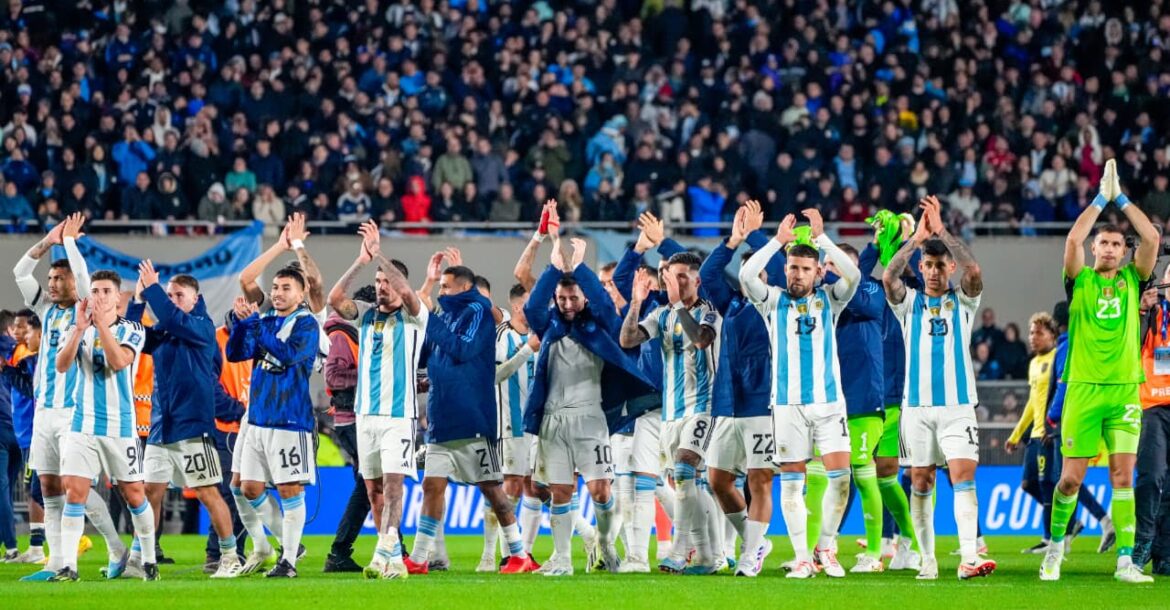

Washington: After two gruelling knockout contests marked more by controversy than goals, Argentina have reached the business end of the World Cup with questions beginning to follow them.
The two-time world champions were dominant in the group stage, topping Group J with victories over Austria, Jordan and Algeria. Led by the unstoppable Lionel Messi, Argentina looked every bit like title favourites in the opening round.
However, their knockout campaign has been far less convincing. Argentina were pushed to the limit by Cape Verde in the round of 32 before sealing a 3-2 win in extra time. They then came from two goals down to defeat Egypt 3-2 in a controversial last-16 clash that sparked allegations of officiating bias.
Read More
- Liverpool fight back from two goals down to beat Villarreal 4-3 in Champions League thriller
- Arshdeep Singh just five wickets away from becoming first Indian with 150 T20I scalps
- Schedule unveiled for ICC Women’s U19 T20 World Cup 2027
- Boland shines as South Africa struggle against Australia
- Portuguese FA suspends Cristiano Ronaldo for 30 days, imposes €255 fine
Despite the concerns, Messi remains Argentina’s biggest weapon. Playing in his sixth and possibly final World Cup, the Argentine captain has scored in all five matches so far. His eight goals place him second in the Golden Boot race, behind France’s Kylian Mbappe, who also has eight goals but has played one match more and leads on assists.
Standing in Argentina’s way are a resurgent Switzerland side, who have quietly put together a remarkable campaign. The Swiss topped Group B unbeaten, defeating Canada and Bosnia and Herzegovina before drawing with Qatar.
Switzerland then beat Algeria 2-0 in the round of 32 before edging Colombia 4-3 on penalties to reach the quarterfinals for the first time in 72 years.
The impressive attacking duo of Breel Embolo and Johan Manzambi has become central to Switzerland’s inspiring run, winning admiration back home and giving the team belief ahead of their biggest test yet.
Saturday’s clash also carries a sense of revenge for Switzerland, who were beaten by Argentina at the 2014 World Cup.