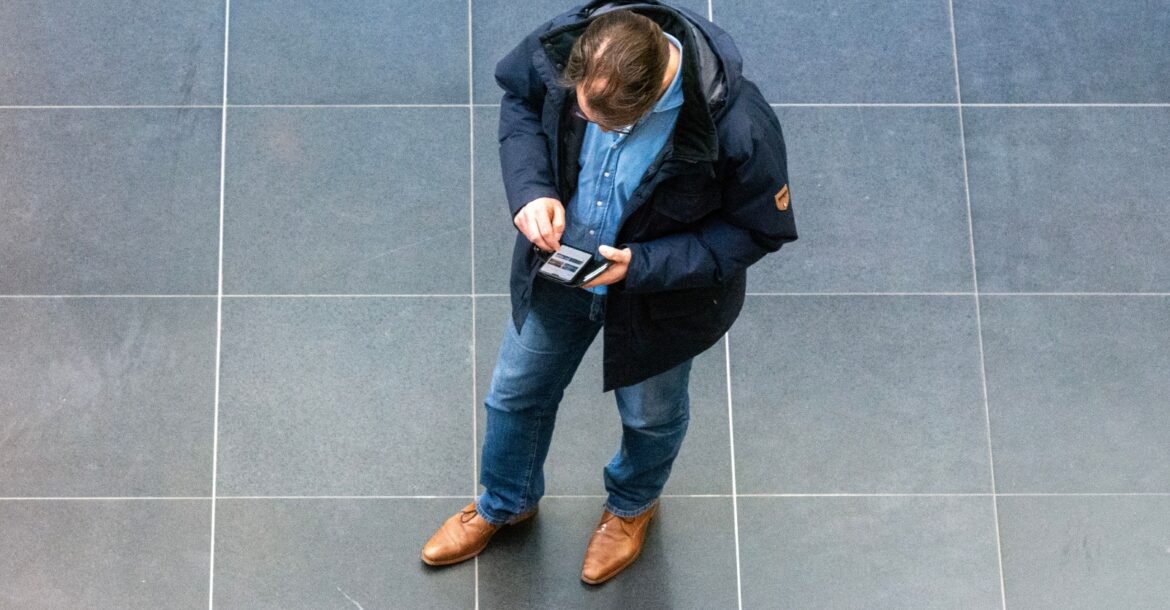

Picture this: Four people sit at a restaurant table. All four are on their phones, thumbs and index fingers endlessly scrolling through content. A familiar scene?
The menu arrives – but not before a search. Dishes are checked online for ratings, ingredients, and popularity before being ordered. When the food finally lands on the table, it is plated with care, garnished neatly, designed to be eaten.
But it isn’t eaten yet.
First comes the camera. Photos are taken. Filters are applied. Angles are adjusted. One image is selected – carefully curated for approval online. Only then does the meal begin, long after it could have.
What was once a simple act of eating has become an elaborate act.
Is this merely an obsession with social media likes and follows, or a sign of an unsettling future where communication is typed rather than spoken, as it once was?
According to online statistics, globally, the average person checks or picks up their smartphone roughly 96 times a day, which is about once every 10 minutes of waking hours. We have become so seamlessly integrated with our devices that we barely notice how screens have taken over every spare moment of our time.
As we cross into 2026, the transition from intentional connection to compulsive consumption has reached an unprecedented scale.
In 2025, global smartphone users reached 5.78 billion, with more than 7.4 billion devices in circulation. This constant connectivity has fundamentally reshaped how time is experienced. Average global screen time now stands at around six to seven hours per day across devices, while social media use alone accounts for nearly 141 minutes daily.
While users surveyed express that social platforms increase their access to information, ease of communication, and freedom of expression, they equally report severe trade-offs: eroded personal privacy, heightened political polarisation, and acute everyday distraction.
More troublingly, the health consequences are mounting. Data from the NIH’s Adolescent Brain Cognitive Development (ABCD) Study highlights that excessive screen time in late childhood directly predicts increased depressive symptoms in early adolescence. In adults, the clinical correlation points to spiked anxiety, social isolation, chronic sleep disturbances, and accelerated cognitive decline.
While much of the world grapples with the psychological effects of hyper-connectivity, the Sultanate of Oman offers a striking case study of near-total digital integration. According to World Bank and DataReportal metrics compiled for 2026, Oman boasts one of the most strong and sophisticated digital ecosystems in the world.
Internet penetration in the Sultanate stands at a staggering 95.3 percent, translating to 5.28 million active internet users out of a population where approximately 98 percent of Omani households maintain an active connection.
Social Media in Oman
Social media use is deeply embedded in daily life, with 3.44 million social media user identities recorded in 2025, equivalent to 62.1 percent of the population.
Platform usage spans the full digital spectrum: 3.44 million on YouTube, 2.80 million on Instagram, 2.73 million TikTok users (18+), 2.35 million Snapchat users, 1.75 million Facebook users, 910,000 X users, 1.30 million LinkedIn members, 925,000 Messenger users, and 181,000 Reddit users.
These figures show that social media usage in Oman is not only widespread but platform-diverse, spanning entertainment, communication, professional networking, and news consumption.
Oman’s high connectivity rate reflects more than technological adoption; it signals a structural shift in lifestyle, communication, and economic participation. Digital services now underpin everything from banking and education to government services and commerce.
Yet, like the rest of the world, Oman is also navigating the broader consequences of hyper-connectivity: attention fragmentation, increased screen dependency, and evolving social behaviour patterns shaped by algorithm-driven content consumption.
This condition has been described as ‘continuous partial attention’, a term coined by researcher Linda Stone, capturing a state of being permanently connected but never fully present. Human attention, once built for cycles of focus and rest, now operates in a near-constant state of digital alert.
And yet, the counterbalance to this modern condition is surprisingly simple.
Studies show that just 10 to 20 minutes spent outdoors triggers an immediate physiological reset. Within this brief window, cortisol levels drop, heart rates stabilise, and cognitive performance sharpens.
Not surprisingly, this does not require wilderness or travel. A shaded park, a quiet street, or even a bench beneath a tree can offer similar restorative effects.
The challenge, then, is not access – but attention.
In a world where five-minute scrolling breaks feel like rewards, stepping outside has become something postponed. Yet unlike most modern wellness solutions, this one requires no subscription, no device, and no interface – only the decision to disconnect.
Real connection – the kind that dissolves isolation and strengthens communities – demands that we finally look up from our screens, make the decision to cross the threshold, and reconnect with the physical world that has been waiting for us all along.





