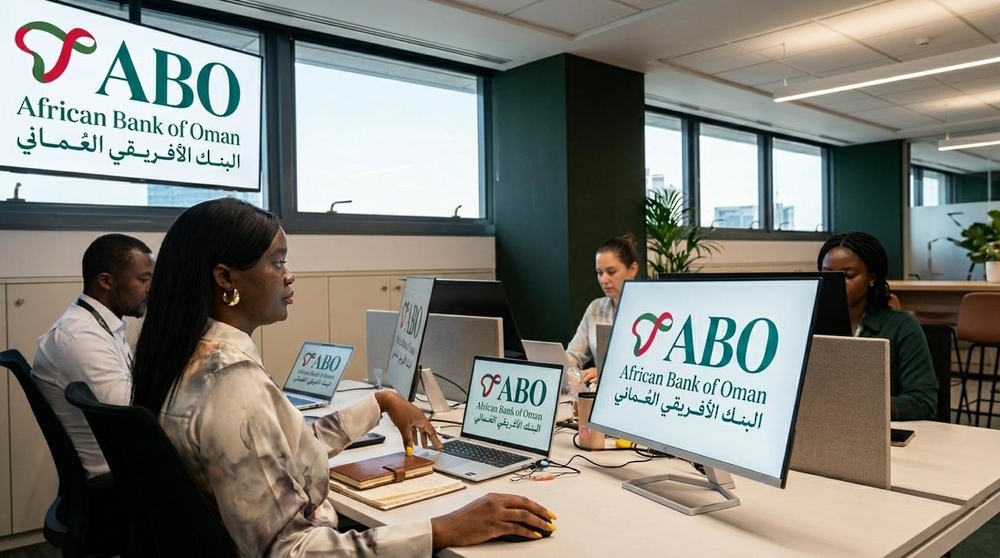

MUSCAT – The new bank reflects Oman’s efforts to strengthen its financial presence in emerging African markets and reinforce its role as a provider of financial and institutional expertise in the international banking sector.
The launch also represents a significant step in deepening economic relations between Oman and the African continent, taking place alongside Angola’s long-term development framework, “Angola Strategy 2050,” which focuses on economic diversification, privatization, infrastructure development, and opening key sectors to foreign investment.

His Highness Sayyid Theyazin bin Haitham Al Said, Deputy Prime Minister for Economic Affairs, stated that the establishment of the African Bank of Oman reflects Oman’s economic diplomacy approach under the leadership of His Majesty Sultan Haitham bin Tariq. He said the initiative enhances Oman’s international investment presence and strengthens its role as a financial bridge connecting the Middle East with emerging global markets. He added that the bank will deepen economic relations with Africa, enhance Oman’s international reputation as a trusted investment partner, and support sustainable economic diversification in line with Oman Vision 2040.
Read More
- Oman, Iran agree framework for safe shipping corridor through Strait of Hormuz
- Thunderstorms, strong downdraft winds sweep parts of Oman
- Saudi Crown Prince sends written message to His Majesty Sultan Haitham
- Oman FM arrives in Tehran, discusses safe passage of ships through Strait of Hormuz
- CPA seizes 1,668 soft drinks, 177 expired juice cans in Oman
His Excellency Abdul Salam bin Mohammed Al Murshidi, Chairman of the Oman Investment Authority, described the bank as a strategic expansion of Oman’s investment presence at regional and international levels. He said it represents a practical step toward achieving Oman Vision 2040 by building financial platforms in emerging markets and diversifying sources of national income. He emphasized that the African Bank of Oman is not merely a banking institution but an integrated financial platform designed to enhance capital flows, trade, and investment between Oman and Africa, particularly Angola, which he described as a high-potential strategic partner with significant economic opportunities.
He added that the Oman Investment Authority views this initiative as a way to consolidate Oman’s role as a reliable partner linking the Middle East and Africa, while transferring institutional expertise and financial governance best practices to emerging markets. This, he said, will enhance investment efficiency and create sustainable value for both sides. He further noted that the bank will support Omani companies in expanding abroad and accessing new markets, while also contributing to Angola’s economic development through financing strategic projects and strengthening trade and investment financing systems.
The African Bank of Oman is positioned as a cross-border investment banking institution with Angolan roots and international reach, designed to facilitate capital flows and trade between Angola, the Middle East, and other African markets. It will operate in line with Omani financial governance standards, with a focus on transparency, sustainability, and regulatory compliance. The bank will also open new financial channels between Oman and Africa, support trade and investment flows, and enable Omani companies to access opportunities across the continent, further strengthening Oman’s role as an economic bridge between regions.
Its operations will focus on facilitating cross-border payments and financial transactions, providing trade finance services such as letters of credit and bank guarantees, managing liquidity and cash flow services, and offering advisory support and financing for major projects in key sectors including oil and gas, mining, manufacturing, infrastructure, transport, and logistics.
The bank will also support core sectors of the Angolan economy, where oil and gas account for about 20 percent of GDP and consumer goods around 19 percent, alongside rapidly growing mining, infrastructure, and logistics sectors under national development programs.
In its initial phase, the bank aims to serve around 50 institutions, including multinational corporations, local companies, and government entities operating in Angola, with plans to gradually expand its services to support wider trade and investment flows between Africa and the Middle East, positioning Angola as a key financial gateway to African markets.





