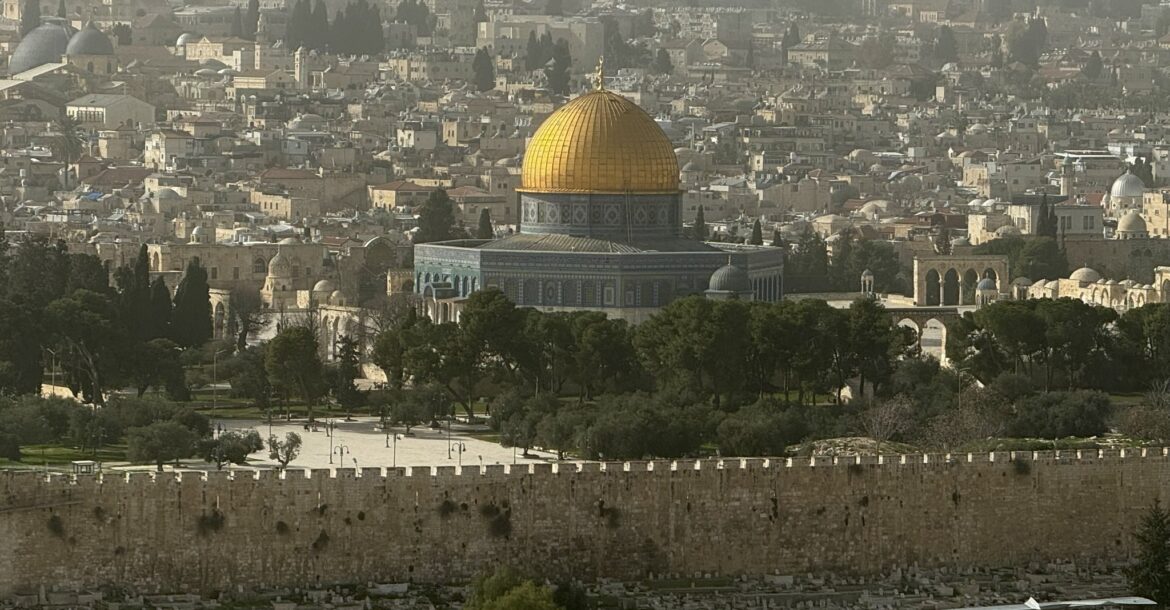

Tel Aviv: On February 14, Jerusalem recorded dangerously high levels of pollution, with an air quality index (AQI) of over 500, making it one of the most polluted cities in the world today. PM2.5 concentrations have reached levels around 93 times the WHO annual guidelines, posing serious health risks, especially to vulnerable populations such as children and the elderly.
According to monitoring data from the Environmental Protection Agency stations, air quality began to deteriorate sharply around 3 a.m., as strong winds carried vast clouds of dust from North Africa and the Sahara into the region. Global air quality platform IQAir ranked both Israeli cities at the top of its pollution index during peak conditions.
The Israel Meteorological Service reported that winds of at least 55 kilometres per hour, with gusts reaching up to 65 kilometres per hour, fueled the storm’s intensity.
Read More
- Drone attack sparks fire at Kuwait border crossing
- Trump says Saudi nuclear deal requires Abraham Accords entry
- US strikes Iran for 12th night as regional tensions spread
- Record heat intensifies Europe’s drought crisis, France reports over 5,700 heatwave deaths
- World Bank warns escalating US-Iran conflict could fuel inflation, slash global growth to 1.3%
By midday, meteorologists said the worst of the haze was beginning to move eastward, with visibility gradually improving. Air quality levels were also expected to recover as wind patterns shifted.
While conditions showed signs of easing, authorities continued to urge caution until pollution levels fully returned to safe ranges.





