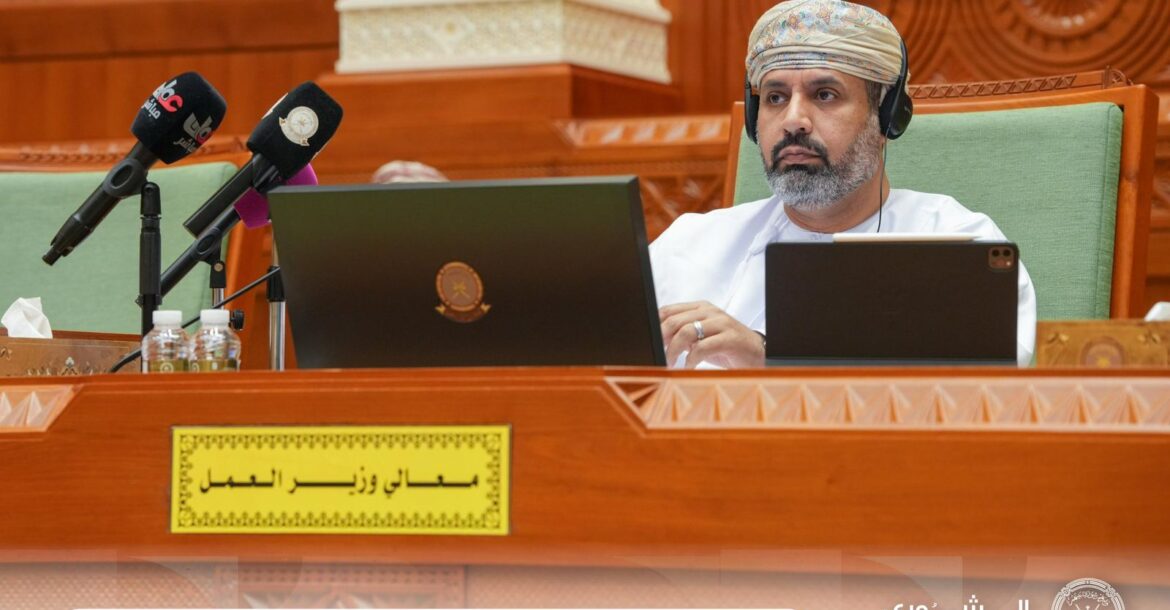

MUSCAT — His Excellency Prof. Mahad Al Baawain, Minister of Labour, outlined a broad set of labour market reforms and policy safeguards during a Shura Council plenary session reviewing the performance of the Ministry of Labour for 2026, responding to extensive interventions from Council members.
Al Baawain said the government is pursuing a balanced labour policy focused on job creation, workforce stability and stronger protection for workers, while ensuring the private sector remains competitive. Members raised concerns over arbitrary dismissals, enforcement of minimum wage requirements, sustainability of employment after the conclusion of wage-support programmes, and solutions for jobseekers and recently laid-off workers.
The minister confirmed that pension and retirement systems are regulated under royal decrees and subject to actuarial and financial studies to assess sustainability, including the impact of contribution levels and benefits. He stressed that no citizen services can be suspended without proper procedures and prior coordination with the Ministry of Labour, warning that violations would expose companies to legal accountability.
Read More
- Muscat Municipality trains SQU students in meat safety and veterinary inspection
- Dedicated ambulance service launched for bedridden patients in Muscat
- Struggling to pay electricity bills? Nama Supply offers flexible payment plans
- Muscat Governorate completes 95 km of internal roads across wilayats in 2026
- His Majesty Sultan Haitham confers Royal Orders on senior officials and leading figures
On employment initiatives, Al Baawain explained that the “Saham” programme is designed to support jobseekers and improve labour market integration, while post-graduation employment planning must remain flexible due to the changing nature of the labour market. Committees have also been formed to review promotion mechanisms linked to the “Ejada” performance evaluation system to ensure fairness and accuracy in assessments.
Shura Council members called for accelerated issuance of executive regulations under the Labour Law, stronger monitoring of Omanisation targets, and closer follow-up on commercial establishments’ commitments, particularly among small and medium enterprises. The minister said oversight mechanisms would be strengthened to verify compliance and safeguard the rights of both workers and employers.
The session also highlighted key social and economic priorities, including increasing the employment-linked training budget, expanding school-holiday work programmes for students, supporting low-income families and breadwinners, and coordinating with relevant authorities to curb unfair competition and enable Omanis to sustainably manage businesses.
Al Baawain said the ministry is assessing the impact of wage regulations across sectors, benchmarking international best practices, and developing performance indicators to measure employment outcomes in line with Oman Vision 2040.





