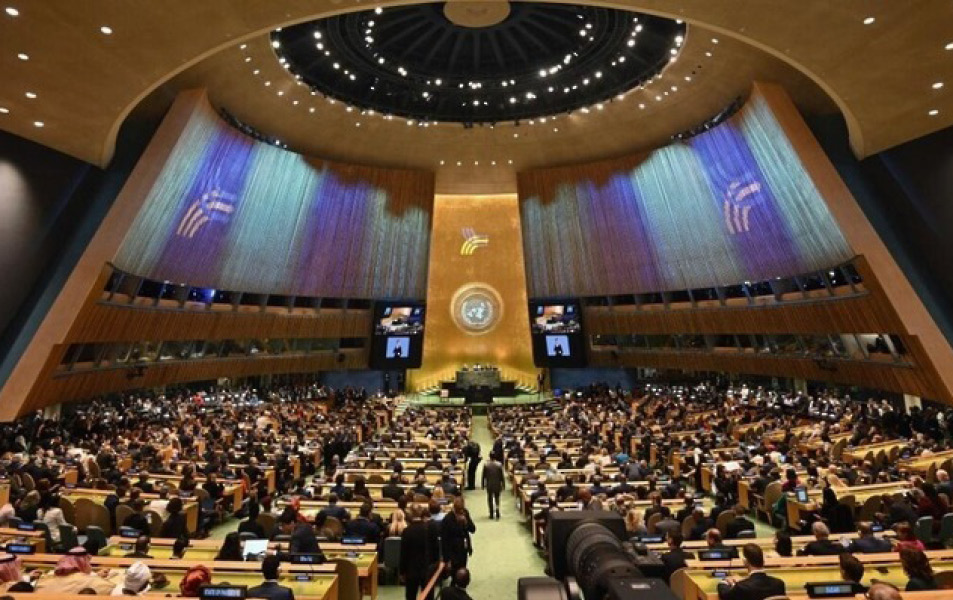

NEW YORK – This year’s theme, ‘Better together: 80 years and more for peace, development and human rights’, sets the tone for high-level discussions on major global issues, including the Israeli-Palestinian conflict, the wars in Ukraine and Sudan, the Iranian nuclear file, the crisis in Syria, U.S.-Venezuela relations, the governance of artificial intelligence, non-communicable diseases, mental health, and gender equality.
Over the course of the week-long debate (September 23–29), world leaders will seek to advance peace, security, and sustainable development, with the Palestinian issue expected to dominate the discourse following months of diplomatic momentum.
Earlier this year, a conference titled ‘Implementing the Two-State Solution’ concluded with the New York Declaration, which called for concrete steps to support the establishment of a Palestinian state. This declaration has since paved the way for a number of countries to signal their intent to formally recognize Palestine.
Read More
- Russia charges Telegram founder Pavel Durov with ‘facilitating terrorism’, issues international arrest warrant
- Meta, BlackRock partner to build USD 14 billion Texas data center campus
- India at UNSC says “world’s focus on Strait of Hormuz” must not divert attention from Gaza
- Many trapped in damaged shopping mall after major 7.1-magnitude Japan earthquake
- Over 390,000 customers lose power as tornado tears through northeast Wisconsin
France has reaffirmed its unconditional recognition of a Palestinian state, while other nations — including Belgium, Luxembourg, Andorra, San Marino, Canada, the United Kingdom, and Malta — have indicated similar intentions. Some have attached conditions such as political reforms or elections, while others have made unconditional pledges.
Tensions also flared earlier this month after the United States delayed visa issuance for officials from the Palestinian Authority and the Palestine Liberation Organization (PLO), prompting the General Assembly to authorize virtual participation for Palestinian representatives during the session.
The ongoing crisis in the Gaza Strip, continued violations of international law by Israeli authorities, and the expansion of the conflict beyond Palestinian territories have further accelerated global efforts to bridge the gap between rhetoric and reality. Several international and regional initiatives are now underway, including interim measures and benchmark reports to track implementation of previous commitments and evaluate progress toward peace.
Expectations are high that additional countries will announce their recognition of the State of Palestine during the General Assembly’s general debate, building on earlier declarations and intensifying the push for a renewed peace process rooted in the two-state solution.
It is worth noting that 147 of the 193 UN member states recognised Palestine as a sovereign state by early September 2025. Attention is now turning to this extraordinary UN meeting and its subsequent decisions and consequences, particularly regarding peace, human rights, settlements, wartime violations, and recognition of the Palestinian state.





