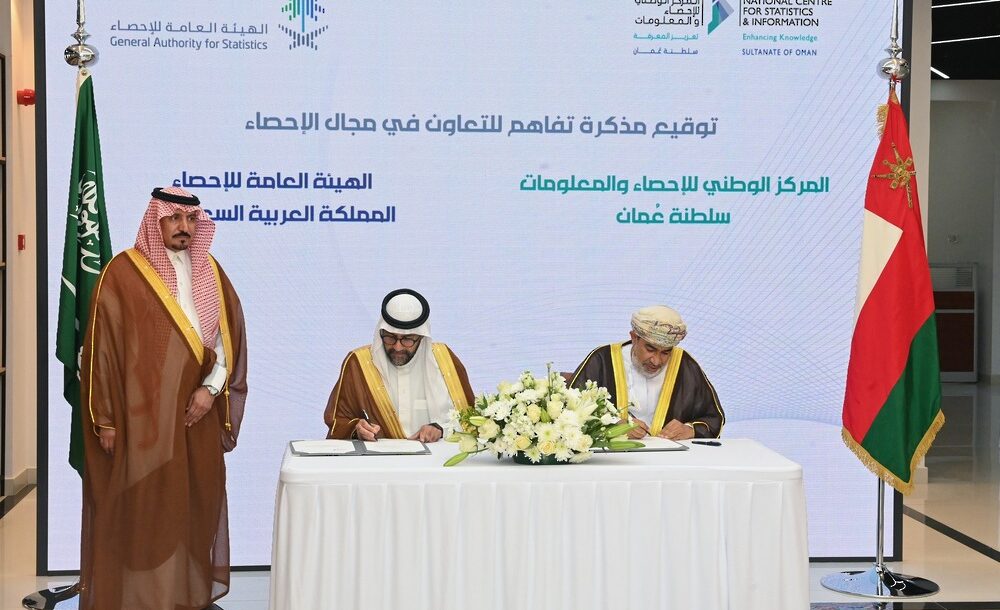

MUSCAT – The MoU was signed at the headquarters of the National Centre for Statistics and Information (NCSI) by His Excellency Dr. Khalifa bin Abdullah Al Barwani, CEO of NCSI, and His Excellency Dr. Fahd bin Abdullah Al Dossari, President of the General Authority for Statistics in Saudi Arabia.
The agreement aims to develop and improve the statistical systems of both countries through the exchange of expertise, data, and best practices. Key areas of collaboration include implementation of awareness programmes to promote statistical literacy; facilitating access to data and improving data interpretation; organising expert exchanges, joint seminars, workshops, and conferences; and exploring future areas of statistical cooperation.
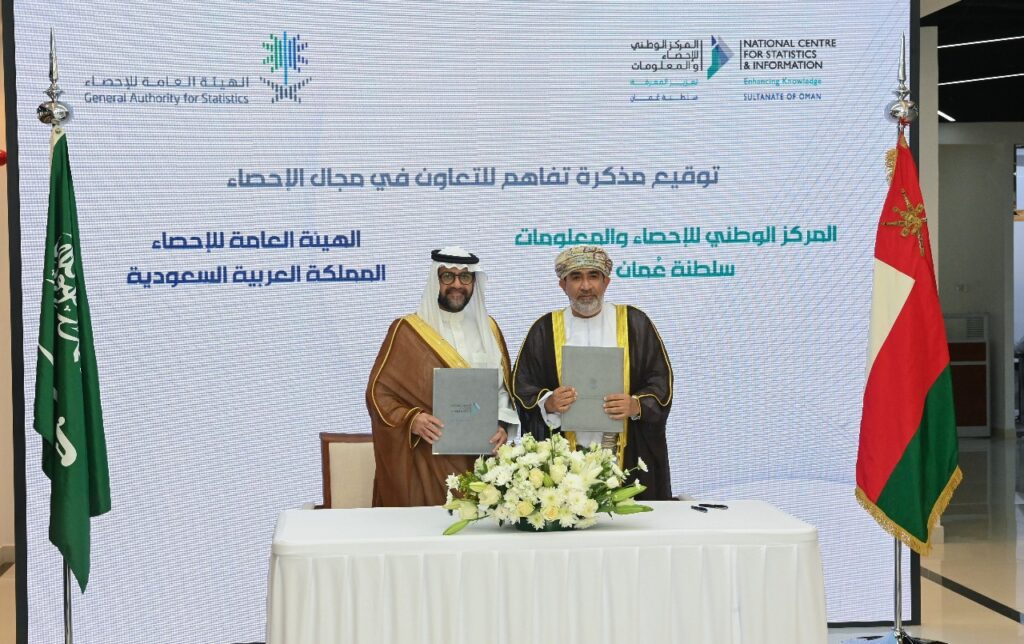
His Excellency Dr. Al Barwani described the MoU as a significant step toward building an integrated Gulf statistical system, producing accurate and reliable data to support national decision-making. He emphasized that the partnership with Saudi Arabia will broaden opportunities for knowledge exchange and capacity building.
Read More
- Oman moves to ensure essential goods supply, price stability as CPA meets retailers
- 13 expats arrested for gambling in Muscat
- His Majesty Sultan Haitham expresses condolences to Jordan King over church attack
- Two arrested in Muscat for possessing crystal meth
- Reposting offensive content on social media could lead to jail, fines in Oman, legal experts warn
His Excellency Dr. Al Dossari also highlighted the MoU as an extension of the strong and historic ties between the two nations. He noted that it will enhance joint efforts in developing statistical work and expertise on both sides.
The signing ceremony featured a visual presentation by the National Centre for Statistics and Information, which showcased its most prominent statistical and information projects, within the framework of an integrated vision aimed at developing the national statistical system in line with the best international standards and practices.
This step embodies the two countries’ commitment to enhancing cooperation and integration in vital sectors, most notably the statistics and information sector, given its pivotal role in supporting decision-making and guiding development policies based on accurate and reliable data.





