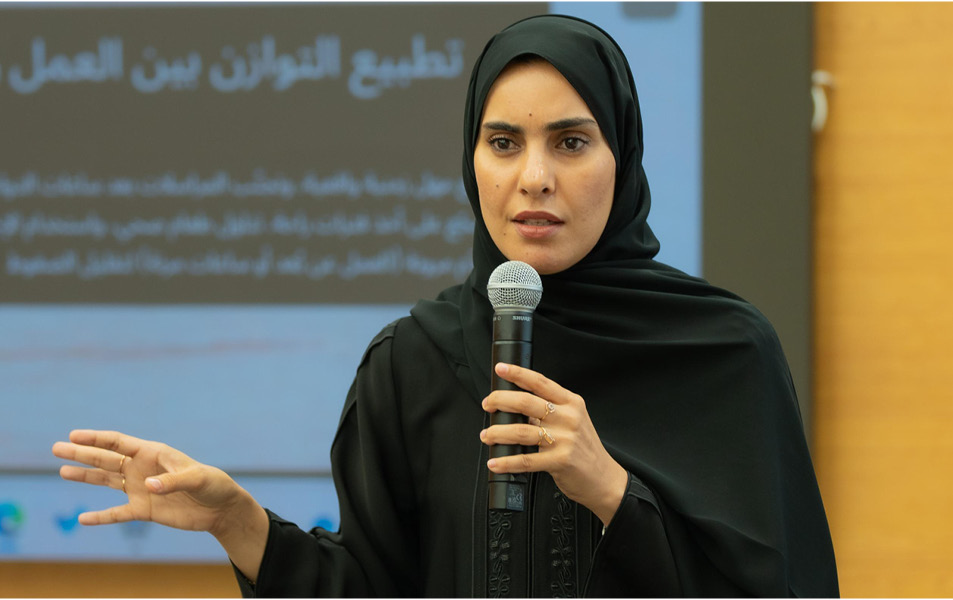

Duqm: The Duqm Summer Series, a four-part program covering AI and automation, workforce development, global trade and supply chains and corporate culture and wellbeing concluded on Tuesday with a session led by Dr Aziza Al Sawafi, Assistant Professor of Mental Health Nursing and Head of the Department of Mental Health at Sultan Qaboos University’s College of Nursing. Her message was clear: wellbeing is not a perk it is the way effective organizations run.
Dr Al Sawafi set out a practical loop that turns wellbeing into performance. It starts with short pulse surveys to test workload, role clarity and inclusion. The findings are shared so people know what will change. Managers closest to the work are coached to remove friction, teams are rebalanced where pressure spikes and progress is tracked against measures leaders already watch – retention, productivity and safety. “Wellbeing isn’t an add-on,” she said. “Measure what matters, fix the frictions and performance follows.”
Failing to take mental wellbeing seriously carries a direct financial penalty. The World Health Organization and International Labour Organization estimate that depression and anxiety account for around 12 billion working days lost each year – much of it through absenteeism and presenteeism – at a global cost of roughly US$1 trillion in reduced productivity. In short, neglecting mental health erodes performance and the bottom line.
Read More
- Youth are the pillar of Oman’s development and future, says minister
- His Majesty Sultan Haitham issues decrees amending Council of Oman, Shura election laws
- Oman moves to ensure essential goods supply, price stability as CPA meets retailers
- 13 expats arrested for gambling in Muscat
- His Majesty Sultan Haitham expresses condolences to Jordan King over church attack
Global evidence also points to the upside of getting this right. Scaling effective mental-health support delivers a strong return – around US$4 in improved health and work ability for every US$1 invested, while Gallup links highly engaged teams with 23% higher profitability alongside fewer absences and errors. In practice, that translates into steadier service, safer sites and projects that move on time.
Reflecting on the program’s outcomes, Eng. Ahmed Akaak, CEO, SEZAD, said: “I’m pleased with what the Duqm Summer Series delivered. We turned big topics into practical steps our tenants can put to work straight away. The thread through all four sessions was simple: solve real problems, track the effect and repeat what works. That’s how firms deliver better, manage risk and build teams that get stronger week by week.”





