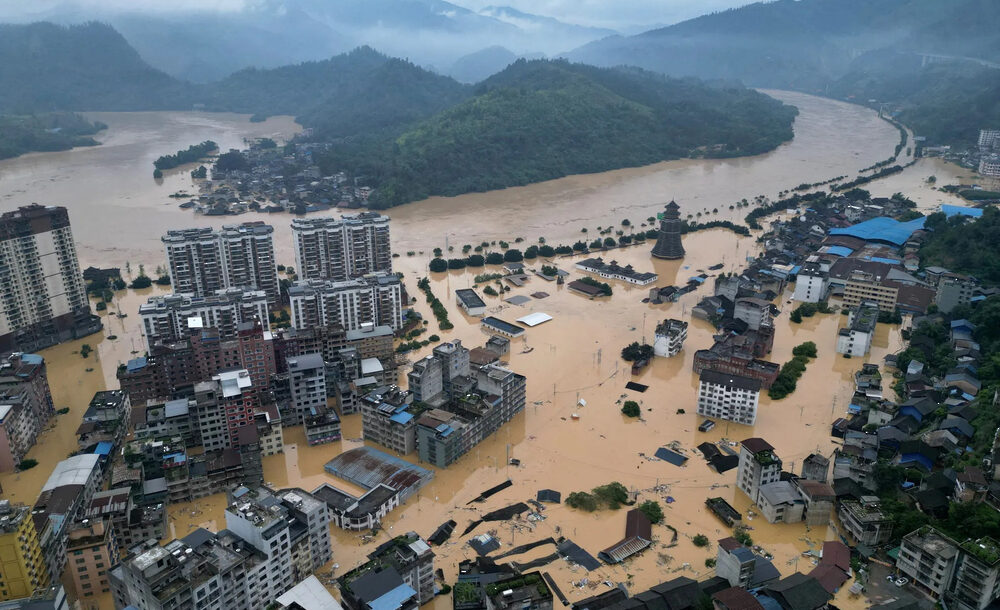

Munich: From raging wildfires and deadly earthquakes to destructive storms, the planet saw a surge in climate-related devastation between January and June this year. The United States bore the brunt of it, suffering losses worth $92 billion—roughly 70% of the global total—largely driven by intense storms and hurricanes.
The most financially devastating event was the series of California wildfires in January, which alone caused $53 billion in damages, setting a new record as the most expensive wildfire disaster in history.
In Southeast Asia, tragedy struck Myanmar on March 28 when a powerful earthquake claimed the lives of approximately 4,500 people, making it the deadliest disaster of the year so far.
Read More
- Germany records nearly 10,000 heat-related deaths this year
- US military completes two-hour strikes on dozens of IRGC targets in Iran
- Russia charges Telegram founder Pavel Durov with ‘facilitating terrorism’, issues international arrest warrant
- Meta, BlackRock partner to build USD 14 billion Texas data center campus
- India at UNSC says “world’s focus on Strait of Hormuz” must not divert attention from Gaza
Meanwhile, Europe experienced relatively limited losses, totaling around $5 billion. However, a massive landslide in Switzerland’s canton of Valais in May was a stark reminder of the continent’s vulnerability. The landslide buried the village of Blatten, destroyed 130 homes, and caused an estimated $500 million in damage.
Munich Re’s chief climate expert Tobias Grimm cautioned that Europe was “fortunate to avoid major climate disasters in the first half of the year,” but warned against complacency in the face of growing climate risks.
The analysis pointed to a rising trend in the frequency and severity of weather-related disasters, attributing much of it to climate change. Experts from Munich Re also highlighted that the thawing of permafrost in the Alps is accelerating geological instability in mountainous areas.
Of the $131 billion in global losses, approximately $80 billion were covered by insurance—well above the long-term average of $79 billion when adjusted for inflation. The only year with higher overall losses remains 2011, when Japan’s devastating earthquake and tsunami triggered record-breaking destruction.





