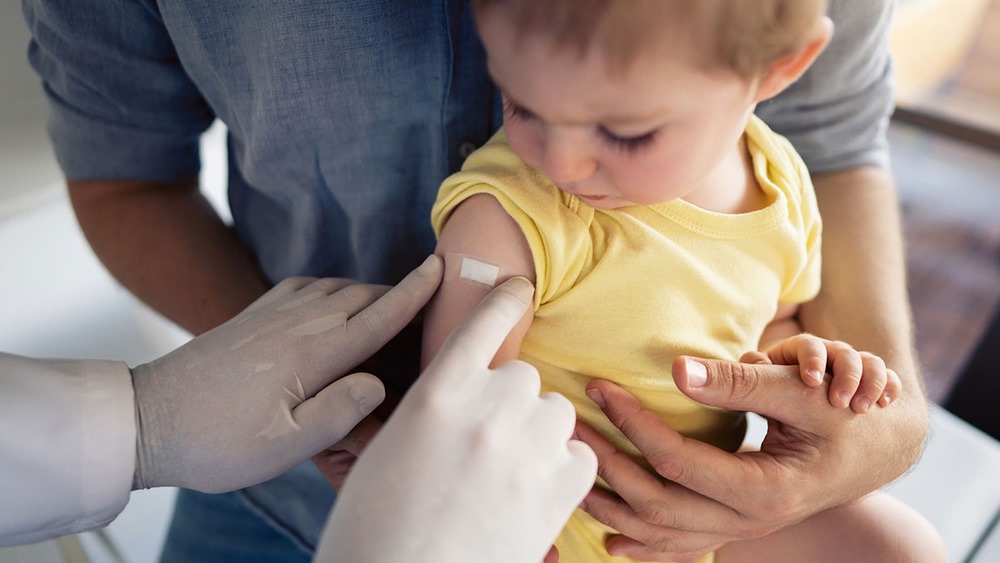

GENEVA: The World Health Organization (WHO) and UNICEF revealed that only 85% of children worldwide received all three recommended doses of the diphtheria, tetanus, and pertussis (DTP) vaccine in 2024—a critical benchmark for global vaccine coverage. This marks a slight improvement of one percentage point from 2023, reaching an additional one million children, but experts describe the gains as modest given the magnitude of the challenges ahead.
UNICEF Executive Director Catherine Russell said, “The good news is that we’ve been able to vaccinate more children with life-saving vaccines. But millions of children still lack protection against preventable diseases.”
An estimated 14.3 million children globally missed even a single dose of DTP in 2024. While this figure is slightly lower than the 14.5 million in 2022, it remains alarmingly higher than the pre-pandemic level of 1.4 million recorded in 2019.
Read More
- Kuwait intercepts drones as IRGC claims strike on US base
- Hamas accepts US-backed roadmap to disarm and exit Gaza governance
- Germany records nearly 10,000 heat-related deaths this year
- US military completes two-hour strikes on dozens of IRGC targets in Iran
- Russia charges Telegram founder Pavel Durov with ‘facilitating terrorism’, issues international arrest warrant
WHO Director-General Dr. Tedros Adhanom Ghebreyesus echoed concerns, noting that the world remains off track to meet the 2030 goal of vaccinating 90% of children and adolescents with essential vaccines. “Drastic cuts in aid, coupled with misinformation about vaccine safety, threaten to undo decades of progress,” he said.
Unequal access to vaccines continues to plague lower-income nations, with armed conflicts and logistical challenges further hindering immunization efforts. UNICEF Immunization Officer Ephrem Lemango warned that recent budget cuts, particularly from the United States, have weakened the response capacity in nearly 50 countries.
The situation is particularly alarming with measles outbreaks. Sixty countries saw “widespread or alarming” outbreaks in 2024, nearly double the number from 2022. While two million more children received the measles vaccine compared to last year, global coverage still lags behind the 95% threshold needed to prevent outbreaks.
The report does highlight some bright spots, especially in the 57 countries supported by Gavi, the Vaccine Alliance, where several vaccines have seen improved coverage. However, health leaders caution that these improvements are fragile without sustained global investment and counter-efforts against misinformation.





