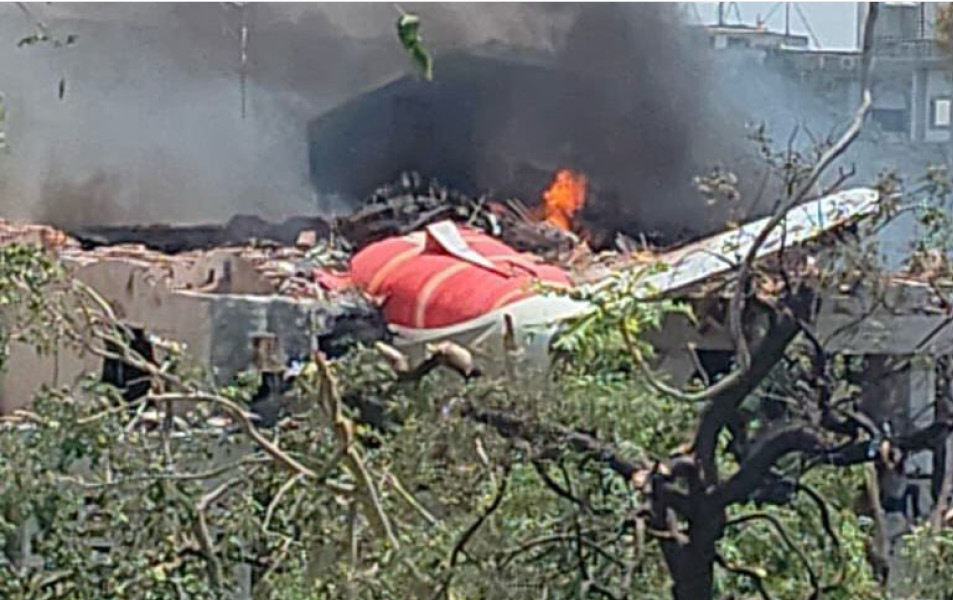

New Delhi: The Aircraft Accident Investigation Bureau (AAIB) of India released its early findings on Saturday, offering insight but no conclusions into the June 12 disaster—the deadliest aviation accident globally in over a decade. The flight, bound for London from Ahmedabad, plunged shortly after takeoff, killing 242 people onboard and 19 more on the ground. Miraculously, one passenger, Viswashkumar Ramesh, survived.
According to the report, just three seconds after becoming airborne, the aircraft’s fuel control switches moved from the “run” to the “cutoff” position, abruptly cutting power to the engines. The Boeing 787 then began a rapid descent. Cockpit audio reveals one pilot asking the other, “Why did you cut off the fuel?” to which the other replied that he hadn’t. The report did not clarify which pilot made the statements.
There was no indication of an emergency warranting an engine shutdown, and a “Mayday” distress call was issued moments before the plane struck Meghani Nagar, a densely populated area.
Read More
- Kuwait intercepts drones as IRGC claims strike on US base
- Hamas accepts US-backed roadmap to disarm and exit Gaza governance
- Germany records nearly 10,000 heat-related deaths this year
- US military completes two-hour strikes on dozens of IRGC targets in Iran
- Russia charges Telegram founder Pavel Durov with ‘facilitating terrorism’, issues international arrest warrant
While the investigation has not assigned blame, it noted that such fuel switch movements are not easily triggered by accident. Aviation expert John Cox told Reuters that the switches are designed to prevent unintentional movement.
An older 2018 FAA bulletin had warned of potential issues with the switch locking mechanism, but Air India confirmed it had not conducted recommended inspections since the bulletin was “advisory and not mandatory.” The airline maintained full compliance with all official airworthiness directives.
So far, the AAIB has not called for changes to Boeing 787 or GE engine protocols, and Boeing has not issued a comment. However, investigators continue to seek information from stakeholders, and the focus of the probe may evolve in the coming months.





