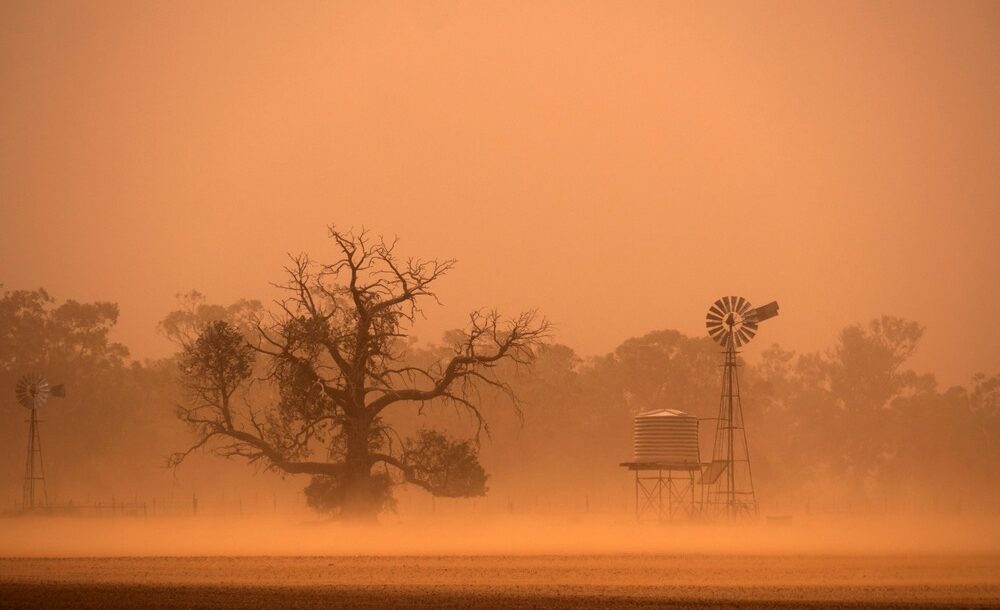

GENEVA: The World Meteorological Organization (WMO) warned in a new report released on July 12, marking the International Day for Combating Sand and Dust Storms that approximately 2 billion tons of sand and dust are released into the atmosphere every year, with more than 80% originating from the deserts of North Africa and the Middle East.
These storms, often carried across oceans and continents, are now affecting a wider range of regions, including the tropical North Atlantic Ocean, South America, the Mediterranean, the Arabian Sea, Bay of Bengal, and central-eastern China.
Although the global average surface dust concentration in 2024 was slightly lower than in 2023, levels remain significantly above the long-term average for 1981–2010 in some of the most affected regions. Alarmingly, dust concentrations were below average in major source areas but above average in dust-receiving regions, underlining a growing geographical spread of impact.
Read More
- Kuwait intercepts drones as IRGC claims strike on US base
- Hamas accepts US-backed roadmap to disarm and exit Gaza governance
- Germany records nearly 10,000 heat-related deaths this year
- US military completes two-hour strikes on dozens of IRGC targets in Iran
- Russia charges Telegram founder Pavel Durov with ‘facilitating terrorism’, issues international arrest warrant
The WMO highlighted that while much of the dust movement is natural, it is increasingly being worsened by human activity — including poor land and water management, drought, and environmental degradation.
Celeste Saulo, Secretary-General of the WMO, stressed that sand and dust storms disrupt air travel, agriculture, solar energy production, and ground transport, in addition to severely impacting human health and quality of life.
A new WMO/WHO index revealed that nearly half of the world’s population — about 3.8 billion people — were exposed to unhealthy dust levels from 2018 to 2022, a 31% rise compared to the previous five-year period. In high-risk areas, residents experienced over 1,600 days of unsafe dust exposure in just five years.
The economic toll is staggering. In the United States alone, the cost of dust and wind erosion was estimated at $154 billion in 2017 — a fourfold increase from 1995. This figure included losses across households, agriculture, renewable energy, and transportation, as well as health impacts from diseases like Valley Fever. The WMO cautioned that actual costs may be significantly higher, citing the lack of comprehensive national data on the full spectrum of dust-related damage.





