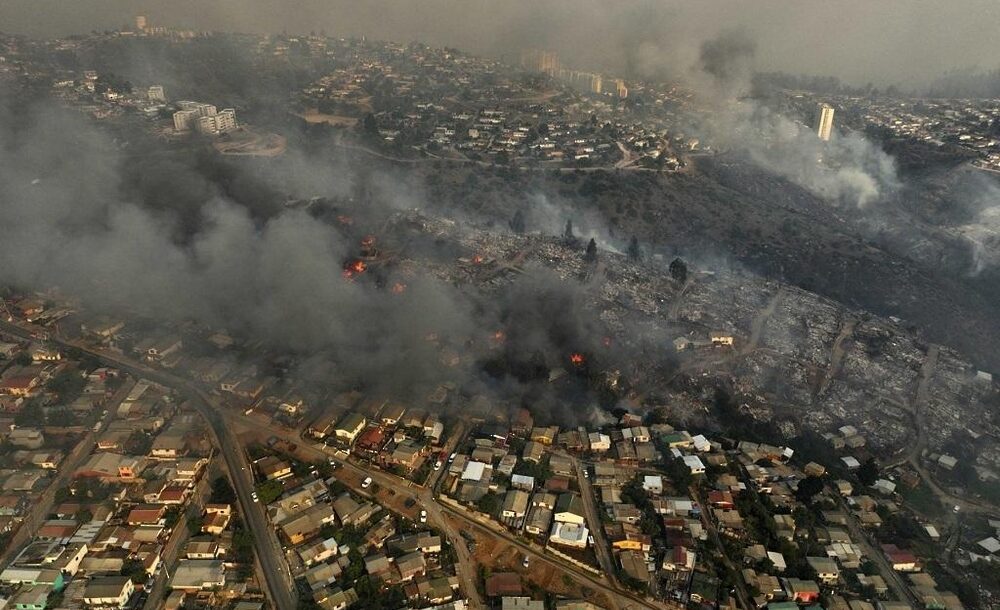

Bonn: The ten-day summit is seen as a crucial milestone ahead of COP30, scheduled for November in Belém, Brazil.
Hosted at the UN Climate Change Secretariat, this year’s Subsidiary Bodies session opens with climate experts under mounting pressure to find consensus on critical challenges, particularly the distribution of climate aid to developing countries. While nations agreed in the recent Baku summit to significantly raise financial support for poorer countries, deep divisions remain over how to allocate and manage the funds.
Read More
- Trump says he is ‘losing faith’ in Iran as nuclear talks continue
- Heavy rain batters India’s Kerala, killing at least four
- Keralam: Pathanamthitta gets 300 mm+ rainfall in 2 hours, administration on alert
- Macron thanks Australia, Lithuania for aid in combating wildfire in France
- Kuwait intercepts drones as IRGC claims strike on US base
Key points of contention—including binding commitments to phase out fossil fuels—are expected to dominate the discussions. Though there is broad agreement on the need for action, some nations continue to resist legal obligations for emissions cuts and energy transitions.
Geopolitical tensions are also shaping the dialogue, especially following U.S. President Donald Trump’s controversial move to withdraw from the Paris Agreement for the second time. This decision casts uncertainty over global unity in fighting climate change.
The Paris Agreement, adopted in 2015, aims to limit the global temperature rise to well below 2°C, ideally to 1.5°C above pre-industrial levels. However, recent findings from the UN’s World Meteorological Organization reveal that 2024 was the hottest year ever recorded, with temperatures exceeding pre-industrial averages by around 1.55°C.
The organization warned earlier this year that while the Paris Agreement’s long-term goals are measured over decades, the path to success is narrowing. It stressed that the agreement “is not yet over, but it is in grave danger.”





