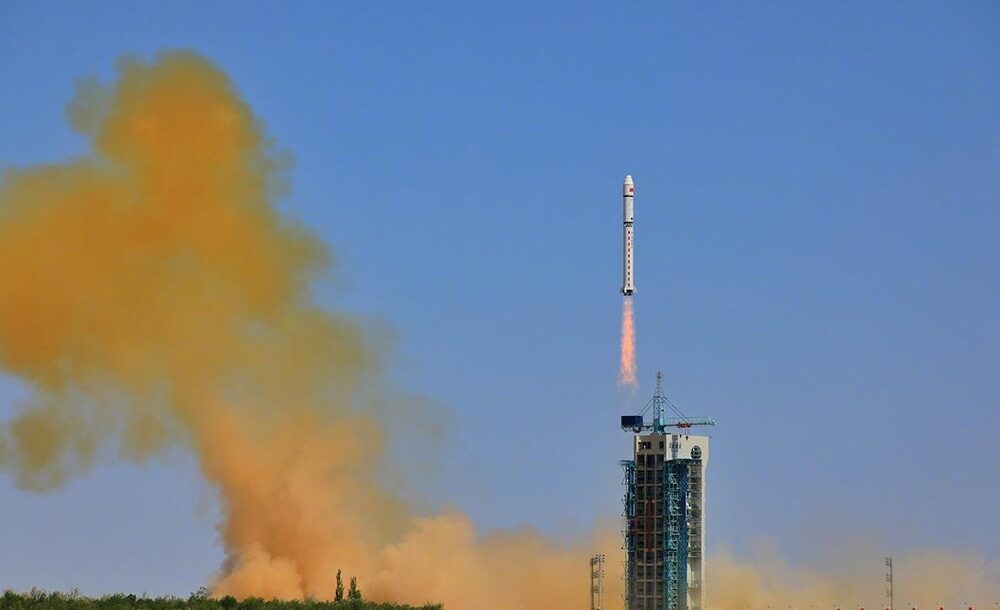

BEIJING: The Changheng 1-02 satellite was launched aboard a Long March-2D rocket from the Jiuquan Satellite Launch Center in northwest China, according to the China National Space Administration (CNSA). The satellite entered its planned orbit smoothly, marking a significant milestone in China’s integrated space, air, and ground disaster monitoring strategy.
Jointly developed by China and Italy, Changheng 1-02 is the world’s first operational satellite dedicated to the study of the Earth’s physical fields. With a designed lifespan of six years, it carries nine scientific payloads, including an electric field detector co-developed by both nations and a high-energy particle detector made in Italy.
Peng Wei, deputy director of CNSA’s System Engineering Department, mentioned that scientists can use this data to support research into predicting earthquakes, tsunamis, volcanic eruptions, and other space and weather-related disasters.
Read More
- Keralam: Pathanamthitta gets 300 mm+ rainfall in 2 hours, administration on alert
- Macron thanks Australia, Lithuania for aid in combating wildfire in France
- Kuwait intercepts drones as IRGC claims strike on US base
- Hamas accepts US-backed roadmap to disarm and exit Gaza governance
- Germany records nearly 10,000 heat-related deaths this year
Beyond disaster prediction, the satellite is expected to significantly strengthen China’s capabilities in early sensing, risk assessment, and emergency response. It will also aid in resource mapping, communications, and navigation—while fostering scientific cooperation with countries and regions along the Belt and Road.





