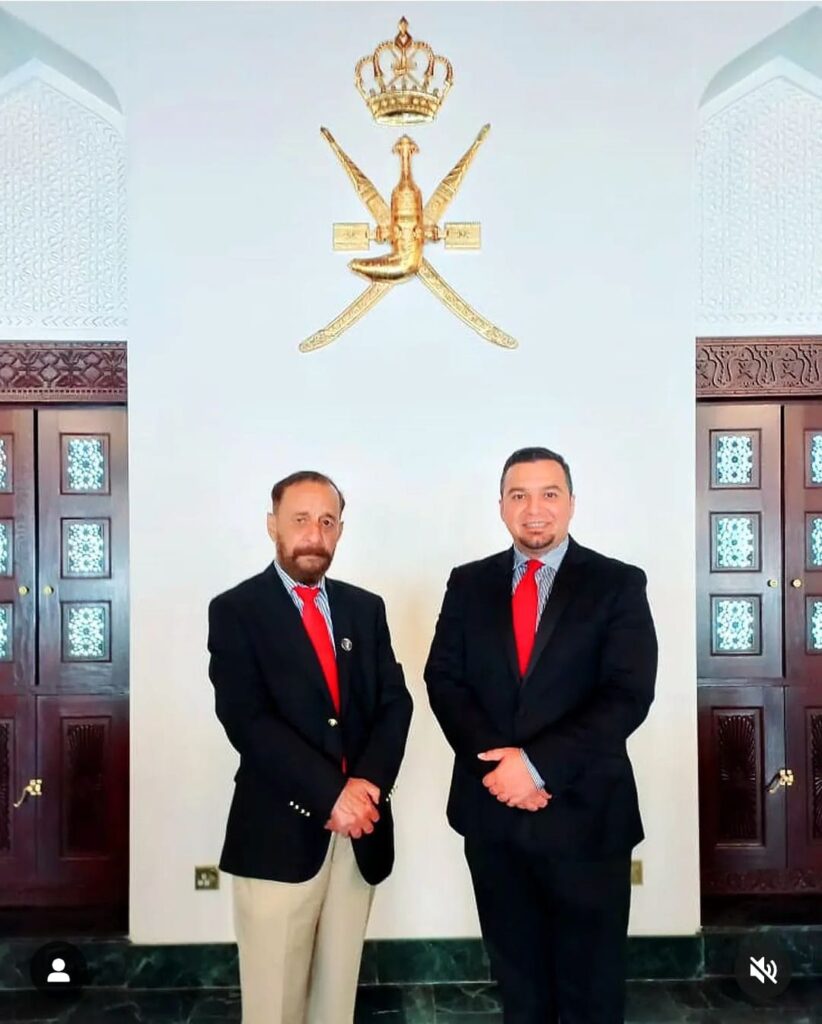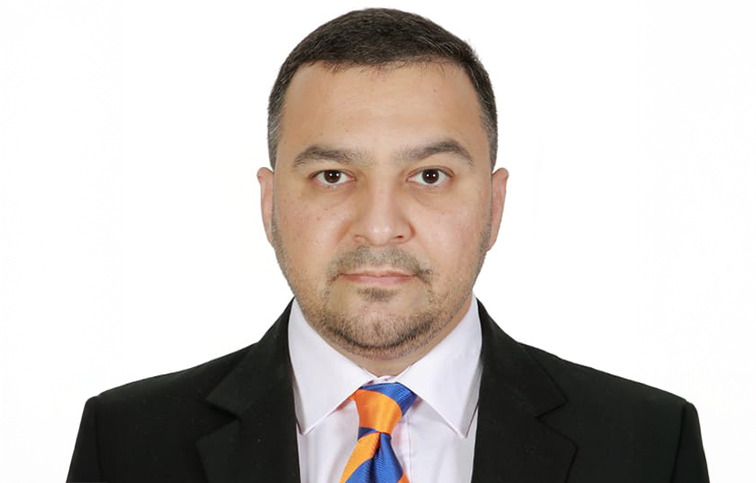

Muscat: A Pakistani expat based in Oman, Syed Shaandar has become a symbol of compassion and quiet resilience, driven by a deep-rooted legacy of service and a belief in the power of kindness to heal. With recent recognitions from the Overseas Pakistanis Foundation and the Red Cross, his story is inspiring a movement of empathy in the Gulf region — one wheelchair, one ticket, and one life at a time.
“I was just a child, playing the role of a child I had never met,” recalls Syed Shaandar Bukhari, speaking of the moment that first introduced him to social work. “A bus carrying pilgrims met with an accident. A lady who lost her child was suffering from memory loss, and until arrangements were made to send her back to Pakistan, I was asked to comfort her by playing the role of her lost son.”
That deeply human experience — one of tragedy, healing, and compassion — became the foundation of a lifelong mission. Inspired by his late father, Honourable Syed Sakhawat Ali Shah Bukhari, a revered figure among the Pakistani diaspora in Oman, Shaandar has taken the torch forward — quietly transforming lives through acts of selfless service.
Read More
- Oman Police clarify viral motorcycle video, say legal action was taken
- Firefighters battle blaze at commercial centre warehouse in Oman’s Shinas Wilayat
- Oman secures observer status in International Council for Harmonisation
- Oman confirms Nov. 25–26 National Day holiday
- Oman launches air bridge to deliver humanitarian aid to Nepal
The wheelchair lending programme that Shaandar operates today started with a single encounter. “I met a lady pushing her injured child in an office chair. She couldn’t afford a wheelchair,” he says. She explained that wheelchairs were expensive, and after a month or two — once the child healed — it would no longer be needed.
“I came across a lot of cases of bedridden patients who have mobility issues get bed sores and had similar concerns that the wheelchair is important. When I checked, I found one shop lending wheelchairs, but with a security deposit of RO 50. I thought, if someone can afford a RO 50 deposit, they might as well buy one. So, I went online and bought a second-hand wheelchair through social media,” he recalls.
With an unused pair of crutches and a walker at home, he posted about his new initiative on Facebook and WhatsApp. The response was overwhelming. People began donating their used wheelchairs, and others even bought new ones to contribute.
“At present, I have about 150 wheelchairs, out of which only one is with me, and the rest are out with people who need them,” he states.
This initiative is a charity dedicated to the memory of his father — a man who taught him that the true value of service is in its sincerity, not its scale.
Equally impactful is Shaandar’s work in repatriating over 150 prisoners since December 2023 — an effort that reflects both strategic collaboration and moral clarity. “I was inspired by the Omani Lawyers Association’s ‘Fak Kurba’ initiative,” he says.
While Fak Kurba does it on a bigger scale – paying debts of national inmates and releasing them – his initiative is focused on arranging air tickets for foreign prisoners who have completed their sentences and are simply waiting to return home.
Explaining how he takes help from the local embassies and authorities, he states: “I am connected with the local authorities and our embassy to some extent, and through them, I get the leads of inmates who have completed their sentences and are now waiting for air tickets to go back to their homeland and unite with their loved ones. But as they don’t have any social contacts, either their embassy or local good samaritans come forward and support them with their air tickets – kindly note these are not criminals but are victims of circumstances.”
In some cases, he has even facilitated medical operations or provided basic necessities like reading glasses, with support routed through official channels.
The process, he explains, is personal and community-driven. “I receive the request, consult travel agents, and secure the cheapest fare. Nadeem, a travel agent, helps me with minimum margins, sometimes at a profit of just RO 1 or none at all. I circulate the appeal within the community, and donors or my own family step in to fund the ticket,” he points out.
But the financial strain is constant. “It’s a herculean task; believe me, arranging funds is not easy, and since we are not allowed to collect funds as per the law of the land, I direct them or channel them to the travel house,” he states, adding that the timeframe for such funds could range from immediate arrangements to weeks and even months.
“I am in debt as we address this issue, but I am hopeful it will be cleared soon,” he states.
Despite the daily grind, it’s the human stories that stay with him. As in the following case narrated by him: “Two Asian expatriates memorised my number. One sent a picture of his livestock — goats and hens — as a gift after returning home. Another’s family sent a voice note thanking me. A few days later, they told me he passed away peacefully. I never reveal my identity to the inmates. I just tell them ‘I’m Shaandar’s friend’.”
Shaandar was recently honoured with a letter of appreciation from the Chairman of the Overseas Pakistanis Foundation, a body under the Government of Pakistan, about which he says, “This recognition is not for me alone, it’s an appreciation for all those unsung heroes who are willing to support humanitarian cases and also for those who are supporting me in this noble cause; such initiatives inspire and give confidence to many.”
He also holds the Red Cross Life Saving Award — one of the oldest humanitarian honours globally.
“I am told that I am the only person in the entire region who has it; it’s a moment of pride for me. On a lighter note, as Spiderman says, ‘with great power comes great responsibility’…it’s a huge responsibility and a huge inspiration and motivation,” he states.
“Living overseas, we are all ambassadors of our countries,” he says firmly when asked about his works and how it plays a role in the Pakistani community. “Such initiatives, on one hand, bring you close to the almighty and its creation, and also, it strengthens the soft fabric of our societies, which are interconnected.”
He emphasises that a single good deed can uplift the image of an entire expatriate community, while a single wrongdoing can do the opposite.
“In my work, I don’t see race as per the teachings of our Holy Prophet (PBUH), who was not just Rehmatul Lil Muslimeem, but was called Rehmatul Lil Aalimeen – a mercy of all the worlds,” explains Shaandar
The support Shaandar receives is purely community-driven. “People buy tickets when I call. They donate wheelchairs. This trust was built by my father over the years,” he asserts.
However, he indicates that more can be done and appeals to individuals and organisations to help the ‘Fak Kurba’ initiative and also him in arranging air tickets for the needy prisoners.
His next goal?
“To reactivate our community’s social club, which — after the embassy — is our only channel to support welfare projects,” states Shaandar.
And his message to the world is simple yet powerful: “Service to others is the rent we pay for the life hereafter. I invite volunteers to help me — not just to assist, but to learn. It’s like teaching them to fish instead of providing them with a fish. It builds compassion in them.”
As he pays tribute to Oman — “this beacon of peace” — and honours the legacies of His Majesty Sultan Haitham bin Tarik and the late Sultan Qaboos, he concludes with gratitude: “This country has given us shelter, peace, and identity. It’s our duty as a good Samaritan to return the goodness.”