
Muscat – It is thus the first nuclear medicine centre in the Sultanate of Oman to undergo this type of international assessment.
The field assessment resulted in an outstanding score of 92.5 percent, exceeding the global average of 73.9 percent and outperforming the usual range of 56.6 percent to 87.9 percent.
Dr. Khalisa bint Zahran Al Nabhani, Senior Consultant in Nuclear Medicine and Head of the Nuclear Medicine Department and Molecular Imaging Center at the Royal Hospital, pointed out that the department had taken a series of strategic steps that contributed to achieving this outstanding result. These included implementing the quality standards recommended by the International Atomic Energy Agency and continuously updating clinical and technical protocols.
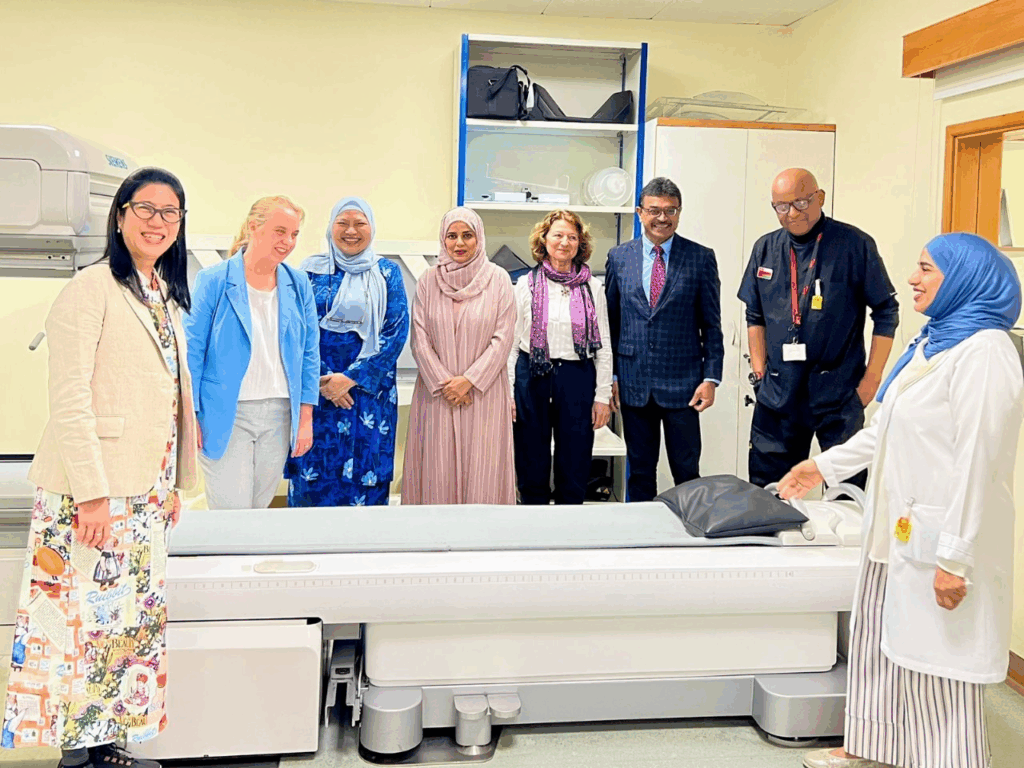
Dr. Nabhani stated that the department had submitted a set of important recommendations to the IAEA’s assessment team, including strengthening radiation protection programmes, improving the personal radiation dose monitoring system, conducting periodic medical examinations for workers, enhancing the quality of inspection and documentation procedures, and improving ventilation systems in laboratories.
She explained that the department is currently developing a comprehensive action plan to implement these recommendations, which includes updating technical and procedural systems, creating specialised training programme, and providing necessary equipment and devices. This rapid and effective response to the recommendations reflects the department’s deep commitment to a culture of continuous improvement and consolidating comprehensive quality practices.
Regarding the contribution of this evaluation to improving the quality of services provided to patients in the Nuclear Medicine Department, Dr. Nabhani emphasised that the external evaluation will directly contribute to raising the quality of services provided. It will enhance radiation safety standards, ensure accuracy in diagnosis and treatment, and improve the efficiency of medical and technical documentation. The evaluation will also support the implementation of a continuous improvement methodology, enabling the periodic remediation of shortcomings and enhancing the patient experience through safer and more effective services.
Regarding future plans to develop the Nuclear Medicine Department at the Royal Hospital and the new projects it is working on, she said that the department is focusing on implementing development plans aimed at expanding the provision of specialized services, including positron emission tomography (PET) for heart and nervous system diseases, and targeted therapy using radioisotopes. It is also working to enhance regional and international cooperation by launching partnership programs in coordination with leading institutions in the field of nuclear medicine at the regional and international levels.
She noted that plans include improving technical infrastructure, such as updating environmental control systems in radiopharmacy laboratories, and increasing capacity to meet growing demand. This is accompanied by a focus on developing training programs and building national capacities to prepare qualified personnel and enhance the quality of professional performance in this vital specialty.
She noted that the department will work to transfer knowledge, train national cadres, and contribute to formulating national policies related to quality and safety in the field of nuclear medicine. It will also foster a culture of scientific research and innovation and build effective partnerships at the national and regional levels, contributing to achieving sustainable progress in this vital field.
Read More
- Oman records highest temperature of 46.2°C
- Heavy rain and hail lash Oman’s Al Buraimi, triggering wadi flows
- Honourable Lady visits Omani Women’s Association in Salalah
- Oman Foreign Minister holds talks with Tunisia, Brunei on bilateral ties and global developments
- Oman, Kazakhstan review bilateral ties and regional developments





