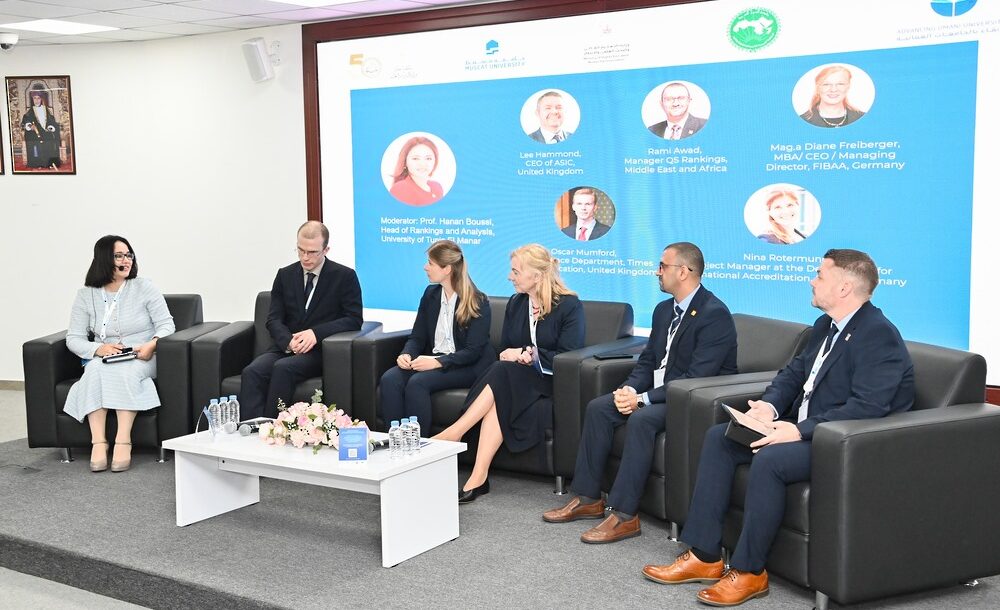

Muscat: Under the patronage of Dr. Rahma bint Ibrahim Al Mahrouqi, Minister of Higher Education, Scientific Research and Innovation, the two-day symposium is organized by the Ministry in collaboration with the Arab League Educational, Cultural and Scientific Organization (ALECSO) and the Omani National Commission for Education, Culture and Science.
The event aims to improve Arab universities’ positioning in international rankings by promoting best practices in academic quality, research impact, and institutional performance. It also introduces frameworks for Arab and international rankings and accreditation standards.
Speaking at the opening, Yahya bin Salam Al Mandhari, Director General of Scholarships at the Ministry, emphasized the importance of private universities in Oman strengthening their global standing. He highlighted how better rankings could help institutions attract talent, secure research funding, and align with Oman Vision 2040’s strategic priorities.
Read More
- Oman police detain 10 over street racing in Nizwa and Izki
- Oman’s Musandam seeks tourism relief, studies new port in Khasab
- Crude oil spill reported after tanker overturns in Oman’s Al Dhahirah
- Invest Oman secures RO 3.09 billion in projects as investment drive gathers pace
- Institutions with high energy use must appoint efficiency officers, Oman ministry says
Al Mandhari noted that Oman aims to place four universities among the top 500 in the QS World University Rankings by 2040. Currently, Sultan Qaboos University ranks 362 globally, while Sohar University is listed in the 1001–1200 group. At the Arab regional level, seven Omani universities are now featured in the QS rankings.
Professor Dr. Mohammed Sand Abu Darwish from ALECSO underlined the importance of Arab universities evolving into hubs of innovation and global academic collaboration. He stressed that the symposium reflects ALECSO’s commitment to implementing the Arab Strategy for Scientific, Technological, and Innovation Research.
Dr. Mahmoud bin Abdullah Al-Abri, Secretary of the Omani National Commission for Education, Culture and Science, stated that rankings today are more than league tables—they shape policy, improve outcomes, and drive international partnerships.
The scientific program features expert-led sessions on QS ranking criteria, accreditation mechanisms, research quality, publishing standards, governance, and innovation. The first day included dialogue and discussion panels on academic reputation and international exchange.





