
Muscat – The event, organised by the Ministry of Heritage and Tourism in cooperation with the Ministry of Education, was held under the patronage of His Excellency Eng. Ibrahim bin Saeed Al Kharousi, Undersecretary for Heritage. It was attended Dr. Mahmoud bin Abdullah Al Abri, Secretary of the Omani National Commission for Education, Culture and Science.
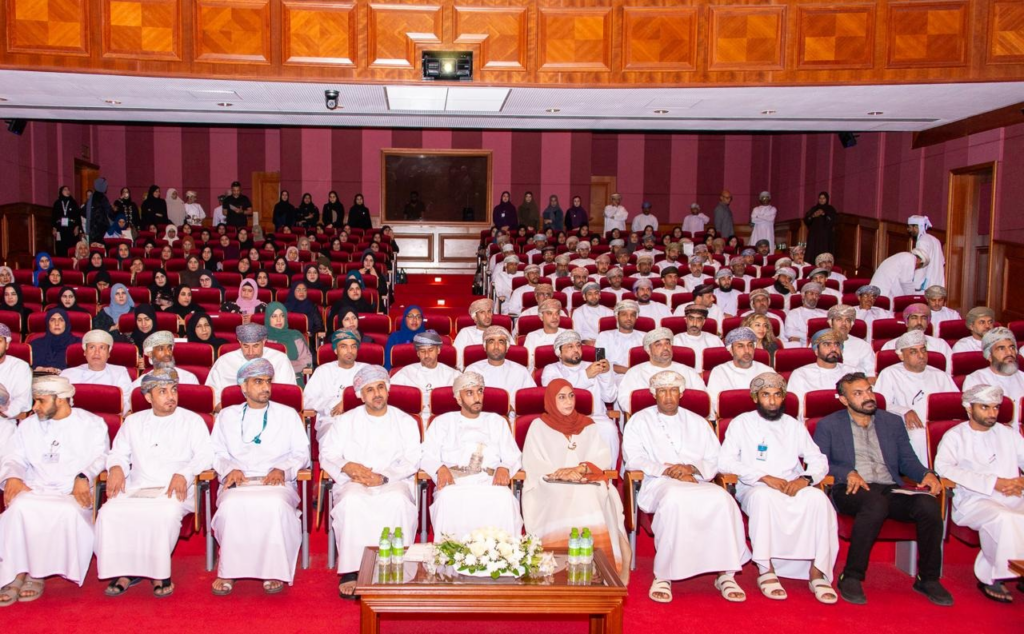
The celebration aimed to raise awareness about the value of cultural and historical heritage, the importance of its preservation, and the efforts of various national institutions in ensuring its continuity. It also served as an opportunity to reaffirm the commitment to safeguarding cultural legacy and promoting it as a foundation for sustainable development and cultural tourism.
Read More
- Indian expat airlifted to hospital after road accident in Oman
- Truck carrying steel coils triggered deadly 15-vehicle Samail crash: Royal Oman Police
- Global experts to gather in Oman to combat water and climate challenges
- Oman accident: Truck collision causes injuries, traffic congestion on Sultan Thuwaini bin Said Road
- Oman records highest temperature of 46.2°C
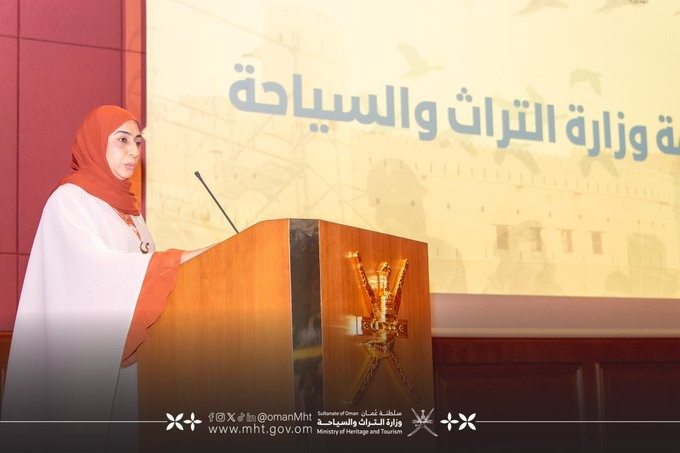
In her keynote speech, Engineer Yusra bint Khalaf Al Subhi, Director General of Antiquities at the Ministry, emphasised that archaeological sites in Oman are not static ruins, but eloquent testaments to the creativity and resilience of the Omani people. She noted that Oman’s historical significance is reflected in its ancient trade networks that once connected ports such as Dibba, Sohar, Qalhat, and Samharam to major cities like Cochin in India, Canton in China, and Mombasa on the African coast.
She also referred to the copper trade routes that extended from Dahwa, Al Safafir, Bat, Qumayrah, and Al Maysar to ancient civilizations including the Indus Valley, Dilmun, Meluha, and the Mediterranean region, long before modern navigation tools existed.
She added that Oman’s celebration of World Heritage Day is a reminder of the need to preserve both tangible and intangible heritage. This includes not only architectural landmarks and inscriptions but also oral traditions, cultural rituals, and historical songs and practices that have been passed down through generations. These elements, she noted, are key to maintaining national identity and fostering understanding between cultures.
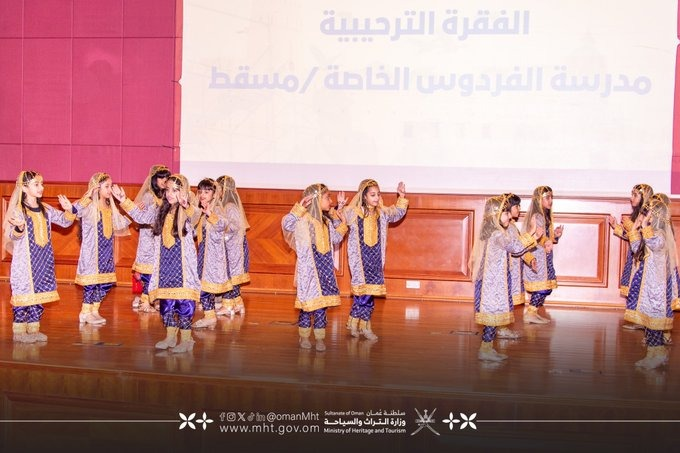
The celebration featured an operetta performed by students from the University of Nizwa, along with traditional Omani arts, theatrical presentations by students from Muscat and Al Dakhiliyah governorates, and an art exhibition.
A panel discussion brought together several experts and stakeholders who explored a variety of topics, including the criteria used by UNESCO for inscribing sites on the World Heritage List, the architectural significance of ancient cities, and how to document archaeological sites using modern digital tools. The panel also addressed how Oman can invest in its heritage sites from a tourism perspective, as well as the challenges that arise after sites are listed as World Heritage.
Oman has successfully inscribed several significant locations on the UNESCO World Heritage List. These include Bahla Fort (1987), the archaeological sites of Bat, Al Khutm, and Al Ain (1988), the Aflaj irrigation systems (2006), the Land of Frankincense (2000), and the ancient city of Qalhat (2018).
World Heritage Day is observed every year on April 18 and was established by the International Council on Monuments and Sites (ICOMOS). It is rooted in the 1972 UNESCO Convention on the Protection of the World Cultural and Natural Heritage.





