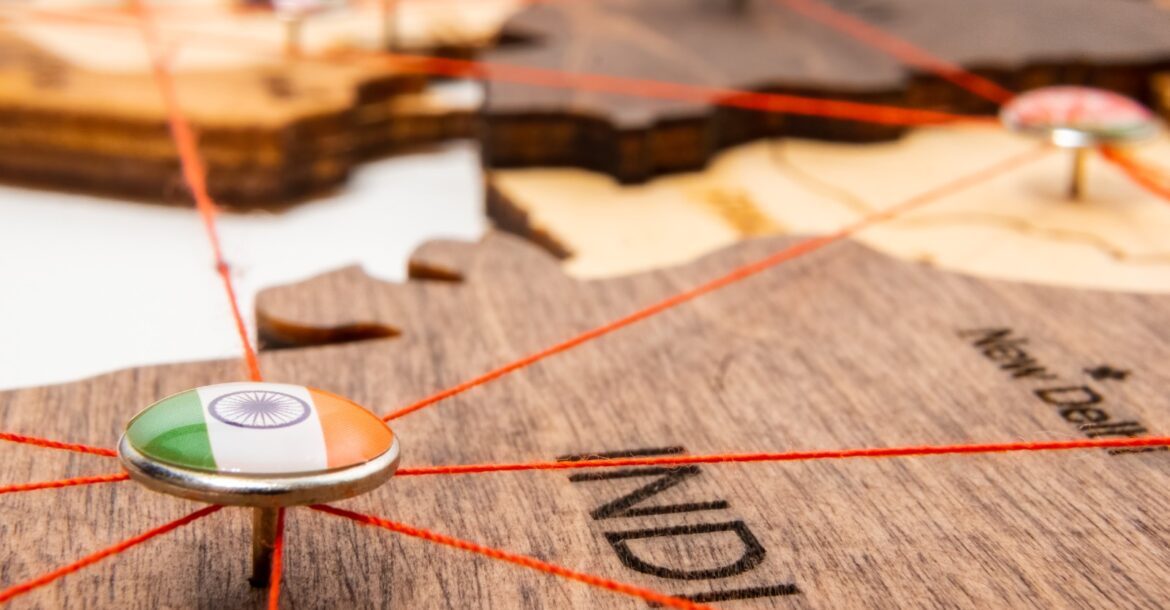

The goal of achieving international respect resonates today. Obtaining a seat at the global high table for India is a major priority for the Prime Minister and the Ministry of External Affairs as well.
What is that thing or those things that create global influence or antarrashtriya samman?
Can we create a three-pronged approach – combining military power, economic power and soft power – that is uniquely Indian and will earn us antarrashtriya samman or international respect?
Read More
- Three expats arrested in Muscat’s Seeb with over 166,000 psychotropic tablets
- Viksit Bharat 2047: India’s roadmap to becoming a developed nation
- India’s space sector emerges as a new engine for global partnerships
- India strengthens its role as a trusted global first responder
- India’s citizen-centric diplomacy revolutionises welfare and support for overseas diaspora
From his actions, it’s clear that Prime Minister Modi has understood the importance of all three prongs and he’s working feverishly on all fronts. Viksit Bharat founded or Atmanirbharta is central to the prime minister’s vision of a successful and prosperous India on the global stage.
And let’s take military power to begin with. The development of the military industrial complex in America was the pivotal factor in building the might of its armed forces. Similarly, there is a huge opportunity for an Indian version of a military industrial partnership to emerge.
We welcome the lists of defense hardware that have been put out by the defense ministry and which ensure that certain products can only be sourced from Indian supplies. A step that speaks of confidence in Indian industry. And that’s a promise we will fulfill.
I hope to see a flood of innovation in the next few years, particularly from the IT sector. Innovative Indian companies are going to have a vital role to play. And India has one historical advantage that attracts companies like mine.
It makes me very proud that in spite of having the fourth largest military budget in the world, independent India has never fought a major war of aggression. Even in international conflicts, we’ve always been part of the UN peacekeeping forces. And that tradition of using military might only for defense and deterrence, that’s what earns us the moral high ground. That’s the moral high ground combined with military strength, which earns us respect and which will continue to do so.
What about the role of business in soft power? India hasn’t done badly when it comes to culture. Our films are enjoyed across the world in countries as far apart as Egypt and Japan. American college students formed Bhangra clubs. Indian music has influenced world music from Jazz to the Beatles. And going out for Indian is now a weekly mealtime call for many around the world. RRR, as we all know, was able to get the world dancing to its tune.
But I think we need to imagine things on a much larger scale. The superheroes of our epic and folktales are more than a match for the Marvel universe. But even superheroes need help. We need larger scale corporations in media which can digest the upfront financial risk required to turn this heritage into new IP and content.
On the education front, under Prime Minister Modi, the proliferation of new IITs, IIMs and AIIMS has been mind boggling. But if innovation is to flourish, we need the private sector to chip in and double or even triple that number. Autonomous institutions endowed, nurtured, and supported by the wealth of Indian corporations could make India a driving force of soft power.
And now to the third prong, let’s talk about economic power and influence. How does business emulate the prowess and the scale and global dominance of American companies? And as I said, it’s ironic that some of the most notable American transnationals and new age businesses are headed by CEOs of Indian origin, Satya Nadella, Revathi Advaithi, Sundar Pichai and the list goes on and on. But they are enabling the continuing dominance of US businesses, not the creation of Indian ones. And in order to gain global influence, very large Indian corporations or very innovative Indian corporations must find a seat at the high table.
I believe there are two important preconditions for Indian industry to get a seat at the global high table. And that has nothing to do with the government or anyone else they’re about to do, they’re about our mindset. There are two things we need to make it big, lofty aspirations and strong self-belief. And I claim that we were robbed by the shackles of our colonial past of both those attributes.
To my mind, the real cost of colonialism is what I called post-colonial subservience disorder, or to coin an acronym PCSD. The most prestigious legacy for them and but the most pernicious for us was the colonization of our minds, impeding us from believing that India could be the best. Please do indulge me as I go into some flashbacks and share some personal memories of PCSD.
I went to a high school in South India from where I gave the Indian school certificate examination in 1970. Until 1970 all the examination papers save for Indian languages were set in England and shipped to us from there. They were placed in a very large iron safe and it was locked. After the allotted time was up, our answer papers were collected. They were placed back in that safe for onward shipment to England for correction. And it’s almost inconceivable to imagine that this was happening even 23 years after independence.
The second assault of colonialism on our psyche was on our aspirations. We were fed the story that we were second grade. And as a result, even today, much of Indian business tends to stick to the safety of the shore. Prime Minister Modi fully understands this. When I met him almost two years ago, the PM was extraordinarily frank in his response. He said Indian industry is not ambitious enough. We aren’t daring to think at a global scale.
His words were undoubtedly accurate.
The private sector is lagging when it comes to risk and investment. PCSD, post-colonial subservience disorder shackles us with invisible handcuffs that we don’t even realize are there. It shakes our self-belief. It waters down our aspirations and it business, it makes us risk averse, sticking to the tried and true rather than blazing new paths. It makes us fear failure.
It makes us settle for jugaad when we are capable of Jhakaas. Jhakaas is a Maharashtrian colloquial word, which means wow. For too long have we carried this imputed sense of inferiority? It’s time to change.
I have no doubt that we have the capability to harness our innovative capabilities to build truly transnational corporations and take our place at that global high table. All we have to lose is our shackles.
I told the story of my school, but I didn’t share the ending of that story. I saved the best for last. The story of Indian examination answer papers being sent to England for correction. And I first told that story to an audience of Indian entrepreneurs in Silicon Valley over a decade ago. And very coincidentally in the audience was a schoolmate of mine, someone from the same batch who had given the same exam at the same time. Six months later, he mailed me jubilantly, mailed me a news article from a UK newspaper. And in that article it was announced that the AQA, which is an autonomous body that sets and assesses over 50% of school leaving answer papers in England, was now outsourcing the correction of those answer papers to India.
The tables indeed had turned.
Ladies and gentlemen, it appears that today all roads lead to India!
Excerpts from Address by Mr. Anand Mahindra, Chairman, Mahindra Group at the fourth Atal Bihari Vajpayee Memorial Lecture





