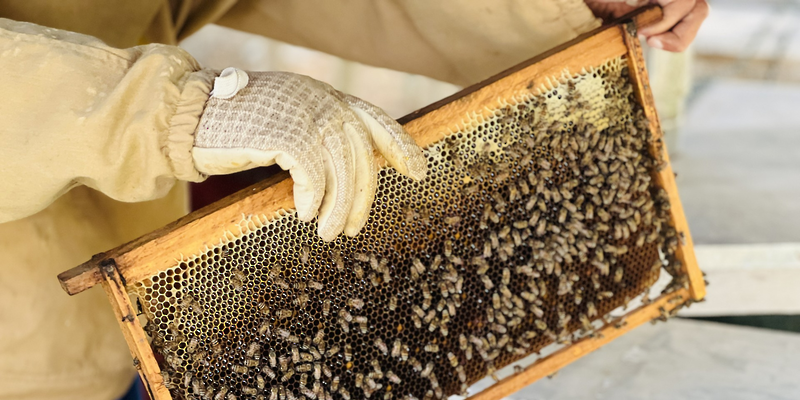
Muscat – According to statistics from the General Directorate of Agricultural and Water Resources, the number of beekeepers in the Wilayat has reached 45, managing a total of 2,985 beehives.
Eng. Mohammed bin Salem bin Obaid Al Kaabi, Director of the Department of Agriculture and Water Resources in the Wilayat of Mahdha, highlighted that beekeeping is one of the ancient Omani professions and serves as a main source of income for many families in Al Buraimi Governorate. This industry not only meets the local market’s demand for Omani honey but also supports the national economy by exporting surplus honey outside the Sultanate of Oman.
He added that the Al Buraimi Governorate experienced significant rainfall recently, which impacted the vegetation cover and contributed to a delay in honey harvesting this year compared to the usual timeline.
Read More
- Heavy rain and hail lash Oman’s Al Buraimi, triggering wadi flows
- Honourable Lady visits Omani Women’s Association in Salalah
- Oman Foreign Minister holds talks with Tunisia, Brunei on bilateral ties and global developments
- Oman, Kazakhstan review bilateral ties and regional developments
- Oman’s Health Ministry urges public to act on suspected unsafe food
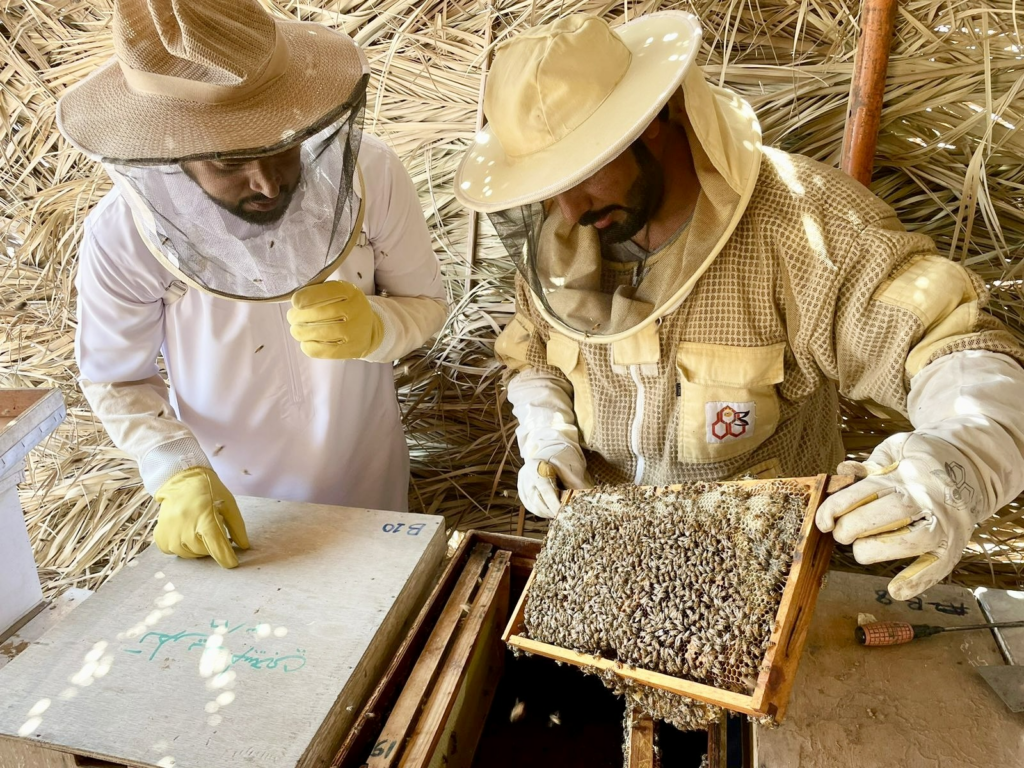
Eng. Al Kaabi explained that there are two types of honey bees in the Wilayat of Mahdha. The first type, known locally as ‘Abu Tuwaiq’, inhabits mountain caves. This bee produces high-quality honey, which commands a high price due to the low production per hive and the limited number of such hives. The second type is the ‘domesticated’ bee, which is small, yellow, and raised using modern methods inside wooden hives. This bee is less aggressive, highly productive, and resistant to most pests and diseases; efficient in collecting and storing nectar and pollen, and can withstand high temperatures.
He pointed out that the Department of Agriculture and Water Resources in the wilayat provides extensive support to beekeepers. This includes technical assistance, necessary tools and equipment, and numerous awareness programs, seminars, and lectures on the correct methods of raising and multiplying Omani bees. The department also publishes guidebooks outlining healthy beekeeping practices.





