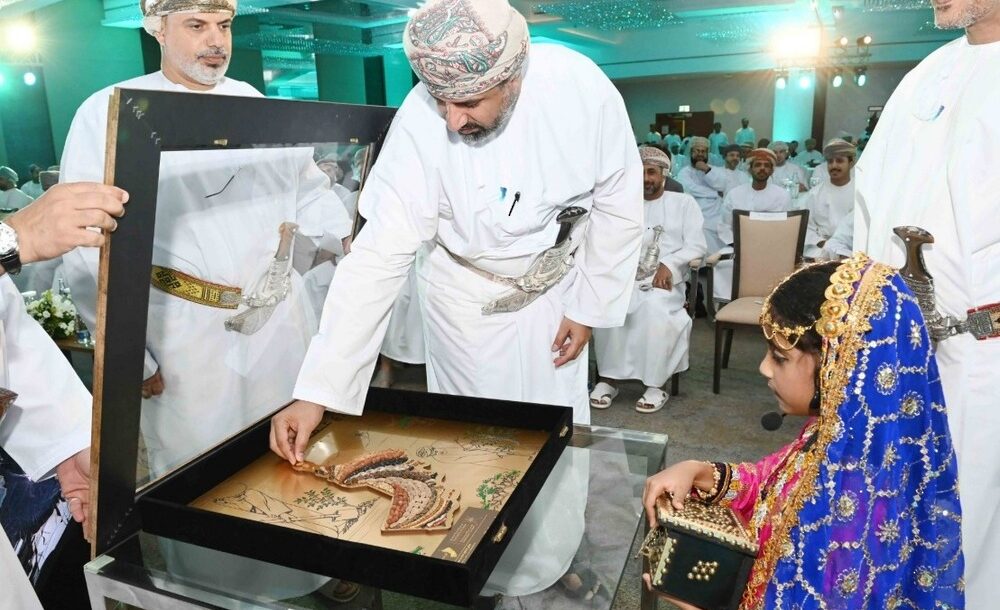

Muscat: The Environment Authority has launched the National Laboratory for the ‘Plant Oman’ initiative, bringing together government institutions, the private sector and local communities to strengthen environmental protection and promote the sustainable use of natural resources across the Sultanate.
The launch ceremony, held at Intercity Hotel, took place under the patronage of His Excellency Dr Mahad bin Said bin Ali Baowain, Minister of Labour, in the presence of His Excellency Dr Abdullah bin Ali Al Amri, Chairman of the Environment Authority and Chairman of the initiative’s Steering Committee, along with senior officials, governors, representatives of public and private institutions, academics and environmental specialists.
The initiative aims to develop sustainable and productive vegetation cover by 2040 while preserving water resources, improving food security, absorbing carbon emissions, restoring biodiversity and combating desertification.
Read More
- Oman unveils national database for persons with disabilities
- Faisal Al Rawas pledges to strengthen private sector’s role after re-election as Oman Chamber chairman
- Hamoud Al Saadi re-elected second deputy chair of Oman Chamber
- Areej Mohsin Darwish elected first deputy chair of Oman Chamber
- Faisal Al Rawas re-elected Oman Chamber chairman
Dr Mohammed bin Rashid Al Maamari, Director of the Department of Agriculture and Nurseries at the Environment Authority and Project Manager, said the initiative seeks to unify existing and future afforestation and environmental restoration efforts under a single national framework.
He explained that the initiative focuses on three strategic areas: environment and biodiversity, food security, and climate action.
These priorities will be implemented through eight integrated national programmes covering sustainable afforestation, productive agriculture, coastal ecosystems and mangrove forests, sustainable cities and governorates, natural resource management, green financing, governance and legislation, and public awareness.
Under the initiative, agricultural and afforestation projects will be introduced across various governorates, with particular emphasis on planting native trees, restoring degraded habitats, expanding fruit tree cultivation and protecting coastal ecosystems.
The programme will also promote the use of treated water, modern irrigation techniques and scientific research to ensure the long-term sustainability of plantations and natural resources.
A key feature of the initiative is its focus on measurable results rather than simply increasing the number of trees planted. Projects will be assessed through indicators covering carbon absorption, water efficiency, food production, biodiversity and economic benefits.
The survival of planted trees will also be monitored 36 months after planting to evaluate their long-term environmental impact.
The initiative will also introduce a national environmental intelligence platform using artificial intelligence, satellite imagery, geographic information systems and remote sensing technologies. The platform will help monitor vegetation cover, soil, water resources, biodiversity and carbon absorption while supporting planning and decision-making.
To ensure effective implementation, the initiative will operate through a governance framework comprising a steering committee, a central executive team, specialised programme teams and coordination mechanisms across governorates.
The Environment Authority said the project is expected to attract green investments, create new economic opportunities and encourage greater participation from businesses, academic institutions and local communities.
Aligned with Oman Vision 2040 and the United Nations Sustainable Development Goals, the initiative aims to strengthen the country’s environmental resilience while supporting sustainable agricultural development and climate action.
Launched under the slogan “Plant Oman… A growing impact, resources preserved, and a more sustainable future,” the initiative seeks to make environmental conservation a shared national responsibility and ensure lasting benefits for future generations.