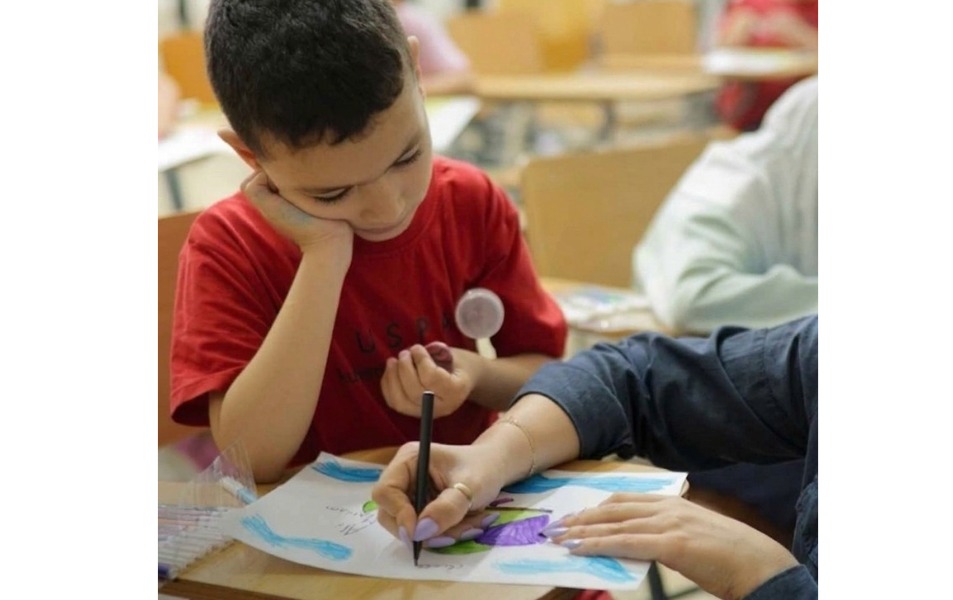

MUSCAT : The United Nations Educational, Scientific and Cultural Organization (UNESCO) has reported significant improvements in early childhood education across Arab countries, driven by expanding government services, stronger policies and increased investment in public kindergartens.
The findings were announced on World Children’s Day during the launch of the first regional edition of the Global Education Monitoring Report 2026 at UNESCO headquarters in Paris.
Titled “Opportunities for Access to Pre-Primary Education in Arab Countries,” the report was prepared in partnership with the Arab Network for Early Childhood Development and launched alongside a global report examining the financing of early education.
Read More
- Powerful 6.7-magnitude earthquake strikes central Peru
- UAE celebrates Oman’s National Day at Khatm Al Shikla border crossing
- Kuwait and Bahrain report aerial attacks as air defences intercept hostile drones
- ‘No threat of death will stop me’: Sheikh Hasina vows Bangladesh return in December
- Xi, Trump and Putin set for historic first trilateral summit
According to data from the UNESCO Institute for Statistics, 13 out of 20 Arab countries now offer at least one year of free pre-primary education through legislation or national policies.
The report also highlighted a major shift towards government-run early education facilities. Across 14 countries with available historical data, the private sector’s share of pre-primary enrolment dropped from 75 percent in the early 2000s to 34 percent in the early 2020s.
UNESCO attributed this decline to the rapid expansion of public kindergartens and increased government capacity, with the number of public institutions doubling in several countries.
Despite the progress, the organisation warned that the region continues to lag behind the global average, with more than half of five-year-olds still not enrolled in pre-primary education.
The report identified rapid urbanisation, smaller family sizes and declining traditional family support systems as factors increasing demand for early childhood education services.
It also pointed to funding shortages and inequalities in access, particularly between urban and rural communities and between wealthy and low-income families.
On financing, UNESCO’s accompanying global report revealed that governments in low- and middle-income countries allocate just 3 to 4 percent of their education budgets to pre-primary education.
However, investing in early childhood care could deliver substantial economic benefits, with every dollar spent on closing existing care gaps estimated to generate approximately $3.76 in GDP by 2035.
Drawing on detailed studies of eight Arab countries, UNESCO called for sustained public investment, stable funding for government kindergartens and greater support for disadvantaged communities and remote areas.
The organisation also emphasised the importance of closer cooperation between education, healthcare and social protection services, alongside improved training for early childhood educators.
For all the latest news from Oman and GCC, follow us on Twitter, Instagram and LinkedIn, like us on Facebook and subscribe to our YouTube page, which is updated daily.





