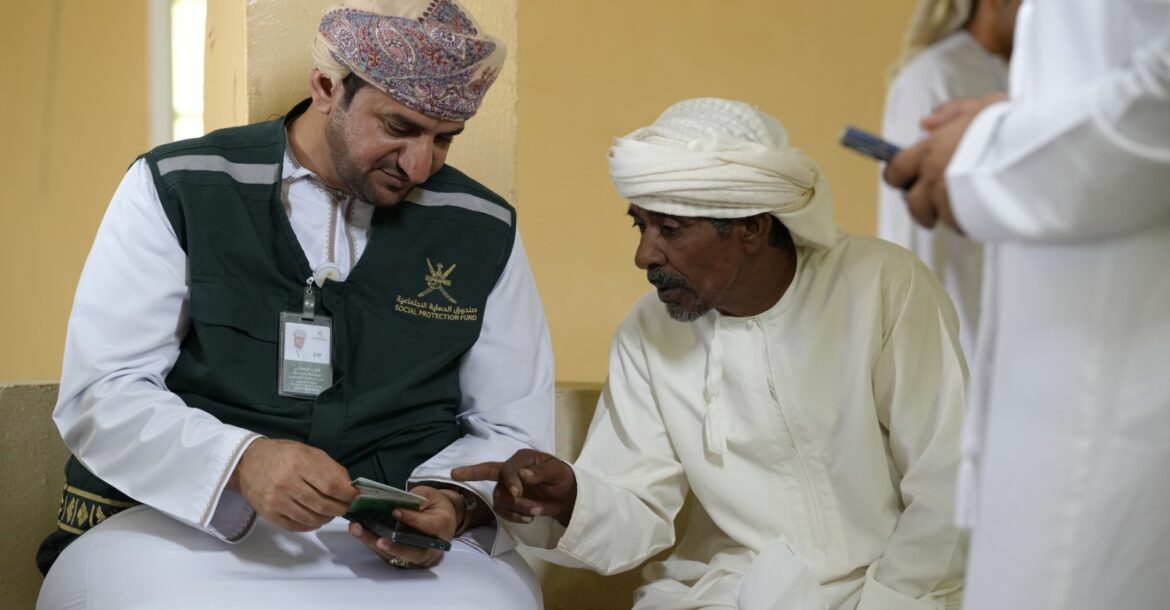

MUSCAT : The Fund continues to expand its coverage and develop its services, with more than 1.7 million active insured individuals and over 1.25 million children receiving social benefits, alongside support for elderly people, persons with disabilities and families eligible for assistance.
The expansion reflects the ongoing development of Oman’s social protection system, which combines social benefits and contribution-based insurance programmes under a unified legislative and institutional framework.
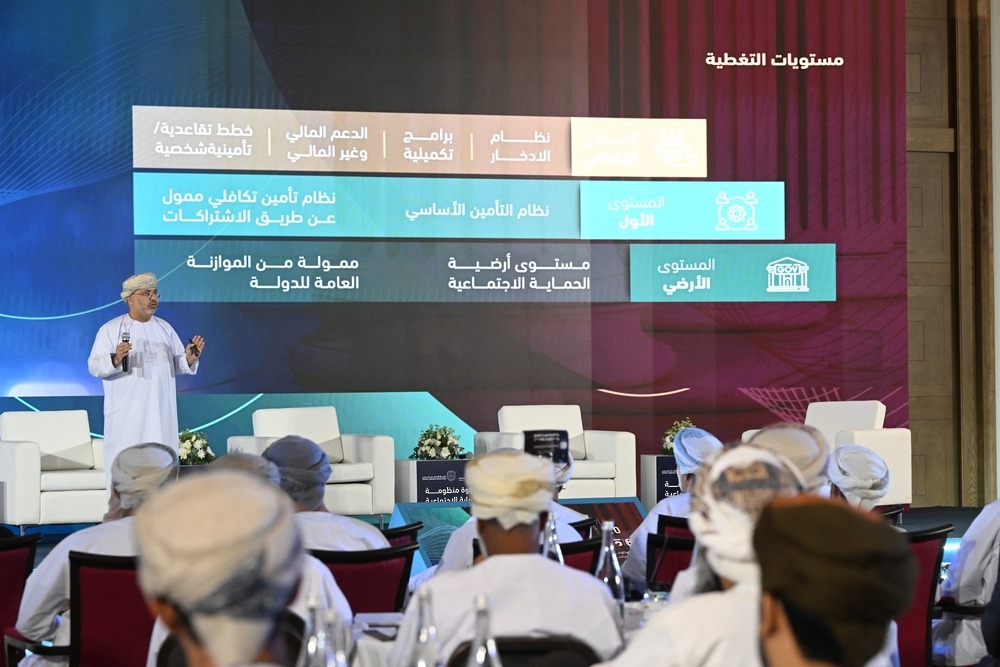
The reforms embody the importance His Majesty Sultan Haitham bin Tarik places on human well-being and family stability, while supporting the national priorities of Oman Vision 2040.
During 2026, the Fund continued expanding insurance coverage, implementing sick leave and extraordinary leave insurance, improving its performance against international pension indicators and taking steps to strengthen programme evaluation and the beneficiary experience.
By the end of October 2026, the number of active Childhood Benefit recipients reached approximately 1,258,605. The Elderly Benefit covered 171,475 people, while 55,078 people received the Persons with Disabilities Benefit.
The Fund also recorded 10,031 beneficiaries of the Orphans Benefit and 5,605 beneficiaries of the Widows Benefit.
On the insurance side, the number of active insured individuals reached 1,702,934 by the end of October 2026, comprising 638,881 Omanis and 1,064,053 non-Omanis. The number of active employers exceeded 141,000.
Oman’s social insurance programmes cover old age, disability and death, work injuries and occupational diseases, job security, maternity, sick leave and extraordinary leave, in accordance with the provisions governing each insurance branch.
The sick leave and extraordinary leave insurance branch came into effect on July 19, 2026, providing income protection during eligible temporary absences from work.
The introduction of this branch represents a further expansion of social insurance coverage, extending protection to risks workers may encounter during their professional lives.
As the number of beneficiaries and insured individuals grows, service quality, procedural efficiency and accessibility have become increasingly important priorities for the Fund.
According to its latest indicators for 2026, the Fund’s services extend to approximately 3.5 million citizens and residents.
During the year, it recorded 333,727 clients through its various service channels, including 228,274 clients at social protection offices across the governorates. Its call centre received 192,258 calls, while 4,672 field services and 3,543 proactive services were delivered, alongside community outreach activities.
The Fund operates through 11 social protection departments across the governorates and three service delivery points. Its other channels include a call centre, an online portal, the Himaya application, digital services and field-based support.
This network is intended to accommodate the different needs of beneficiaries, particularly elderly people, persons with disabilities and individuals who may encounter difficulties accessing services in person.
Customer feedback has also played a role in improving service delivery. Through its annual Customer Forum in the governorates, the Fund has sought to translate beneficiaries’ suggestions into practical improvements.
Of the 19 suggestions identified during the 2024 and 2025 editions, 15 were implemented, representing an implementation rate of 78.9 percent.
The improvements included direct communication channels, automated response systems, enhancements to the call centre and the development of information and electronic services.
Participation in the forum increased by 94 percent, reflecting growing engagement and opportunities for beneficiaries to contribute directly to service improvements.
The Fund continues to use this feedback to review the beneficiary journey, simplify procedures and improve the clarity and accessibility of its services.
In July 2026, the Fund strengthened its quality management framework by obtaining international ISO certifications covering quality management, complaints management and contact centre operations across its regional branches.
These certifications support the standardisation of procedures for follow-up, customer responses and continuous improvement, with the aim of enhancing service efficiency, information clarity and the overall beneficiary experience.
Oman’s pension system recorded an improvement in the 2026 Marsh and CFA Institute Global Pension Index, with its overall score rising from 61 points in 2025 to 69.9 points in 2026.
The improvement moved the system from a C+ to a B rating, placing Oman among five pension systems that improved their ratings in this year’s index.
Oman scored 80.3 points in the adequacy category, earning an A rating.
The index evaluates pension systems across three main pillars: adequacy, sustainability and integrity. It provides an international comparison of retirement income systems, assessing their capacity to meet beneficiaries’ needs while maintaining long-term financial sustainability.
International cooperation has also supported the development of Oman’s social protection framework.
In June 2026, the International Labour Organization (ILO) and the Social Protection Fund launched a joint report documenting the redesign of Oman’s social protection system, coinciding with the 114th session of the International Labour Conference in Geneva.
The report examined the transition towards a more integrated, multi-tiered system combining social benefits and contribution-based insurance, with protection extending across different stages of life in line with international labour standards.
In October 2026, the Fund announced the development of a monitoring and evaluation framework in collaboration with the ILO and UNICEF.
The framework aims to strengthen the measurement of programme coverage, benefit adequacy and actual access to services, while linking performance indicators to evaluation and improvement processes.
The Fund also received the International Social Security Association’s (ISSA) Grand Prize for Good Practices in the Asia-Pacific region in 2024, recognising its experience in expanding social protection coverage.
Documenting Oman’s experience and exchanging knowledge with international organisations contribute to institutional learning, benchmarking and the continued development of social protection practices.
Financial sustainability remains a central consideration as the Fund expands its programmes and manages long-term commitments to beneficiaries.
According to its latest approved investment performance results for 2026, the Social Protection Fund achieved an investment return of 10.4 percent.
The performance was calculated and reported in accordance with international investment performance standards, supporting consistency in measurement and disclosure and enabling comparisons with relevant benchmarks.
The Fund manages its resources and investments within approved frameworks designed to balance returns, risks and present and future financial obligations.
The Fund’s 2026–2030 strategy identifies four interconnected pillars: social protection, strategic partnerships, institutional efficiency and financial sustainability.
These pillars are aimed at improving the adequacy of protection, enhancing service delivery, strengthening governance and partnerships, developing financial resources and raising institutional efficiency.
As Oman’s social protection system continues to evolve in response to demographic changes, changing work patterns and socioeconomic needs, the next phase will focus on implementing programmes according to approved schedules and regulations, expanding access to services, strengthening data integration, developing impact measurement tools and improving operational efficiency and financial governance.
For all the latest news from Oman and GCC, follow us on Twitter, Instagram and LinkedIn, like us on Facebook and subscribe to our YouTube page, which is updated daily.
Read More
- Oman Royal Office Minister meets India’s Deputy National Security Adviser
- Oman evacuates 24 from burning tanker in Musandam, one crew member missing
- Oman suspends camping and overnight stay permits at Al Dimaniyat Islands Nature Reserve
- Oman Customs raids expat house in North Al Batinah, seizes smuggled cigarettes, tobacco and liquor
- His Majesty Sultan Haitham, Kuwait Emir discuss strengthening ties





