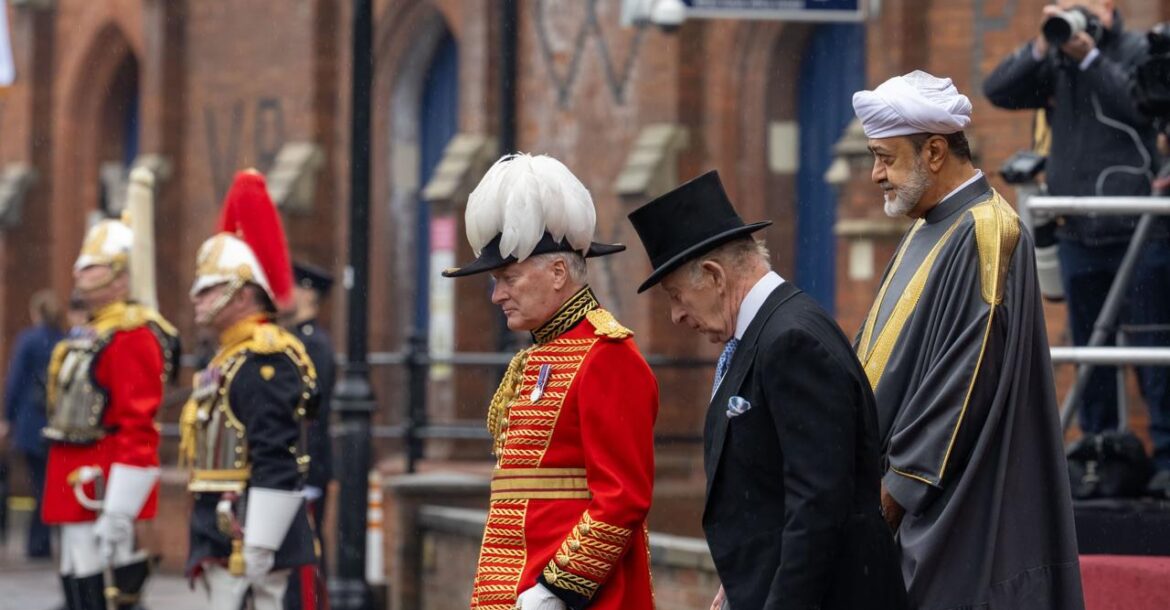

MUSCAT — His Majesty Sultan Haitham bin Tarik’s state visit to Britain is giving the countries’ strategic partnership renewed momentum, Oman’s Foreign Minister His Excellency Sayyid Badr bin Hamad Al Busaidi said, highlighting opportunities to expand investment, innovation and cooperation.
Speaking to Oman News Agency, Sayyid Badr said the visit reflected the distinctive relationship between the two countries and their commitment to developing ties in line with national priorities and the aspirations of future generations.
The strength of the relationship lay in its ability to evolve, he said, drawing on a friendship spanning more than three centuries while building partnerships that respond to changing needs.
Read More
- Omani man detained over unauthorised marriage promotion on social media
- His Majesty Sultan Haitham champions dialogue and peace in Windsor speech
- Former Times of Oman Sports Editor TK Mohandoss passes away
- His Majesty Sultan Haitham, King Charles hold talks at Windsor Castle
- His Majesty Sultan Haitham tours Royal Collection exhibition with King Charles and Queen Camilla
The visit provided an opportunity to turn that legacy into joint efforts to develop capabilities, widen investment opportunities and strengthen ties between the two peoples, he added.
“We aspire to see the development of our relations translate into tangible opportunities for education, employment and investment, and to give the new generation room to contribute, innovate and shape the future,” Sayyid Badr said.
He said the support of His Majesty Sultan Haitham and King Charles III reinforced the friendship and mutual respect underpinning the relationship.
Beyond its historical significance, the visit carried strategic importance for long-term cooperation between public and private institutions, expanding mutual interests and maintaining consultations on regional and international issues, he said.
On the economy, Sayyid Badr called for greater two-way investment and closer cooperation in clean energy, advanced technologies, research and innovation.
Partnerships linking businesses with universities and research institutions could support knowledge exchange, develop skills and advance future industries, he said, aligning with Oman Vision 2040 and the growth priorities of both countries.
Educational, cultural and people-to-people ties remained central to sustaining the relationship, he added. Expanding university cooperation, research, training and cultural exchanges would give young people, researchers and creative professionals a greater role in shaping its next phase.
On foreign policy, Sayyid Badr said mutual trust allowed frank and constructive dialogue with Britain on regional and international challenges.
Oman remained committed to diplomatic efforts to contain crises and tensions, resolve disputes through dialogue and peaceful means, and uphold international law and state sovereignty, he said.
“What gives our friendship its value is not only its historical depth, but also what it makes possible for the future,” he said. “We look forward to the new generation being a partner in renewing this relationship and creating its opportunities.”





