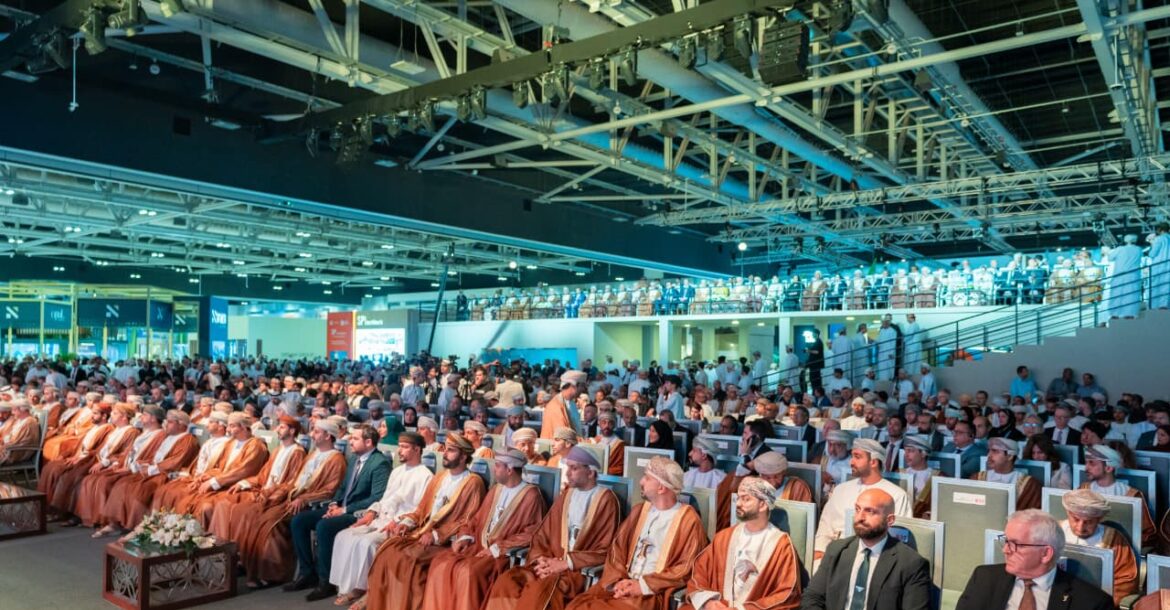

More Than 21,000 Visitors in the Expo’s First Two Days
The momentum behind Urban, Home & Building Expo & Conference and World Habitat Day 2026 continued today at the Oman Convention & Exhibition Centre, as part of Urban October, running through 8 October.
Bringing together local and international experts across real estate development, urban planning, design, mobility, and sustainability, the second day turned the spotlight on the future of emerging and fast-growing cities, exploring how ambitious urban visions and masterplans can move beyond paper to become real projects that shape better places and enhance quality of life. More than 21,000 visitors have attended the Expo during its first two days.
Read More
- OPAZ highlights Oman clean energy manufacturing drive in Shanghai
- University of Technology and Applied Sciences signs three memoranda of understanding to strengthen academic and research cooperation
- Oman Tax Authority urges shops to mark 0% VAT goods, calls on public to report overcharges
- His Majesty Sultan Haitham highlights IFC Oman as avenue for financial cooperation with Kazakhstan
- Ministry of Heritage and Tourism signs integrated tourism complex licence agreement with OMRAN Group for Sultan Qaboos Port Waterfront Development
Ideas, Insights and Dialogues Shaping the Cities of Tomorrow
A dynamic program of expert discussions and working papers took place under the theme “Emerging & Fast-Growing Cities,” examining the forces shaping the next generation of cities, from the role of developers in delivering urban visions to international approaches to city-making, innovative models for mobility financing, and the power of design, public spaces, and regeneration to create more sustainable and inclusive urban environments.
The session “Beyond Masterplans: How Developers Turn Urban Vision into Reality” explored the role of real estate developers in translating urban strategies into projects on the ground. The discussion brought together Nasser Al Siyabi, Director General of Real Estate Development at the Ministry of Housing and Urban Planning; Mohammed Al Muhammadi, Chief Strategy Officer at Retal Urban Development; Qais Al Bahri, Chief Executive Officer of Dream Villa; and Sameh Habib, Chief Executive Officer of Al Ahly Sabbour Developments, alongside representatives from other leading development companies. The session was moderated by Maryam Al Sharji, Director of the Real Estate Centre.
The session “Making a Difference: UN-Habitat Scroll of Honour Award-Winning Experiences” opened a window onto inspiring urban initiatives from Pakistan, Myanmar, Brazil, and Tunisia. Case studies included housing and urban planning experiences, the “Housing Now” initiative in Bago, Brazil’s first municipal indigenous reserve, and the experience of Bizerte, Tunisia, offering a diverse look at how communities are addressing urban challenges in different contexts.
Global City Lessons and New Thinking on Mobility Finance
Dr. Inhee Kim, Chief Masterplanner of Gangnam and affiliated with the Seoul Institute, presented a paper exploring the “10-Minute City” concept within the framework of Seoul 2030, examining how proximity and accessibility can help shape more connected urban environments.
The dialogue “A Conversation with City-Makers: Seoul, Medellín and Rotterdam – Lessons and Parallels for Muscat” brought together insights from three dynamic global cities, exploring what their experiences can offer Muscat and how international approaches can be adapted to local urban realities. The session was moderated by Monika Bik, Planning Advisor at the Ministry of Housing and Urban Planning.
On mobility finance, Shuprotim Bhaumik, Partner at HR&A Advisors, presented “Who Pays for Transit? International Lessons in Land Value Capture,” examining how rising land values can be leveraged to support transport investment through models and experiences from around the world.
The discussion continued with “From Plan to Reality: Developing Light Rail Stations in Muscat,” focusing on the journey from urban strategy to implementation. Participants included James Rayner, Founder of Urban Place Network; Ash Gupta, Director of Master planning at tp bennett; Shuprotim Bhaumik; and Ahmed Al Maqbali, Development Director at Al Irfan City, with the session moderated by Mohammed Al Balushi from the Ministry of Housing and Urban Planning.
Designing Better Every Day Experiences
Design and quality of life also took center stage, with sessions exploring how the built environment shapes the way people experience cities every day.
Mary Randsborg, Chief Executive Officer of Kube, presented “Extraordinary Every day,” exploring the potential of everyday urban experiences to become more meaningful, engaging, and people-centered.
Meanwhile, Gianluca Racana, Board Member at Zaha Hadid Architects, explored the transformative role of design through “Cities by Design: Shaping a Sustainable and Inclusive Future,” highlighting the role design can play in creating cities that respond to both people and the planet.
Isamu Sugino, Director of International Business Planning at Mitsubishi Jisho Design, shared insights from Marunouchi in Tokyo, exploring the relationship between governance, identity, and value and how these elements can shape the long-term evolution of a district.
The session “Beyond New Buildings: What Makes Cities Thrive? The Power of Public Spaces and Urban Regeneration” examined what it takes to move beyond construction and create places that truly come alive.
The discussion featured Sergey Kuznetsov, Managing Director of Strelka KB and former Chief Architect of Moscow; Alexey Muratov, Partner at Strelka KB; and Jonathan Lin, Director at WSP, among others. The session was moderated by Shatha Al Balushi, Senior Architect at the Ministry of Housing and Urban Planning.
Another key discussion, “Good Design or Good Business: Must We Choose?”, explored whether design excellence and commercial performance can and should go hand in hand.
The session featured specialists from architecture, engineering, and real estate development, including Fouad Al Kindi, Vice Chairman of the Oman Society of Engineers; William Matthews, Founder of Matthews Associates; and Daisy Sabbagh, Deputy Chief Executive Officer of Al Surooh Development. The session was moderated by Maryam Al Balushi from the Oman Association of Architects.
Tomorrow: Cities That Work for Everyone
The conversation continues tomorrow, Wednesday, with the programmer moving into the theme “Cities That Work for Everyone.”
The day will explore how sustainable communities can draw strength from memory, identity, and a sense of belonging, alongside the role of digital tools in bringing future city visions to life.
Sessions will also examine the transformation of global business districts, the opportunities emerging from changing urban economies, and the role of economic clusters in strengthening productivity and competitiveness.
The program will feature the story behind the Oman Pavilion at Expo 2025 Osaka, explore the Sustainable Urban Development Guidelines for Historic Oasis Landscapes of Oman, and examine how cities can move beyond the middle-income trap.
Further discussions will focus on the evolution of waterfronts from urban landmarks into vibrant coastal destinations, as well as the challenges and opportunities involved in delivering successful urban regeneration.
A broad group of experts and specialists will contribute to these conversations, bringing together perspectives from planning, design, investment, policy, and urban development.
Investment, Local Content and New Development Opportunities
Tomorrow’s program will also feature the Investment and Local Content Forum, alongside the signing of agreements and memoranda of cooperation covering housing assistance, residential and tourism development, beneficiary financing, and real estate development services.
The program will also highlight opportunities for research and training collaboration linked to Oman Building Code.
New investment opportunities are expected to be unveiled across Salalah Future City, the agricultural cities of Saham and Najd, and a number of projects within Sultan Haitham City, alongside opportunities in the industrial sector.
Together, these initiatives broaden the conversation from urban development to a wider ecosystem of investment, economic activity, innovation, and future-ready growth.
The second day of Urban October brought together urban vision, investment, mobility, design, and regeneration, connecting international experience with the opportunities and challenges of the Omani context and reinforcing the event’s wider mission to help shape cities that work better for people and create a higher quality of life.





