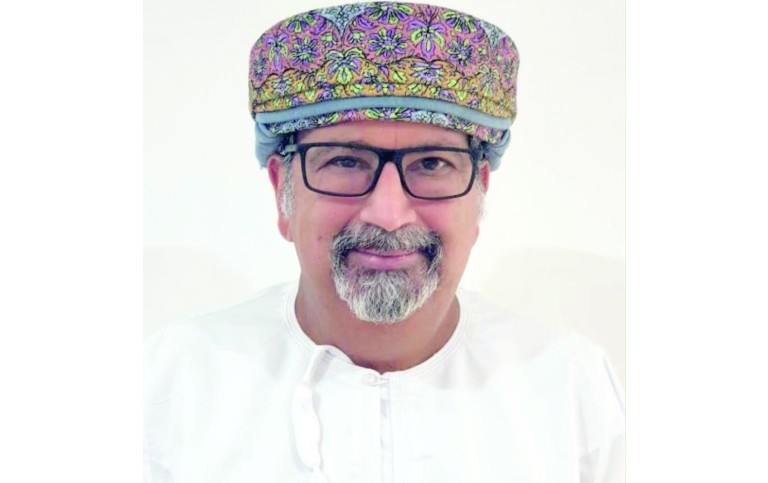

MUSCAT : Trophies have changed hands, team names have evolved and players have come and gone. But across six seasons of Oman’s domestic cricket, one figure has remained closely associated with teams competing at the business end of tournaments: Chaitanya Khimji.
Known affectionately in Oman’s cricketing circles as “Chaitanya Bhai”, Khimji’s involvement with the sport stretches back well beyond his recent run of success as a team builder. He has been associated with Oman Cricket for many years, including as a player in the academy and association system.
What began as a childhood passion has developed into a sustained involvement in building competitive domestic sides, with his teams collecting championships and runners-up finishes across the D10, D20 and 50-over formats.
Read More
- Oman chase history at 27th Gulf Cup
- Allan Border, Steve Waugh and other former Australia captains urge Aus Foreign Minister to raise concerns over Imran Khan’s detention
- Babar Azam turns to domestic cricket after 7 years amid prolonged Test form struggles
- Zverev wins first US Open title after four-set win
- Oman to host Beach Handball Global Tour stage in Muscat this December
The results tell part of the story. The more significant thread running through those seasons, however, has been consistency.
A winning run takes shape
The run gathered momentum during the 2021-22 season when Yalla Shabab Giants, then Ruwi Rangers, won both the Oman D10 and D20 titles. Amerat Royals, now Royal Oman Stallions, added the Oman D50 championship.
In 2022-23, Amerat Royals finished runners-up in both the D10 and D50 competitions, keeping Khimji-associated teams among the leading contenders.
Another strong campaign followed in 2023-24.
Royal Oman Stallions won the Oman D10 championship and the 50-over Premier League, while Yalla Shabab Giants captured the D20 title and finished runners-up in the D50 competition.
The 2024-25 season further underlined the depth of the two teams.
Royal Oman Stallions won the D10 title, ahead of runners-up Yalla Shabab Giants. The Giants then won the 50-over Premier League, with the Stallions finishing second, before Yalla Shabab Giants also claimed the Oman D50 league title, again with Royal Oman Stallions as runners-up.
The pattern continued in 2025-26.
Royal Oman Stallions finished runners-up in the Oman D20 League, while Yalla Shabab Giants were crowned Premier 50 Overs champions.
In the Oman Super League, Yalla Shabab Giants won the D20 title ahead of Royal Oman Stallions and followed it by taking the Super League 50 Overs championship.
One final, two Khimji teams
The 2026-27 season has now produced perhaps the clearest illustration yet of Khimji’s influence on the two squads.
Yalla Shabab Giants and Royal Oman Stallions have both reached the Oman D50 League final.
It guarantees that a team associated with Khimji will lift the trophy, but the achievement goes beyond having a champion on either side of the final. Getting two separately assembled teams through the same competition and into the title match highlights the depth and consistency that has been built over successive seasons.
For Khimji, the approach has centred on identifying players, developing balanced squads and strengthening them from one season to the next rather than assembling teams around a single tournament.
His involvement also extends to the structure around the players.
Khimji has worked closely with a management and coaching group that includes team manager Vinu Mathew and head coach Prashanth Chandran, placing emphasis on training, player development and creating competition for places.
That process has also helped provide a platform for players capable of progressing towards Oman’s national cricket setup.
Beyond the trophy cabinet
Domestic cricket can be unforgiving. Short-format competitions can turn on a handful of deliveries, while longer formats demand depth, discipline and consistency.
For teams to remain competitive across D10, D20 and 50-over cricket therefore requires more than assembling a strong starting XI.
Khimji’s record over recent seasons reflects an emphasis on building squads capable of adapting across those formats, while maintaining a core structure around players and coaching staff.
It is also why the number of runners-up finishes matters alongside the championships. They show teams repeatedly reaching the final stages rather than emerging for a single successful campaign.
From Amerat Royals and Ruwi Rangers to their current identities as Royal Oman Stallions and Yalla Shabab Giants, the names may have changed, but their presence near the top of Oman’s domestic competitions has remained remarkably consistent.
Now another trophy is at stake.
For Khimji, however, there will be an unusual certainty when the Oman D50 final begins: whichever side wins, a team he helped build will be champion.
After six seasons filled with finals and titles, that may be the strongest indication yet that the success has become more than a winning streak. It has become a system.





