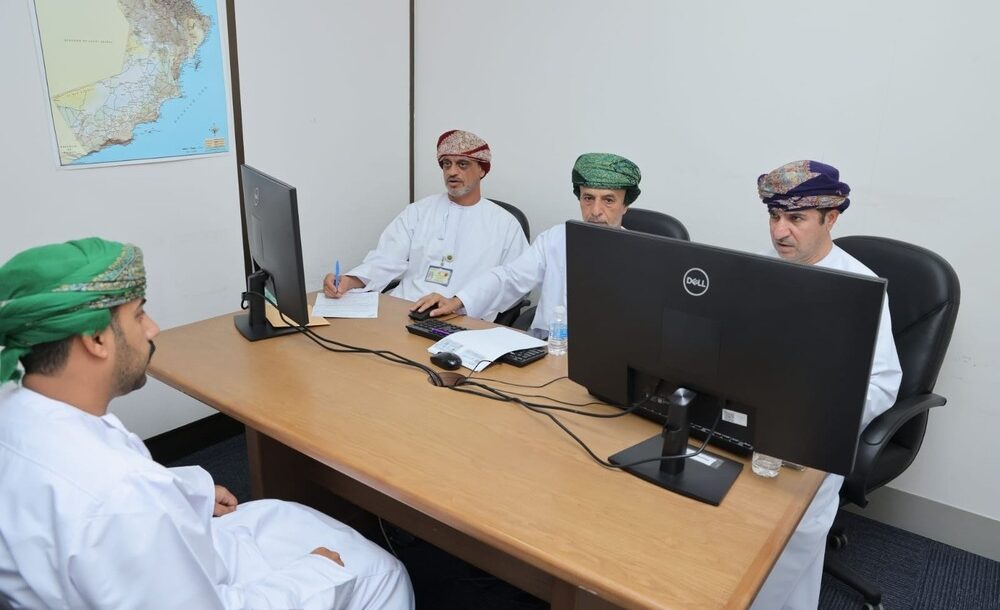

MUSCAT: The opportunities included 1,681 positions in the first announcement and 757 in the second, alongside 100 positions allocated for people with disabilities, bringing the total opportunities offered through the three recruitment tracks to 2,538.
Abdullah bin Sultan Al Sunaidi, Director of the Employment and Replacement Department in the Government Sector at the Ministry of Labour, said the first-half results reflected the ministry’s continued implementation of government employment plans based on the actual workforce needs of government entities.
He said the ministry is moving beyond treating government recruitment as a series of individual vacancies, instead linking employment to workforce planning, priority positions and future requirements. Depending on the nature of the position, recruitment pathways may include direct appointment, replacement, or training and qualification before appointment.
Replacement accounted for 999 positions, or about 59 percent of the total opportunities during the first half of the year. Of these, 877 positions were linked to training, while 122 were filled through direct replacement.
Al Sunaidi said linking replacement with training and qualification is particularly important for specialised positions that require skills or practical experience that may not be readily available among job seekers. The approach gives national candidates time to acquire the required knowledge and practical skills before taking up the targeted positions.
He said the ministry monitors replacement from the identification of the targeted position through training and qualification and ultimately appointment, with the aim of improving implementation and reducing the gap between workforce planning and placing qualified national candidates in government jobs.
As part of its localisation efforts, the ministry is also implementing an initiative to replace 110 expatriate trainers with Omani cadres in vocational colleges. Vacancies for the positions are expected to be announced during 2026, with selection and appointment procedures scheduled for completion in 2027. The selected candidates are expected to begin work at the start of the 2027/2028 academic year.
The 2,538 opportunities offered during the first half included 1,500 new job vacancies and 39 job contract opportunities, in addition to replacement positions.
The ministry said new positions respond to workforce requirements arising from expansion in government activities, the creation of new roles and the need to strengthen government entities with national competencies.
It is also reviewing job requirements submitted by government entities, including qualifications, specialisations and the nature of each position, to direct recruitment opportunities towards fields aligned with current workforce requirements and the outputs of the education and training system.
University graduates accounted for the largest share of the opportunities, with 1,927 positions, while 201 positions were allocated to holders of a general education diploma and 280 to holders of post-secondary diplomas.
The ministry said the distribution reflects the diversity of workforce requirements across the government sector and the different educational and professional qualifications needed for available positions, with efforts focused on matching candidates’ qualifications and skills with the requirements of targeted jobs.
Read More
- Hormuz talks in Oman could lead to broader regional dialogue, says Iran Foreign Minister
- Oman Tax Authority sets benchmark prices for tobacco products under new excise tax rules
- Oman inflation rises to 3.4% as food prices climb 7% in August
- Oman Labour Ministry flags 856 non-compliant companies after 3,792 inspections
- Oman cracks down on unlicensed crypto mining, warns equipment suppliers of legal penalties





