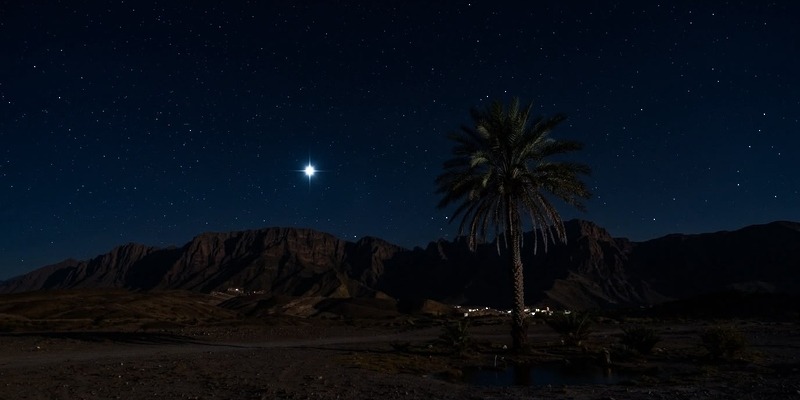

Muscat: Wisal bint Salem Al Hinai, Head of the Community Outreach Committee at the Omani Society for Astronomy and Space, said Suhail, known astronomically as Canopus, is located around 313 light-years from Earth and is the second-brightest star in the night sky. The star is distinguished by its yellowish-white appearance.
Its arrival during the second half of August has for generations served as an important seasonal marker in Oman, helping communities organise agricultural and maritime activities and traditionally signalling the approaching end of the intense summer period.
Al Hinai stressed that the appearance of Suhail does not directly cause temperatures to fall or weather conditions to change. Instead, its significance lies in Oman’s traditional astronomical calendar, where the “Suhail calculation” was used to identify seasonal changes.
Read More
- Al Mudhaibi Health Center in Oman to close permanently as services move to new complex
- Two arrested in Oman’s Al Dakhiliyah for series of vehicle and motorcycle thefts
- World Bank sees Oman’s economy holding firm with 3.1% growth amid regional conflict
- Oman, Italy sign MoU to enhance cooperation in areas of heritage, museums
- His Majesty Sultan Haitham, Dutch King discuss bilateral ties and regional developments
The star also played an important role in Oman’s long maritime history. Sailors and captains relied on Suhail and other stars to determine directions and navigate routes during lengthy sea voyages.
Astronomical observations were also closely connected with traditional agriculture. The movement of stars during the night was used to regulate water shares from aflaj and determine irrigation timings under traditional systems such as athar and badah.
Suhail has also remained deeply rooted in Omani popular memory through inherited sayings and proverbs reflecting generations of experience in observing seasonal changes. This heritage highlights how astronomical knowledge was once closely integrated into everyday life.
According to Al Hinai, Suhail initially becomes visible shortly before sunrise, low above the southeastern horizon, before gradually rising higher and becoming easier to observe as the season progresses.
She said the star’s return provides an opportunity to combine modern astronomical observation with efforts to preserve and document Oman’s traditional knowledge for future generations.





