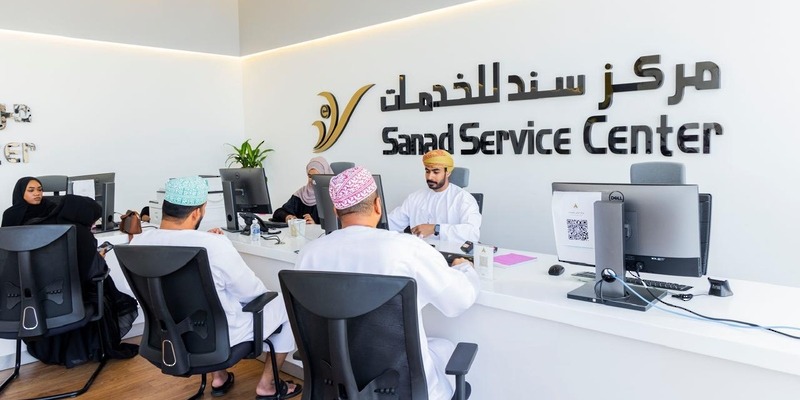

MUSCAT: The number of authorised Sanad service centres reached 922 by the end of June, with the centres collectively providing more than 2,200 job opportunities for Omani nationals, according to the Ministry of Commerce, Industry and Investment Promotion.
The ministry said it is continuing to implement development programmes and initiatives to upgrade Sanad centres through organisational expansion and digital transformation, with the aim of improving service efficiency, quality and accessibility.
The centres play an important role in supporting the national economy, empowering small and medium enterprises (SMEs), and bringing government and private-sector services closer to beneficiaries across Oman’s governorates.
Fathi bin Nasser Al Mahmooli, Assistant Director of Sanad Service Centres at the ministry, said the centres have evolved into platforms providing integrated government and private services and supporting the country’s digital transformation.
He noted growth in the number of services offered, an increase in the number of entities electronically linked to the centres, wider use of digital platforms and improvements in service quality.
Al Mahmooli said the centres have helped reduce the need for beneficiaries to visit government agencies directly, saving time and effort while lowering transportation costs.
The ministry is also developing performance indicators to measure transaction completion times, first-visit completion rates and beneficiary satisfaction as part of efforts to ensure continuous improvement.
The beneficiary base has expanded in recent years to include entrepreneurs, SMEs and investors, in addition to citizens and residents. Rising digital awareness has also increased demand for more specialised, faster and higher-quality services.
Al Mahmooli acknowledged differences in service quality among centres, which can be linked to factors including centre size, the types of services offered and operational demand. He said the ministry is working to standardise service levels through a governance guide, training and qualification programmes, institutional classification and continuous monitoring.
Looking ahead, the ministry aims to transform Sanad centres into smart, multi-service centres over the next five years, with plans to expand the range of services, increase the share of digital services, introduce artificial intelligence systems, classify centres and strengthen public-private partnerships.
These measures are expected to improve operational efficiency while supporting the financial sustainability of Sanad service centres.





