

MUSCAT – Assets under management (AuM) across the Gulf Cooperation Council (GCC) rose 10% in 2025 to reach $2.7 trillion, marking one of the strongest annual performances in more than a decade, according to a new report released by consulting firm Boston Consulting Group (BCG).
The findings, published in BCG’s Global Asset Management Report 2026: An Imperative for Growth, showed that the region’s retail asset management segment outpaced institutional investors, recording 14% growth during the year, compared with a 9% increase in institutional assets.
Despite the stronger growth rate, institutional investors continued to dominate the market, accounting for 93% of total GCC assets under management, while retail investors represented 7%.
Read More
Saudi Arabia remained the region’s largest asset management market, holding the highest share of retail mutual funds and exchange-traded funds (ETFs) in both the GCC and wider Middle East. The UAE and Kuwait followed as the next-largest markets.
Among pension funds, the Kingdom’s General Organization for Social Insurance Public Pension Agency (GOSI-PPA) retained its position as the region’s largest pension fund, while Kuwait’s WAFRA ranked second. The Kuwait Investment Authority remained the largest sovereign wealth fund in terms of externally managed assets, followed by the Abu Dhabi Investment Authority.
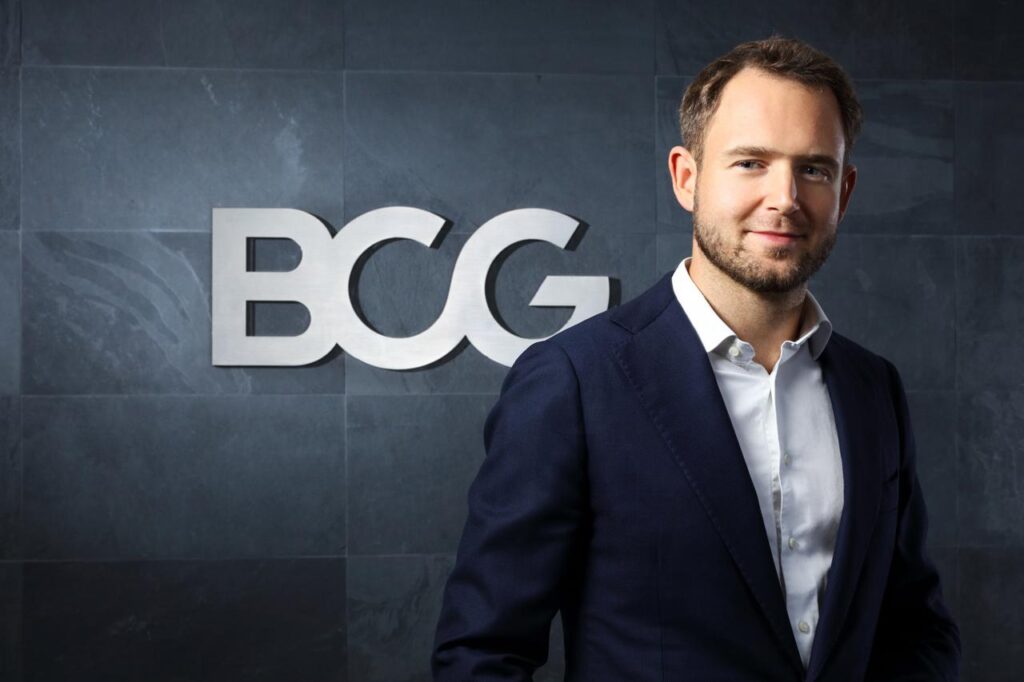

“The GCC asset management industry is at an inflection point that demands a fundamentally different approach to competition,” said Lukasz Rey, Managing Director and Partner at BCG.
“While near-term dynamics will depend on the broader market environment, the region’s structural fundamentals remain compelling, and many asset managers continue to view the GCC as a strategic priority.”
The report highlighted a broader shift in the global asset management industry, where distribution capabilities are becoming increasingly important as traditional product offerings become more commoditised.
BCG said firms with stronger access to distribution channels—including digital platforms, financial advisers and institutional networks—are gaining a competitive advantage as investors become more selective.
The report also identified artificial intelligence as a transformative force reshaping the sector. BCG estimates that AI adoption could enable asset managers to reduce operating costs by between 25% and 35% over the next three to five years while significantly expanding research and client coverage capabilities.
According to the report, AI could increase research coverage by two to five times and allow relationship managers to serve three to five times more clients through enhanced automation and personalised services.
“Middle East asset managers have an opportunity to leapfrog traditional operating models by embedding AI and digital capabilities into their core operations,” said Mohammad Khan.
The report noted, however, that most firms remain in the early stages of AI adoption and are still focused on pilot projects rather than full-scale transformation.
In addition to AI, BCG identified tokenization and digital assets as emerging trends that could significantly alter the global asset management landscape.
The consultancy projected that tokenized real-world assets could reach a value of $14 trillion by 2030 and expand further to $55 trillion by 2035, creating new models for ownership, investment distribution and asset management.
“The convergence of tokenization, AI and evolving investor expectations is reshaping the competitive landscape in ways that favour agility over incumbency,” said Nabil Saadallah.
BCG said the industry is entering a phase where competition-driven growth, rather than market-driven growth, will increasingly determine success. Firms that can attract net inflows, build scalable distribution networks and integrate technology into their operating models are expected to emerge as industry leaders in the years ahead.





