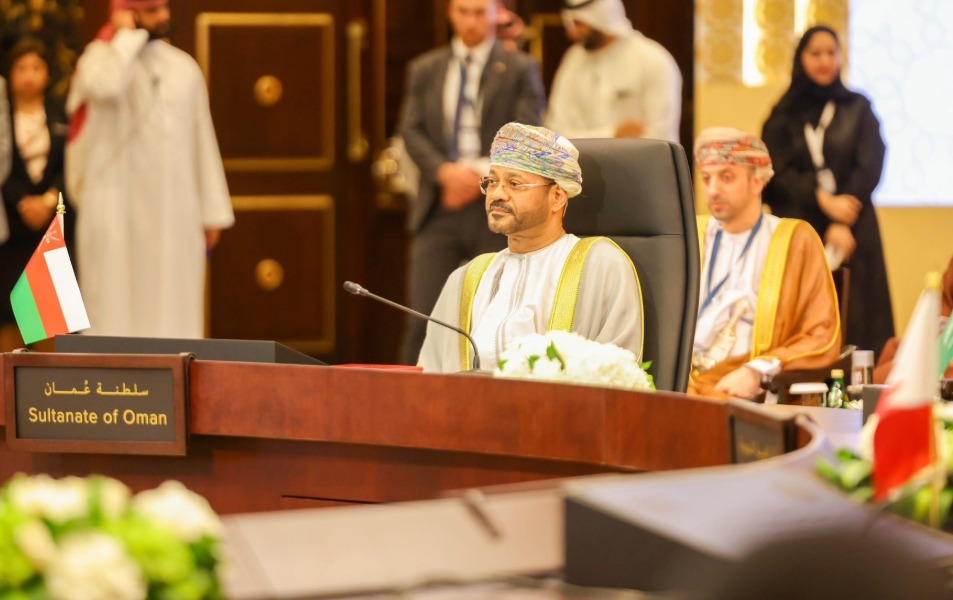

MANAMA : Oman said on Thursday that any future arrangements governing navigation through the Strait of Hormuz would not include transit fees, seeking to reassure the international shipping industry over access to one of the world’s most important maritime chokepoints.
Speaking during a joint ministerial meeting between the Gulf Cooperation Council (GCC) and the United States in Bahrain, Omani Foreign Minister Sayyid Badr Al Busaidi said future arrangements related to the strait must preserve freedom of navigation and remain consistent with international law.
“Future arrangements regarding the Strait do not entail the imposition of any transit fees,” Al Busaidi said, according to a statement issued by Oman’s Foreign Ministry.
Read More
- Oman convenes global experts to advance AI innovation in mental healthcare
- HH Sayyid Theyazin chairs International Financial Centre of Oman board meeting
- Oman participates in Interpol Anti-Drug Conference in Czech Republic
- HH Sayyid Bilarab honours former Wali of Bausher for dedicated public service in Muscat
- Oman police to review heavy vehicle safety standards and driving licence rules
The comments come after Oman and Iran, the two countries bordering the Strait of Hormuz, indicated earlier that they were discussing practical measures linked to maritime safety and navigation services in the strategic waterway.
The Strait of Hormuz, which connects the Gulf to global markets, is one of the world’s most critical energy transit routes, handling a significant share of global oil and liquefied natural gas exports. Any suggestion of new charges or restrictions on shipping has drawn close attention from energy markets and maritime operators.
Al Busaidi’s remarks are likely to be welcomed by major shipping companies and oil exporters that rely on uninterrupted passage through the narrow waterway.
The Omani minister made the comments during the GCC-U.S. ministerial meeting in Manama, attended by U.S. Secretary of State Marco Rubio and foreign ministers from Gulf states. The gathering focused on regional security, economic cooperation and recent developments in the Middle East.
According to the Omani Foreign Ministry, ministers discussed efforts to strengthen the strategic partnership between the GCC and the United States and reviewed ways to promote regional stability amid ongoing geopolitical tensions.
Al Busaidi also reaffirmed Oman’s support for the recent memorandum of understanding between the United States and Iran, describing it as an opportunity to advance peace and reduce tensions in the region. He said Muscat remained committed to working with all parties to move the diplomatic process forward.
The minister stressed the importance of restoring maritime security in the Strait of Hormuz and ensuring the safe movement of commercial vessels, noting that Oman, as a coastal state overlooking the waterway, bears a special responsibility in supporting international efforts to safeguard navigation.
He added that any future framework governing the strait would be based on international law and the United Nations Convention on the Law of the Sea, while ensuring that vessels continue to enjoy the right of free passage without additional transit charges.
For all the latest news from Oman and GCC, follow us on Twitter, Instagram and LinkedIn, like us on Facebook and subscribe to our YouTube page, which is updated daily.





