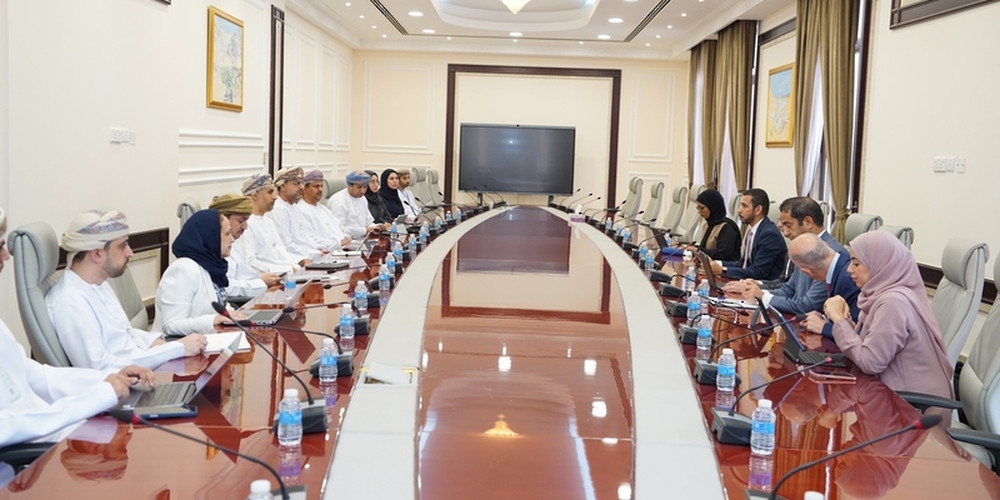

MUSCAT – The IMF commended the resilience and the continued momentum of economic reforms, following its preliminary meetings with the Omani government as part of the 2026 Article IV consultations.
The IMF mission, held from June 7 to 15, 2026, reviewed recent economic developments, fiscal and monetary policies, and progress on structural reforms in the Sultanate of Oman.
At the conclusion of the visit, the Fund said Oman’s economy has remained resilient despite recent regional geopolitical challenges, supported by prudent macroeconomic and financial policies and ongoing reform efforts.
Read More
- GCC history forum participants thank His Majesty Sultan Haitham for Oman’s warm hospitality
- His Majesty Sultan Haitham sends condolences to Nepal president over flood, landslide victims
- Oman records highest temperature of 46.2°C
- Heavy rain and hail lash Oman’s Al Buraimi, triggering wadi flows
- Honourable Lady visits Omani Women’s Association in Salalah
The IMF noted that Oman’s real Gross Domestic Product (GDP) growth reached 2.4 percent in 2025, compared with 1.6 percent in 2024, and projected growth to accelerate to 3.7 percent in 2026, driven by higher oil production and continued expansion in non-hydrocarbon sectors.
The Fund said inflation remains contained despite global economic developments and related increases in food and transportation prices.
The IMF also highlighted expectations of further improvement in Oman’s fiscal position and external accounts, supported by higher oil revenues, continued fiscal discipline and strong non-oil export performance. It projected fiscal and current account surpluses of around 4.5 percent and 3 percent of GDP, respectively, while public debt is expected to continue declining as a share of GDP.
The statement confirmed that Oman’s banking sector remains robust, well-capitalised, highly liquid and profitable, with strong asset quality that supports economic activity and financial stability.
The IMF cautioned that ongoing regional uncertainties could pose risks to Oman’s economic outlook, while stressing the importance of maintaining fiscal and structural reform momentum to strengthen sustainability, support diversification and improve the competitiveness of the national economy.
The IMF team concluded by expressing appreciation to the Omani government and participating entities for their cooperation and the constructive discussions held throughout the mission.





