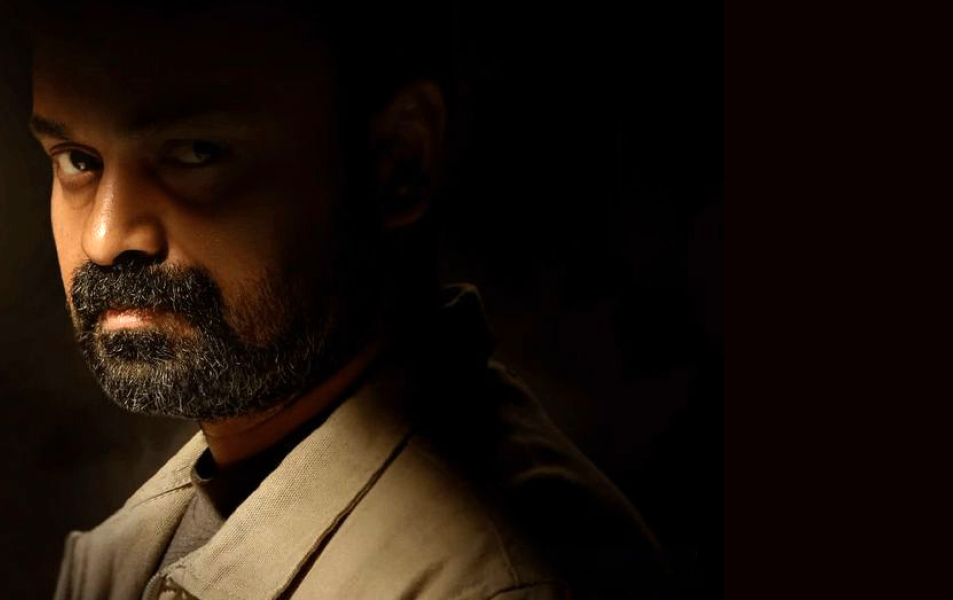

There are actors who arrive with noise, and then there are those who simply stay, reshaping themselves so gradually that the transformation almost escapes notice.
For three decades, Kunchacko Boban has belonged firmly to the latter category: a star who began as the face of youthful romance and quietly evolved into one of Malayalam cinema’s most dependable, shape-shifting performers.
When he debuted in Aniyathipravu, Boban was less an actor and more a phenomenon. The film didn’t just work; it ignited a generation. His boy-next-door charm, soft-spoken vulnerability, and disarming smile became a template for the romantic hero of the late 1990s. In an industry already rich with towering performers, he carved out a niche that felt refreshingly accessible.
But the very qualities that made him a sensation would, for a time, confine him.
Read More
The fall before the rise
The early 2000s were less forgiving. Malayalam cinema itself was shifting, and the audience’s appetite for formulaic romance waned. Boban, once omnipresent, found himself navigating a quieter phase, a period that, in hindsight, reads less like decline and more like recalibration.
Unlike many of his contemporaries, he did not cling to past glory. Instead, he disappeared just enough to return different.
Reinvention as craft
The second act of Kunchacko Boban’s career is where his real story begins.
In films like Traffic, he shed the comfort of predictability, stepping into ensemble-driven storytelling that redefined Malayalam cinema’s narrative grammar. By the time he reached Nayattu, there was little left of the soft-focus romantic hero. Here was an actor willing to inhabit moral ambiguity, exhaustion and fear: a man caught in the machinery of power.
And then came Nna Thaan Case Kodu, where Boban delivered one of the most subversive performances of his career. There was humour, yes, but also a biting political edge, a reminder that he had grown not just with the industry, but with its conscience.
The endurance of gentleness
What makes Boban’s longevity remarkable is not reinvention alone, but continuity. Even in his darkest roles, there remains an unmistakable gentleness, a residue of the boy audiences first fell in love with. It is this emotional accessibility that allows him to move between genres without rupture.
He does not dominate the screen in the traditional sense. He inhabits it.
A career without spectacle, and yet all impact
In an era increasingly defined by scale and spectacle, Boban’s journey feels almost countercultural. There are no grand reinventions announced, no aggressive star vehicles designed to reclaim lost ground. Instead, there is work: steady, deliberate, and often surprising.
Thirty years on, he stands not as a relic of nostalgia, but as a living argument for evolution over reinvention, substance over spectacle.
Still in motion
If longevity can sometimes harden into repetition, Boban’s current phase suggests the opposite: a career still expanding.
His latest release, Oru Dhooraha Sahacharyathil, continues his exploration of layered, character-driven storytelling, reinforcing his shift towards roles that prioritise depth over familiarity.
Meanwhile, anticipation is already building around Patriot, set for release next month. The film brings together an extraordinary ensemble of Mohanlal, Mammootty and Fahadh Faasil, placing Boban within a rare convergence of Malayalam cinema’s biggest forces across generations.
That he stands comfortably within this lineup is, in itself, a testament to the journey he has made: not through spectacle, but through persistence, reinvention, and an unwavering commitment to craft.
And perhaps that is the real legacy of Kunchacko Boban: not that he lasted, but that he changed, and in doing so, helped change the very cinema he once simply charmed.





