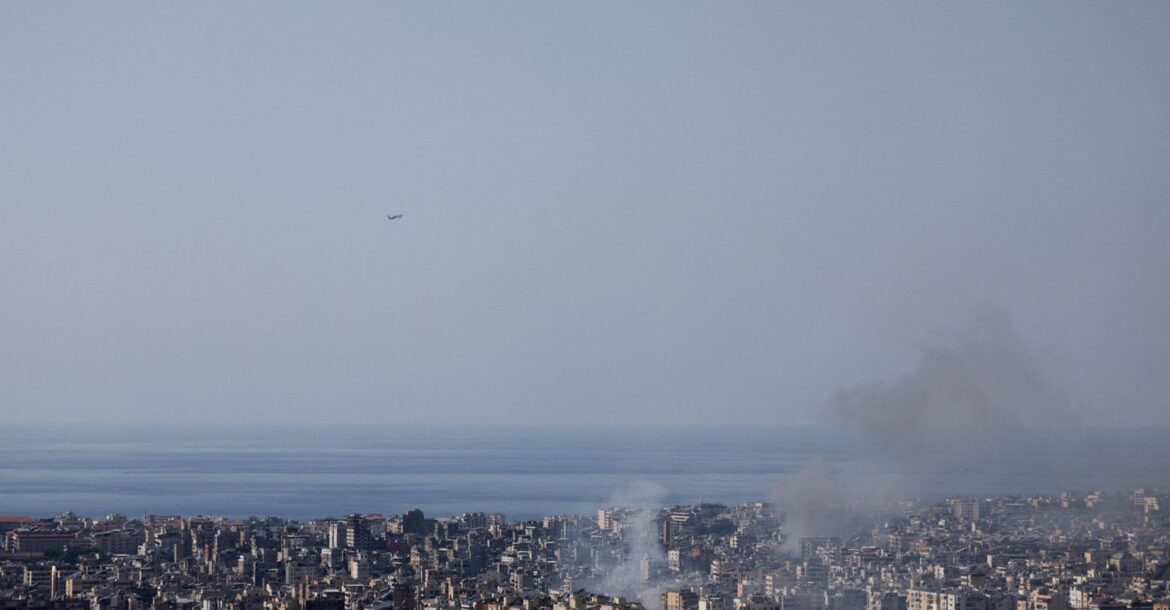

Muscat: The Middle East crisis entered its fourth consecutive day on Tuesday, with Iran-linked attacks expanding across the Gulf and regional leaders intensifying diplomatic efforts to prevent a broader confrontation.
Missile interceptions lit up skies over parts of the UAE and other GCC states, while drone strikes were reported in Oman. Across the wider region, mounting casualties in Iran and Lebanon underscored the growing human cost of the conflict.
GCC targeted as air defences intercept missiles
The UAE, Bahrain, Kuwait, Saudi Arabia and Qatar have all reported aerial threats in recent days, prompting heightened military readiness and widespread airspace restrictions.
Read More
- What did His Majesty Sultan Haitham and UAE’s Sheikh Tahnoun discuss during Muscat meeting?
- Oman Investment Authority invests in Spanish space company PLD Space
- Oman health facilities rise to 2,464 as sector expands in 2025
- Over 800 expired perfume and incense packages seized in Oman’s South Al Sharqiyah
- His Majesty Sultan Haitham receives UAE National Security Adviser Sheikh Tahnoun bin Zayed
In the UAE, authorities confirmed that sounds heard across parts of the country were the result of missile interceptions.
Reem Al Hashimy, UAE Minister of State for International Co-operation, said during a media briefing that the UAE has repeatedly stressed it will not allow its airspace or territory to be used in any attack against Iran.
She reaffirmed that the UAE reserves the right to self-defence in response to attacks, to protect its sovereignty and the safety of its citizens, residents and visitors.
“The UAE believes there is no military solution,” she said, warning that further escalation would harm the entire region.
Maj Gen Abdul Nasser Al Humaidi, official spokesman for the UAE Ministry of Defence, said the country would “never accept its sovereignty and security being compromised,” adding that the armed forces remain at a high level of combat readiness.
He confirmed that the UAE retains strategic reserves capable of fending off aerial threats for an extended period and that defensive deployments have been reinforced.
Oman hit by drones, No casualties reported
In Oman, drone activity was reported over Duqm Port and parts of Dhofar on Tuesday. Authorities confirmed there were no casualties.
Duqm, a strategic industrial and maritime hub along the Arabian Sea, has grown in importance in recent years as part of Oman’s diversification strategy. The reported drone activity marks a rare direct security incident affecting Omani territory in the current crisis.
Oman has historically maintained a neutral diplomatic posture in regional conflicts and has often played a mediating role.
His Majesty Sultan Haitham bin Tarik has continued high-level diplomatic outreach, speaking with several world leaders including Narendra Modi, as part of efforts aimed at de-escalation and restoring stability.
Officials have reiterated that Oman’s priority remains safeguarding its sovereignty while promoting dialogue over confrontation.
Rising toll in Iran and Lebanon
As cross-border strikes continue, humanitarian concerns are intensifying.
The Red Cross said the death toll in Iran has risen to 787 since the crisis began, marking one of the deadliest escalations in recent regional history.
In Lebanon, at least 40 people were killed and 246 wounded in Israeli attacks over Monday and Tuesday, according to a spokesperson for the Lebanese health ministry. Officials clarified that a previously reported death toll of 52 had been due to a technical error.
The expanding theatre of conflict from Iran to Lebanon and across the Gulf reflects a rapidly widening security arc.
Aviation, energy and regional stability at risk
The fourth day of sustained attacks has severely disrupted regional aviation, with intermittent airspace closures and flight suspensions across multiple Gulf states.
Energy infrastructure remains on high alert, particularly in coastal and industrial zones. While no major production facilities have been confirmed as critically damaged, the risk premium on regional energy exports has risen sharply.
Military analysts warn that continued missile exchanges and drone warfare raise the risk of miscalculation particularly given the density of commercial aviation routes and critical maritime shipping lanes in the Gulf.
Diplomacy vs. Escalation
Despite the escalation, Gulf leaders have repeatedly emphasised restraint.
The UAE’s position rejecting the use of its territory for offensive operations while asserting its right to self-defence reflects a broader GCC balancing act: defending sovereignty without sliding into full-scale regional war.
Oman’s parallel diplomatic engagement underscores the Sultanate’s long-standing role as a bridge-builder during crises.
As Day 4 concludes, the region stands at a delicate crossroads: entrenched military exchanges on one hand, and urgent diplomatic outreach on the other.
Whether the coming days tilt toward containment or further confrontation may determine not only regional stability but the global economic and security landscape tied to it.





