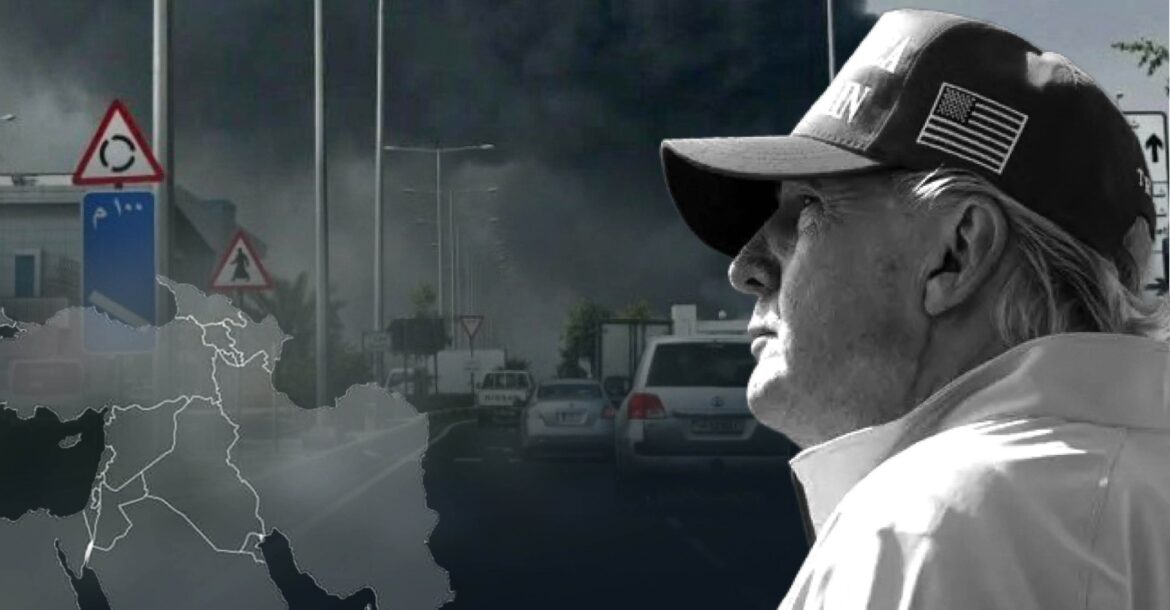

MUSCAT – The death toll from ongoing U.S.–Israeli strikes on Iran has climbed to at least 555 people, according to Iran’s Red Crescent Society of the Islamic Republic of Iran, as regional tensions escalated and global aviation faced its most severe disruption since the COVID-19 pandemic.
Iranian authorities said hundreds have been killed since the strikes began, with casualties continuing to mount amid retaliatory exchanges across the region. The figures could not be independently verified.
U.S. President Donald Trump acknowledged there could be further American casualties after four U.S. troops were killed in Kuwait earlier in the escalation, marking one of the deadliest single incidents involving U.S. personnel since hostilities intensified.
Read More
- Abandoned building collapse claims lives of four children in Oman
- Japan’s Kokomo Murase wins Olympic gold medal in big air snowboarding
- India at 77: Democratic strength, Global leadership, and a strategic bond with Oman
- Oman’s CPA warns against use of certain Drinkmate bottles
- Led by wisdom, His Majesty Sultan Haitham’s diplomacy reshapes Oman’s global partnerships
Pentagon: “Not regime change”
At a Pentagon briefing, U.S. Defense Secretary Pete Hegseth said Washington’s objective was not to overthrow Iran’s leadership.
“The goal of the strikes on Iran was not regime change,” Hegseth said. “But the regime sure did change and the world is better off for it.”
His remarks underscored the delicate messaging from Washington as it seeks to frame the military campaign as targeted rather than open-ended, even as the scope of the conflict appears to widen.
“Friendly fire” incident over Kuwait
In a separate development, the U.S. military confirmed that three American fighter jets were accidentally shot down by Kuwaiti air defenses in what it described as a “friendly fire incident.” All crew members were recovered and are reported to be in stable condition.
Kuwaiti authorities have not publicly detailed the circumstances surrounding the incident, but defense analysts said the episode highlights the heightened state of alert and complexity of air operations over the Gulf.
Aviation crisis spreads globally
The conflict has also triggered widespread airspace closures and severe restrictions across the Middle East, disrupting global travel flows.
Airlines canceled approximately 1,560 flights to and from the Middle East on Tuesday, equivalent to about 41% of scheduled services, according to aviation tracking data. Major hubs including Dubai, Abu Dhabi and Muscat have faced significant operational constraints, leaving hundreds of thousands of passengers stranded.
Industry executives warned that prolonged instability could further disrupt supply chains, tourism and business travel, with airline stocks coming under pressure in global markets.
Aviation experts described the situation as the worst regional disruption since the COVID-19 pandemic, when border closures and grounded fleets brought international travel to a near standstill.
Oman intensifies diplomacy
Amid the escalating crisis, His Majesty Sultan Haitham bin Tarik, has intensified diplomatic efforts, holding talks with regional and world leaders in a push to de-escalate tensions.
Oman, which has historically played a neutral mediating role in regional disputes, is understood to be urging restraint, a halt to military operations and a return to dialogue to safeguard regional security and stability.
Officials in Muscat have reiterated the Sultanate’s longstanding position that diplomacy and dialogue remain the only sustainable path to resolving conflicts, particularly at a time when the region faces heightened security and economic risks.
Russia calls for ceasefire
Russia also urged an immediate ceasefire, warning of a spiraling regional war. In a statement, the Ministry of Foreign Affairs of the Russian Federation expressed concern that what it described as “aggression by the U.S. and Israel” was expanding beyond its initial scope.
Moscow said the widening military campaign risked destabilizing the broader Middle East and called for urgent diplomatic efforts to halt further escalation.
Risk of wider conflict
Security analysts say the convergence of rising casualties, direct U.S. military involvement, retaliatory strikes and airspace disruptions has created a volatile environment with global implications — from energy markets to aviation and financial systems.
With no clear diplomatic breakthrough in sight, governments and airlines alike are bracing for further instability in the days and weeks ahead.





