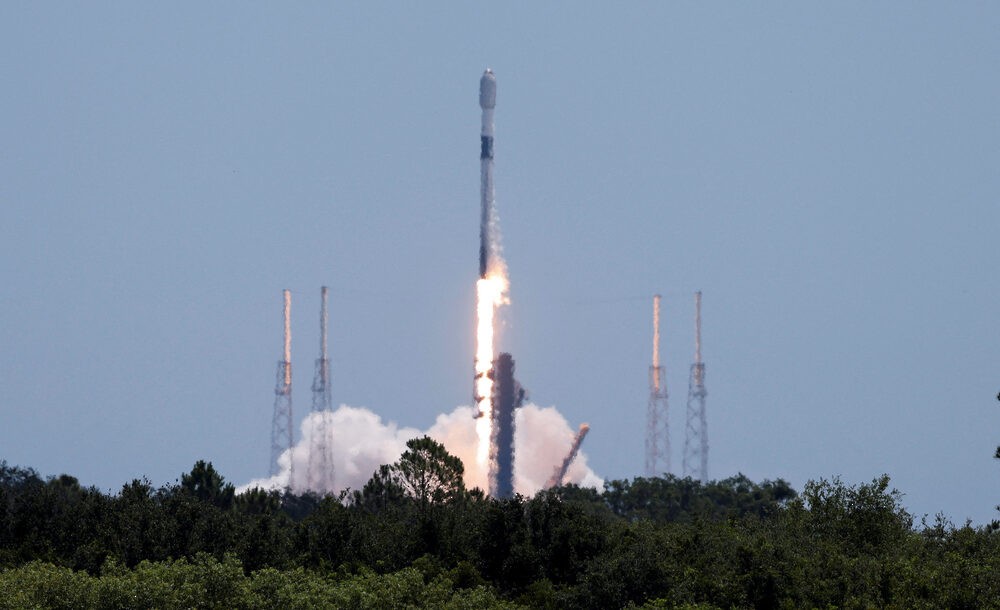

Beijing: The laboratory said the constellation marks a critical step toward building an AI-powered space infrastructure designed to serve space exploration, smart city development, and natural resource surveys in cooperation with global partners.
According to officials, orbital experiments have already demonstrated the constellation’s ability to function as an integrated working network, conduct advanced computing operations in space, and deploy AI models effectively. Among the models tested were a remote sensing model and an astronomical time model. These systems contributed to surveying infrastructure, identifying buildings and bridges, and classifying gamma-ray bursts with an accuracy rate of 99 percent.
The Zhejiang Laboratory further revealed that once the full planned constellation is completed—comprising more than 1,000 satellites—the system’s operational capacity could reach approximately 100 quintillion operations per second. A key feature of the project is its ability to process certain data directly in space before transmitting results to users on Earth, potentially reducing delays and improving efficiency.
Read More
- Indian government seeks until Saturday to respond on Minister’s resignation, says CJP
- Kuwait air defences confront new wave of drone attacks
- Spain declares national emergency as wildfires force 10,000 to flee
- France bans social media for childen under 15: Macron
- King Charles III opens Commonwealth Games 2026 in Glasgow
The latest deployment builds on earlier progress. In May 2025, China launched its first constellation of 12 satellites under the Space Computing Constellation project. Follow-up experiments confirmed the system’s ability to establish an integrated working network, deploy artificial intelligence models, and scientifically verify payload performance.





