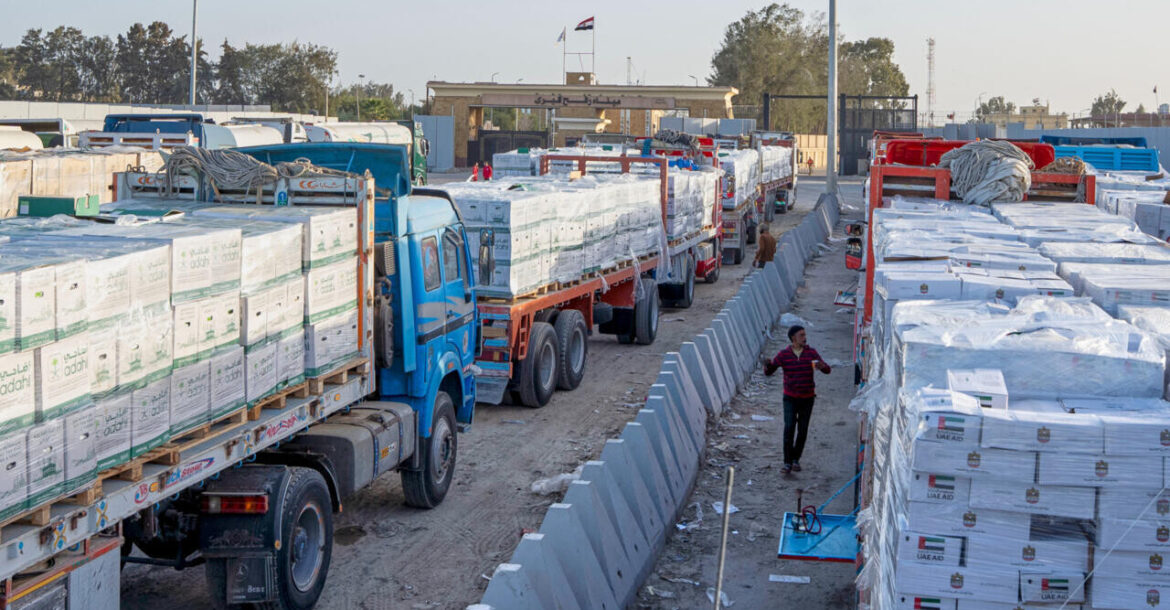

Gaza: The Rafah crossing, a critical gateway between the Gaza Strip and Egypt, had been largely shut since May 2024, when Israeli forces took control of the Palestinian side of the crossing. Its long-delayed reopening forms a key component of the first phase of US President Donald Trump’s ceasefire plan between Israel and Hamas, which came into effect in October.
Under the current arrangements, only dozens of people will be permitted to cross in each direction daily. The transfer of humanitarian aid and commercial goods through Rafah remains suspended. Israeli media reports indicate that just 50 patients, each accompanied by two relatives, will be allowed to leave Gaza per day, while only 50 Palestinians from the tens of thousands displaced during the war will be permitted to return.
An estimated 20,000 sick and wounded Palestinians are currently waiting to exit Gaza for medical treatment abroad. The World Health Organization is expected to oversee patient transfers, transporting them by bus from Hamas-controlled areas through Israeli-controlled territory to the crossing.
Read More
- Trump threatens to use frozen Iranian funds to pay for Hormuz ship damage
- Bangladesh President Mohammed Shahabuddin resigns, cites health reasons
- Indian government seeks until Saturday to respond on Minister’s resignation, says CJP
- Kuwait air defences confront new wave of drone attacks
- Spain declares national emergency as wildfires force 10,000 to flee
Israeli Defence Minister Israel Katz has warned that anyone crossing the Yellow Line, which demarcates Israeli-controlled territory under the ceasefire agreement, would be “met with fire.”
Operationally, the Rafah crossing will be managed by supervisors from the European Union alongside local Palestinian staff, while Israel will conduct remote security checks. Israeli authorities confirmed that a trial opening of the crossing was completed on Sunday. A Palestinian official familiar with the arrangements told the BBC that around 30 Palestinian staff members had arrived on the Egyptian side in preparation for full operations.
Trump’s 20-point Gaza peace plan states that the reopening of Rafah in both directions will follow the same mechanism used during a previous ceasefire in January last year. Prior to its seizure by Israel in 2024, Rafah served as the main exit route for Palestinians permitted to leave Gaza and a key entry point for humanitarian aid.
The reopening has faced repeated delays. In December, Israel announced that the crossing would open to allow Palestinians to leave Gaza, but Egypt insisted it must operate in both directions, enabling the return of tens of thousands who fled during the conflict. The process was further stalled after Israel made the opening conditional on Hamas locating the body of the last deceased Israeli hostage in Gaza.
Last week, the Israeli military said it had recovered the remains of police officer Master Sgt Ran Gvili from a cemetery in northern Gaza. He was among the 251 people abducted during the Hamas-led attack on Israel on October 7, 2023, which killed about 1,200 people.





