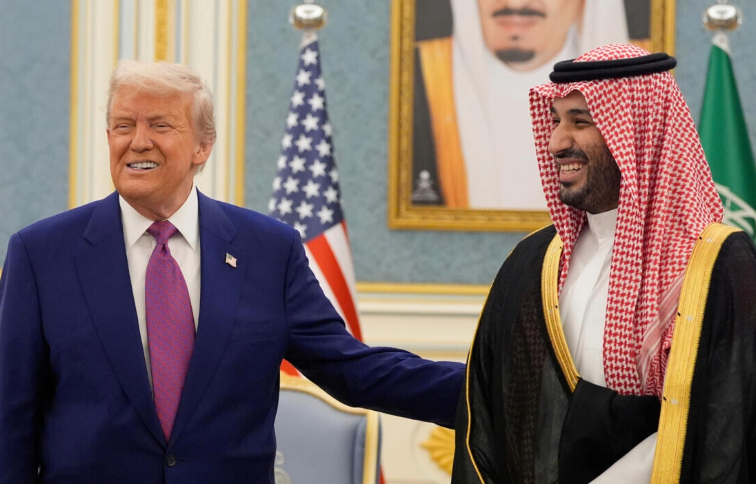

WASHINGTON : The announcement comes just hours before Saudi Crown Prince Mohammed bin Salman arrives at the White House for a two-day visit focused on security and investment.
Speaking to reporters, Trump said he intends to proceed with allowing Saudi Arabia access to the U.S.’s most advanced fighter aircraft, describing the kingdom as “a great ally” and noting its assistance in U.S. missile strikes this year that he claimed “obliterated” Iran’s nuclear sites. He also suggested that Washington and Riyadh are set to sign a broader security agreement, though he provided no details.
Crown Prince Mohammed’s visit, which continues Wednesday with a joint U.S.–Saudi investment conference at the Kennedy Center in Washington, marks a pivotal moment in bilateral relations. The president is effectively separating a deepening economic and security partnership from his long-standing push for Saudi Arabia to normalize ties with Israel, an effort derailed by the ongoing conflict in Gaza.
Read More
- Tourists evacuated from China’s Jiuzhaigou park after mudslides
- UN warns funding shortfall threatens nutrition programmes for 5.7 million in Afghanistan
- Typhoon Noul hits southern China, forcing evacuation of over 340,000 people
- 32 civilians killed in armed attacks in eastern DR Congo
- Pralhad Joshi appointed as India’s new education minister after Pradhan quits amid NEET protests
If finalized, the F-35 deal would become the third major arms package Trump has advanced for Saudi Arabia across his two terms. It follows a $142 billion arms and security package announced in May, and a $120 billion weapons deal unveiled during his first term, much of which was carried over from negotiations under the Obama administration.
Delivering the jets themselves could be a years-long undertaking, requiring expanded production capacity and extensive pilot training. Lawmakers or future administrations could also intervene and halt the process at any stage.
The U.S. has previously attempted an F-35 sale to a Gulf nation, approving the jets for the United Arab Emirates in 2020 as part of a diplomatic normalization push with Israel. That agreement stalled amid U.S. concerns over the UAE’s ties to China and ultimately collapsed under the Biden administration’s additional technology-sharing restrictions.
Saudi Arabia remains one of Washington’s largest defense clients, having purchased the Terminal High-Altitude Air Defense (THAAD) system for $15 billion in 2018.
For all the latest news from Oman and GCC, follow us on Twitter, Instagram and LinkedIn, like us on Facebook and subscribe to our YouTube page, which is updated daily.





