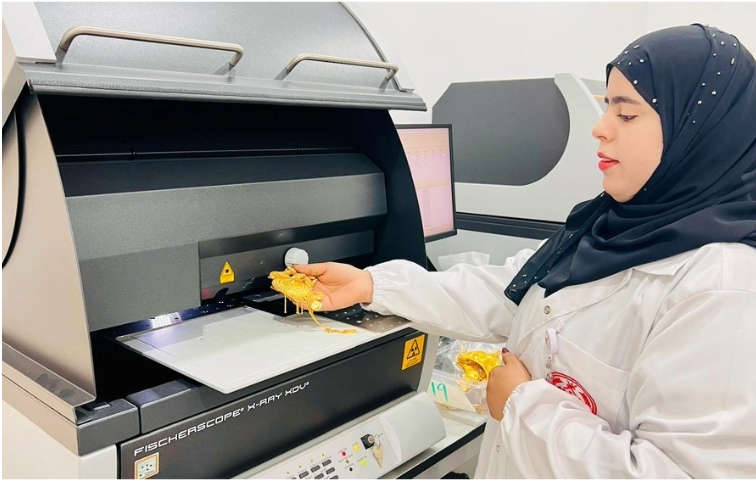

MUSCAT : The Ministry of Commerce, Industry and Investment Promotion (MoCIIP) said it continues to play a pivotal role in protecting the national economy by closely monitoring the trade of precious metals and gemstones. The aim, officials noted, is to maintain market quality, curb illegal practices, counter attempts at customs smuggling, and support the broader precious metals industry.
Emad bin Khamis Al-Shukaili, Director General of the Directorate General of Standards and Metrology, explained that the ministry’s oversight focuses on three key metals, platinum, gold and silver. Through the Precious Metals Laboratory, the directorate provides a full range of technical services including element analysis, carat determination, alloy testing, and certification for gold and silver leaf used across medical, scientific and industrial sectors.
Al-Shukaili added that once laboratory analyses are completed, products are stamped according to strict Omani legal standards, ensuring their reliability and granting official trading approval under the Precious Metals Control Law. The laboratory also carries out periodic and random inspections of shops and workshops to verify compliance and issues certified analysis reports to jewellers seeking documentation for their products.
Read More
- Former Times of Oman Sports Editor TK Mohandoss passes away
- His Majesty Sultan Haitham tours Royal Collection exhibition with King Charles and Queen Camilla
- Oman’s Dhank signs five development agreements worth about RO200,000
- Oman’s Duqm University College launches GCC’s first work-based learning degree programmes
- Oman and Spain join forces to improve organ donation services and transplant efficiency
Highlighting a significant operational surge, Mansour bin Rashid Al Ya’arubi, a precious metals laboratory technician, said the laboratories achieved record performance this year due to increased sample analysis and enhanced technical procedures.
Al Ya’arubi confirmed that modern, digitally equipped laboratories have accelerated workflows and improved service quality. The department has also expanded its team, now consisting of 20 trained technicians able to manage the growing volume of samples.
Performance indicators showed strong outcomes: the average time to complete transactions was three working days, with stamped samples delivered within two days. The error rate remained below 3 percent, while customer satisfaction reached an impressive 90 percent according to internal surveys.
For all the latest news from Oman and GCC, follow us on Twitter, Instagram and LinkedIn, like us on Facebook and subscribe to our YouTube page, which is updated daily.





