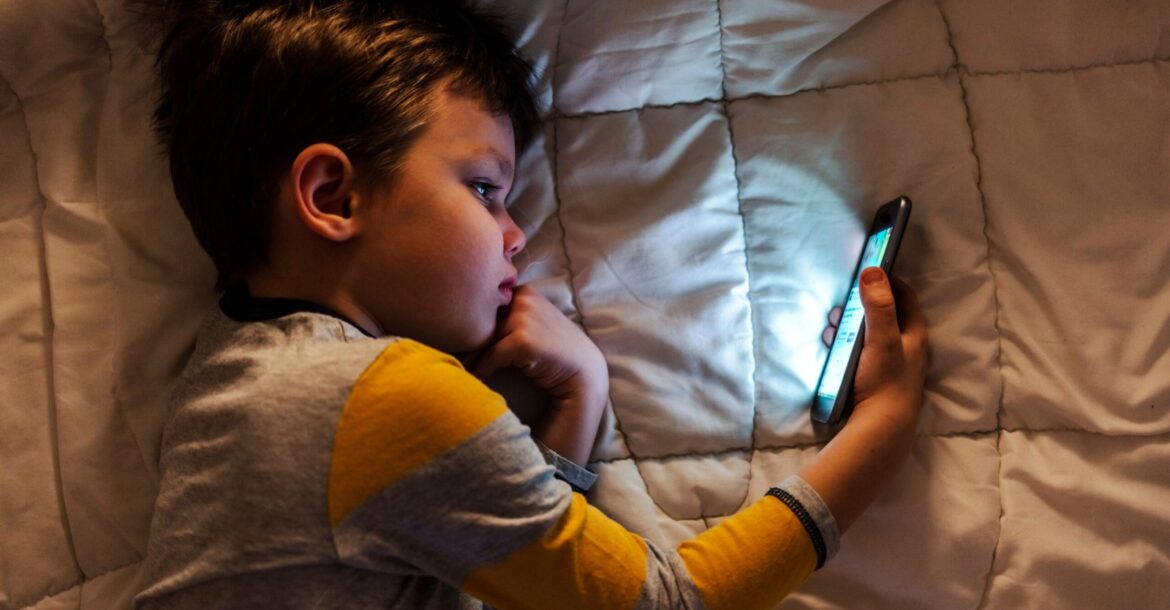

It’s 7:15 a.m. in Muscat, and Amal, a working mother of two, is already negotiating with her 11-year-old daughter. “Just ten more minutes on YouTube before school,” the girl pleads, phone in hand. Amal sighs she remembers being told as a child that too much TV would “rot the brain.” Now, she wonders whether the same warnings apply to a pocket-sized screen that her daughter never seems to put down.
“I resisted giving her a phone until last year,” Amal admits. “But when all her classmates were already on WhatsApp groups, she felt left out. I gave in but with rules. No phones after 9 p.m., and I check her apps every week. It’s exhausting, but at least it feels like I’m not giving up completely.”
Her story echoes across households from Muscat to Mumbai, Dubai to Doha. Parents are facing an unrelenting question: not if their children should have phones, but when and under what conditions.
Read More
The 8th-grade promise
Globally, the “Wait Until 8th” movement has become a rallying cry. Advocates argue that holding off until around age 13 or 14 delays the worst effects of social media the pressure to post, the race for likes, the lurking threats of cyberbullying.
Yet, for families in the Gulf, the eighth-grade threshold often feels unrealistic. Extended families are scattered across cities and countries, and WhatsApp groups are lifelines. During the pandemic, even seven-year-olds were logging onto Zoom for school. Phones are not luxuries; they are woven into daily life.
“It’s not just about entertainment here,” says Khalid Al-Harthy, a teacher in Sohar. “Sometimes parents need children to have a phone because of logistics to arrange pickups, to stay in touch when traffic is heavy. You can’t delay forever.”
Boundaries over birthdays
Psychologists argue that the fixation on age misses the bigger picture. “The line is no longer between children with phones and children without them,” explains Dr. Sameera Hassan, a Dubai-based child psychologist. “The line is between those who are guided and those who are left to navigate it alone.”
That guidance comes in the form of boundaries screen-free dinners, no phones in bedrooms, app checks, and open conversations. Parents who enforce them say they see the difference.
In Muscat, father of three Mohammed Al Balushi has a strict rule: phones go into a basket at 8 p.m. sharp. “At first, my kids hated it,” he laughs. “But over time, it became normal. They actually sleep better, and we eat together without distractions. It’s the only rule I don’t compromise on.”
A global divide
Around the world, the smartphone debate reflects cultural contrasts. In Silicon Valley, some of the very executives who built social platforms delay giving devices to their children. In South Korea and China, digital literacy is introduced as early as primary school. In the Gulf, where community ties are sustained online, children often receive devices earlier not as toys, but as connectors.
Yet, across cultures, the underlying concerns are the same: anxiety, attention, and addiction.
“My son was 12 when he joined Instagram,” says Aisha Al-Maqbali, an Omani educator. “I noticed his mood shifting. He was comparing himself to influencers, worrying about how many likes he got. We deleted the app together, but it was a wake-up call. Phones are not neutral. They shape how children see themselves.”
**The new rules of screen time **
- Delay social media, not communication. Messaging apps for family/friends can come before TikTok or Instagram.
- Model good behavior. If parents scroll at the dinner table, kids will too.
- Quality beats quantity. One hour of coding or documentaries outweighs ten minutes of random scrolling.
- Talk openly. Cyberbullying, predators, misinformation hiding the risks won’t protect kids.
- Encourage balance. Sports, books, and face-to-face friendships are non-negotiable.
Parenting in the age of anxiety
The deeper truth may be that there is no universal “right age.” For some families, 14 is still too early; for others, 9 feels inevitable. What matters is the scaffolding parents build around the device.
As Dr. Hassan notes, “The debate shouldn’t be about the first phone. It should be about the first conversation and the hundred conversations after that.”
Phones are here to stay. The real question is whether today’s children will grow up as passive consumers or conscious digital citizens. For parents like Amal, Mohammed, and Aisha, the answer lies not in waiting for eighth grade, but in teaching their children that life still exists and flourishes beyond the screen.





