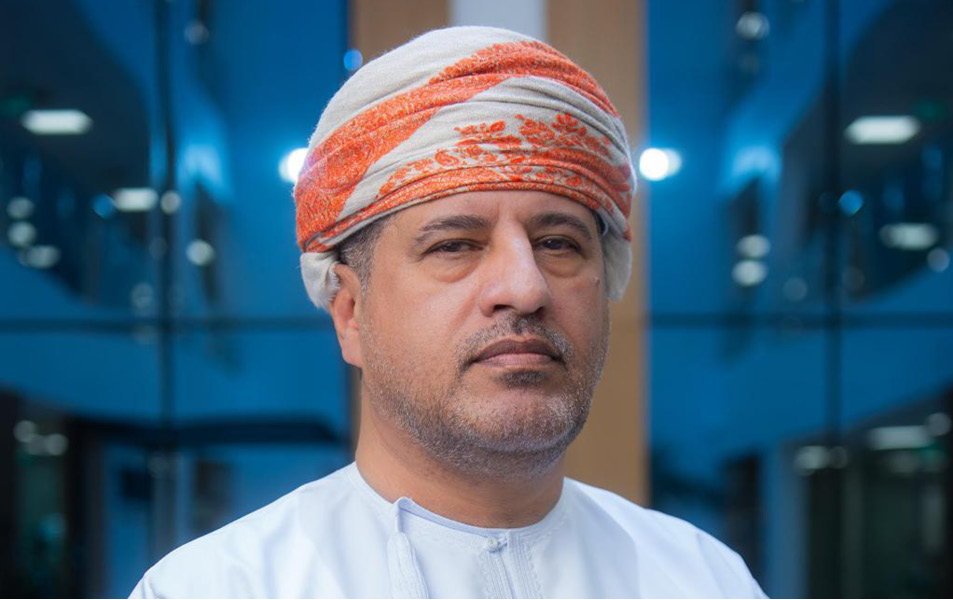
Muscat: Eng. Ahmed Akaak, CEO, Special Economic Zone Authority at Duqm (SEZAD) explains the thinking behind the Duqm Summer Series and why he selected AI, workforce resilience, global supply chains and workplace culture as the four key topics for this inaugural executive development program.
You’ve launched the Duqm Summer Series with four very specific themes. Was this always the plan or did these topics emerge from conversations with your tenant community?
To be honest, we started with a much longer list based on feedback from our business community. They’re incredibly engaged and forward-thinking, so we were getting requests for sessions on everything you can imagine. But these four themes kept surfacing as the most pressing priorities.
Read More
- Bank of Beirut to exit Oman after 20 years, depositors given 60 days to settle accounts
- Omantel’s Otech, DeepAstra launch sovereign AI platform in Oman
- Oman’s oil prices slide below $92 as global markets rebound
- With the new school year approaching, plan for your child’s education with BankDhofar
- Nifty, Sensex end lower as Iran sanctions, high crude and rising bond yields weigh on sentiment
AI, for example, has become critical – tenants are asking for practical guidance on deployment and ROI, moving beyond the conceptual stage to real-world application. Workforce development was another priority from tenant feedback, with everyone focused on attracting and retaining top talent. Companies everywhere are rethinking their hiring standards and development approaches to build stronger teams. For all four sessions, we made sure to bring in presenters who’ve tackled these challenges, not just theorized about them.
The first session looks at AI and automation. Every business conference seems to have an AI panel these days. How do you avoid the usual ‘ChatGPT will change everything’ presentation?
We’re focusing on ROI and implementation reality. Companies understand AI’s potential but want practical guidance on execution. The presenter, Saeed Abdul Ghafoor, CEO, Star Drones, has been using AI algorithms to process drone data faster and more accurately, delivering measurable improvements in both mission efficiency and safety.
What makes Saeed’s session different is that he’s built complete AI frameworks from scratch. He’ll walk through the specific steps, challenges and real costs involved in scaling from pilot projects to full implementation. Nothing too theoretical – just the process of moving from concept to deployment with concrete examples of what worked, what didn’t and why. Attendees will hopefully leave with practical insights they can start applying immediately.
Moving from technology to talent – your second session focuses on workforce development. Given Duqm’s location and today’s competitive talent landscape, this must be particularly important.
Absolutely. In today’s competitive talent landscape, the smartest companies are those that invest in developing and retaining their people. The most successful organizations on SEZAD are investing in developing adaptive leaders who can navigate rapid change and uncertainty.
Auf Al Aufi from Development Bank brings exactly the right perspective to this challenge. With years of HR experience he understands how to develop leaders who can embrace ambiguity and take calculated risks – skills that are essential in today’s business environment. He’ll share practical approaches our tenants can adopt right away.
Your third session tackles global trade and supply chains. Given everything that’s happening with trade disruptions and policy changes, this feels very relevant right now.
Duqm’s location gives us a real competitive edge, but our tenants need to master today’s complicated global trade environment. Supply chain disruptions have become the new normal and companies everywhere are scrambling to adapt by bringing operations closer to home or finding alternative supply routes. Here’s where Duqm’s advantage becomes clear. Thanks to Oman’s FTA with the U.S., many of our goods face just a 10% tariff while competitors from other regions are getting hit with charges of 25% to 40% or more.
This competitive edge matters because many manufacturers are now sourcing from two suppliers instead of one. They need clear ways to figure out when the extra cost is worth the insurance against major disruptions. For companies looking to diversify their supply chains, Duqm’s favourable tariff treatment and strategic position on major shipping routes makes us an attractive alternative. These advantages become even more valuable when you consider the broader uncertainty in global trade right now.
The UN’s trade arm, UNCTAD, recently highlighted how policy uncertainty is paralyzing business decisions and disrupting global supply chains. Rebeca Grynspan, UNCTAD’s Secretary General said that many CEOs are in a wait-and-see mode because trade and investment require predictability and trust. When uncertainty shaves half a percentage point off global growth forecasts, businesses start looking for stable alternatives. That’s exactly what Duqm offers – predictable trade terms, established infrastructure and the kind of operational certainty that allows companies to make confident long-term decisions.
That’s where our session comes in. Nabeel Al Balushi, a logistics expert from the Ministry of Transport, Communications & Information Technology will deliver practical insights on building resilient supply networks and risk assessment approaches. We’ll examine case studies of successful supply strategy pivots, showing how with everything happening in global trade right now, Duqm is more attractive than ever as a place to set-up and grow a business.
Shifting to workplace dynamics – your final session on workplace culture and wellbeing might have seemed peripheral five years ago. Why is it now a business imperative?
What’s changed is our understanding of how deeply employee wellbeing affects organizational performance. Consider this, global engagement declined to 21% in 2024 and burnout-driven productivity losses now cost companies an estimated US$322 billion yearly. Nearly half of workers identify work stress as the primary cause of their deteriorating mental health, with burnt out employees being 68% less productive than their healthy colleagues. However, companies that address these challenges see substantial returns – the WHO estimates every US$1 invested in mental health support translates to a US$4 return in improved health and productivity.
Beyond the financial benefits, recent surveys show that 89% of employees will only consider companies that prioritize employee wellness when seeking new employment. This makes wellbeing a key factor in both retention and talent attraction.
Dr. Aziza Al Sawafi from Sultan Qaboos University brings exactly the expertise we need for this conversation. She’ll walk our tenants through practical ways to measure wellbeing impact and implement changes that work. What I’m excited about is how she’ll demonstrate that workplace culture isn’t some fluffy HR concept but a hard business driver that shows up directly in performance metrics and profit margins.
Each session is designed to run for just an hour. In an era of multi-day conferences and lengthy seminars, why the constraint?
It comes down to respecting the reality of our tenant community. These are busy people running lean operations and asking them to block out half a day just isn’t realistic. An hour hits the sweet spot where we can deliver real value without derailing their schedules.
It also forces our presenters to get straight to what actually matters most. We’re focused on practical insights they can walk out and use immediately. We’ve learned people retain more from a focused hour than they do from sitting through endless presentations where half the content isn’t relevant to their immediate needs. Our tenants want solutions they can implement this week, not next quarter. The time constraint keeps everyone honest about delivering actionable value.
How will you measure success for the Duqm Summer Series beyond attendance numbers?
This is an important question. We’re developing a tracking system with specific metrics. We’ll conduct follow-up surveys at 30-, 60- and 90-days asking participants what strategies, if any, they’ve implemented as a result of attending the Duqm Summer Series. We’ll also be asking what measurable results they’ve seen and whether any new partnerships have emerged from networking at the sessions.
We’re also interested in understanding longer-term impacts. When participants report back on changes they’ve made – whether that’s new hiring practices, supply chain adjustments or operational improvements – we’ll know the sessions are hitting the mark. Success isn’t measured by how inspired people feel walking out, it’s measured by what they implement and whether it works.
Looking ahead, will this become an annual SEZAD fixture and might the format evolve?
If August’s sessions go well, absolutely. But we need to prove the concept first. We’ve put a lot of time and effort into making this work and if our tenants find real value in it, then yes, it becomes an annual thing.
We’re already thinking about potential themes for next year – cybersecurity, sustainability compliance, regional trade ties, but that’s getting ahead of ourselves. The format will I’m sure evolve based on what we learn from this year’s pilot. The key is staying flexible and listening to what works for our tenant community, not just what looks good on paper.
Finally, what’s your advice for businesses trying to navigate all these changes?
Stop trying to predict the future and start building your ability to respond to it. Three fundamentals, invest in your staff, build systems that can pivot fast when the world shifts and cultivate relationships outside your industry bubble.
Your next game-changing idea probably won’t come from your competitors but from connecting with people in completely different sectors who are solving similar problems in different ways. The businesses thriving on SEZAD are the ones that stay curious and keep learning from what’s happening around them.





