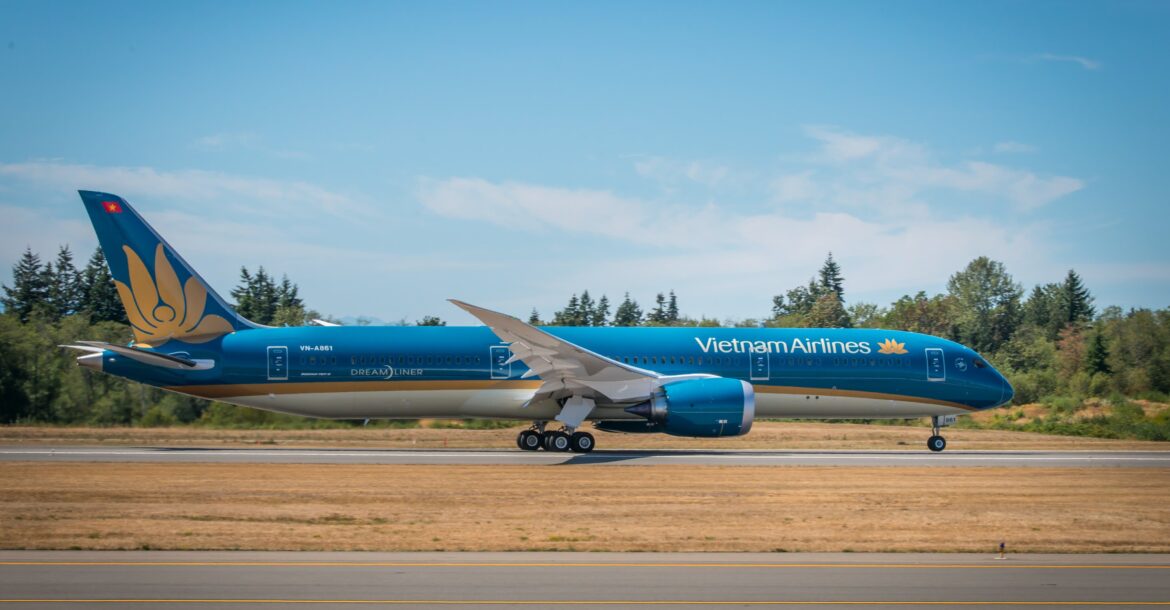

Hanoi: While no injuries were reported, both aircraft were grounded, causing widespread disruptions on one of Vietnam’s busiest routes.
The incident occurred at 2:23 pm local time when a Boeing 787-9 Dreamliner (Flight VN7205), en route to Ho Chi Minh City, clipped the tail of a stationary Airbus A321 (Flight VN1804), which was preparing to depart for Dien Bien. The collision happened at the intersection of taxiways S and S3 under clear weather conditions, according to the Northern Airports Authority.
The Boeing’s right wingtip struck the Airbus’s vertical stabiliser, scattering debris across the tarmac and visibly damaging both aircraft. All 386 passengers from the two flights were unharmed and safely escorted back to Terminal T1, where Vietnam Airlines arranged alternative flights.
Read More
- Kuwait intercepts drones as IRGC claims strike on US base
- Hamas accepts US-backed roadmap to disarm and exit Gaza governance
- Germany records nearly 10,000 heat-related deaths this year
- US military completes two-hour strikes on dozens of IRGC targets in Iran
- Russia charges Telegram founder Pavel Durov with ‘facilitating terrorism’, issues international arrest warrant
Preliminary reports suggest the Airbus A321 may have halted short of its designated holding point, potentially contributing to the crash. With weather ruled out as a factor, the focus of the investigation now shifts to potential communication lapses or operational errors involving pilots and ground control.
The Civil Aviation Authority of Vietnam (CAAV) and the Northern Airports Authority have launched a joint investigation. Both aircraft were towed to remote stands for further technical inspection.
The crash places Vietnam Airlines among a list of global carriers—including Ryanair, KLM, and Asiana—that have experienced ground collisions, underlining the risks that exist even when aircraft are not airborne.
The airline worked quickly to manage the fallout, but the grounding of two key aircraft—particularly on the high-traffic Hanoi–Ho Chi Minh City corridor—sent shockwaves through its domestic schedule, disrupting travel plans for hundreds.





