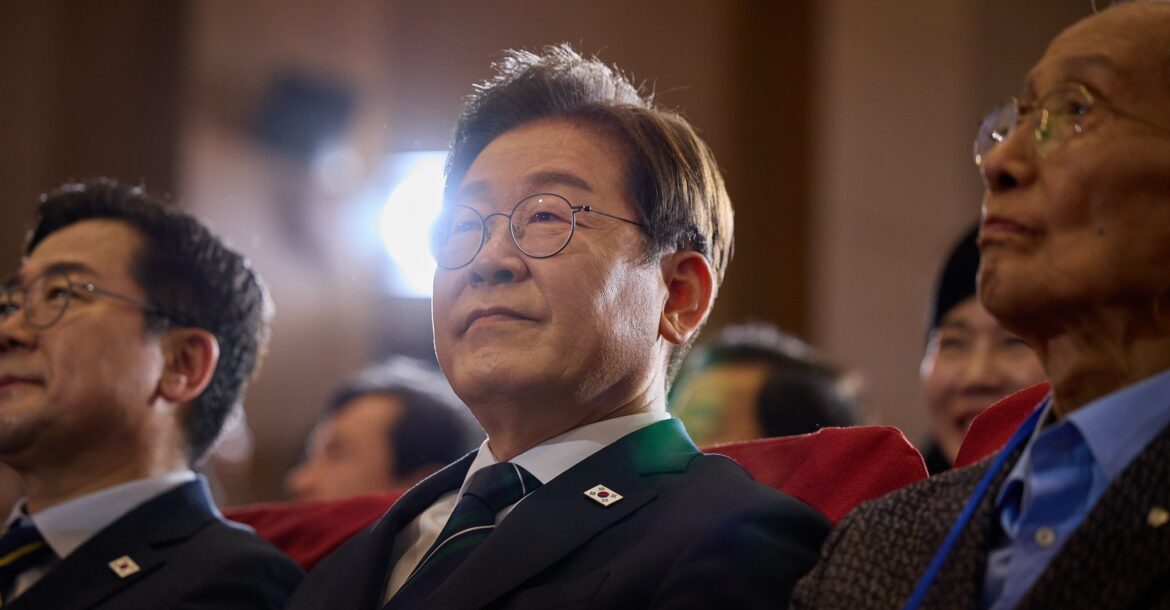

Seoul: Lee Jae-myung’s decisive win in Tuesday’s snap election marks a political turning point for South Korea, Asia’s fourth-largest economy. With 49.42% of the nearly 35 million votes cast, Lee triumphed over conservative rival Kim Moon-soo, who garnered 41.15%, in the country’s highest voter turnout for a presidential election since 1997.
Taking his oath at the National Assembly—where just six months ago he scaled the perimeter wall to vote against martial law—Lee declared his administration would be a “pragmatic pro-market government.” He pledged to deregulate industries, boost innovation, and address the cost-of-living crisis plaguing millions of working families and small businesses.
One of his earliest tests will be renegotiating trade terms with the United States, as Washington pressures Seoul over tariffs blamed for a growing trade imbalance. The urgency is compounded by looming deadlines from President Donald Trump’s administration that could severely impact key South Korean exports, including autos and steel.
Read More
- Cyclone Murasu makes landfall in India’s Andhra Pradesh, thousands evacuated
- “Another milestone in India’s space journey”: MEA congratulates ISRO on GSLV-F18 launch
- Air India gets DGCA approval for flying academy in Maharashtra
- Nine dead, five injured after oxygen cylinder explodes inside ambulance in Pakistan
- Cyclone Arnab kills three in eastern India
Internationally, U.S. Secretary of State Marco Rubio congratulated Lee, emphasizing the “ironclad commitment” between the two countries and their shared goal of modernizing the alliance. Meanwhile, the White House affirmed the election was “free and fair” but voiced concerns over Chinese influence on global democracies—an issue Lee appears more cautious on, especially in managing economic ties with Beijing and maintaining balance in regional diplomacy.
While signaling openness to dialogue with North Korea and stronger environmental policies, Lee reaffirmed that the alliance with the United States remains central to South Korea’s foreign strategy.





