

MUSCAT : The report aims to enhance local awareness of these indicators and serves as a reference for government and private institutions, as well as researchers interested in Oman’s classification on the global stage.
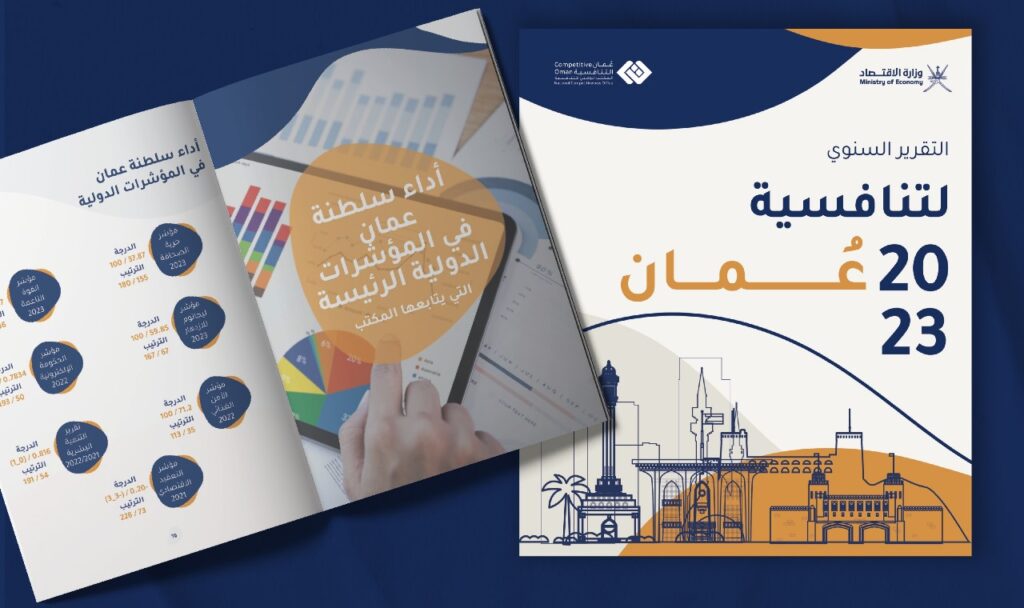
The report is structured around three main axes. The first two axes present 14 international indicators from leading global organizations, covering economic, social, political, and environmental aspects. Each indicator is accompanied by a brief description and information about the methodology used for country evaluations.
Key indicators from the Oman Vision 2040 document are also analysed, focusing on seven primary metrics, including global competitiveness, economic freedom, governance, corruption perceptions, environmental performance, global innovation, and network readiness. Additionally, seven sub-indicators reflect the performance of the Sultanate, which have been referred to the relevant authorities for further analysis and improvement.
The report reveals notable advancements in Oman’s performance across several indicators, particularly in the Global Innovation Index, where Oman achieved a score of 80-100 in four sub-indicators. These include the number of students per teacher in secondary education (84.48), the percentage of science and engineering graduates (88.28), the availability of information and communication technology (91.72), and the application tariff rate (88.94). Furthermore, Oman excelled in network readiness, achieving its highest score in cybersecurity at 95.97.
In the Economic Freedom Index, which assesses the economic freedom of countries through 12 sub-pillars, Oman reached a score of 97.6 in tax burden and 82.9 in monetary freedom, indicating continued progress in this area.
The report concludes with insights from various specialists on the significance of innovation and its measurement, emphasizing its role in economic growth, scientific research, sustainable development goals, and the digital economy. It features seven articles from experts across government and private sectors in Oman, discussing innovation’s impact on the economy and policy development.
The National Competitiveness Office is committed to enhancing Oman’s performance in international indicators, especially those outlined in the Oman Vision 2040 document. The Office monitors and analyses these indicators and provides periodic reports to the National Competitiveness Committee. Additionally, it collaborates with relevant parties to implement improvements and assess their impact on Oman’s competitiveness, while maintaining communication with international organizations to update and correct Oman’s data in global competitiveness metrics.
For all the latest news from Oman and GCC, follow us on Twitter, Instagram and LinkedIn, like us on Facebook and subscribe to our YouTube page, which is updated daily.
Read More
- IMF sees Oman’s economic growth accelerating to 4.5% in 2026
- HH Sayyid Theyazin presides over Sultan Qaboos University’s 40th anniversary
- Oman elected Vice-Chair of WHO Working Group on Pandemic Agreement
- Oman and Saudi Arabia sign Hajj agreement for 1448 AH season
- Oman, Liberia sign agreement to establish diplomatic relations





