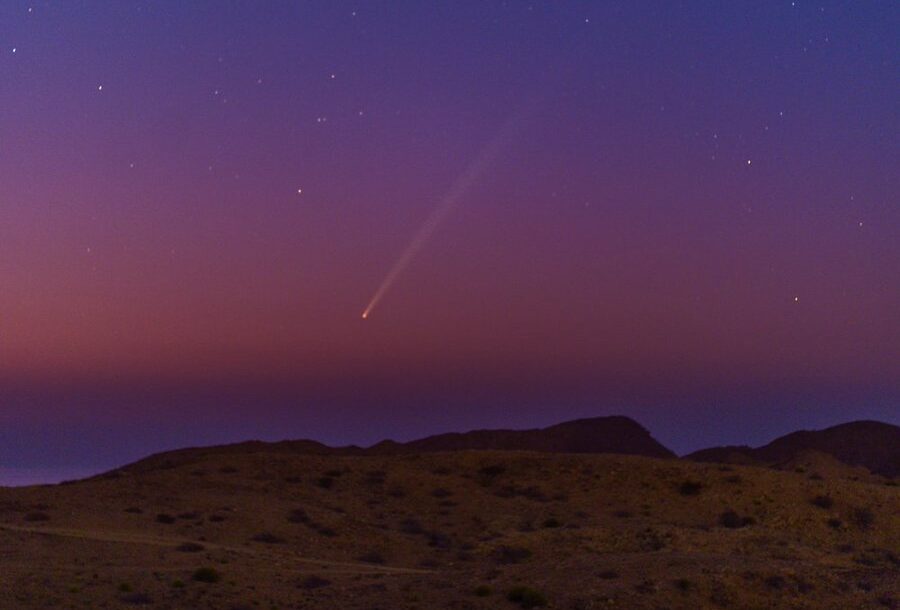

MUSCAT : Astronomer Issam bin Ali Al-Salhi explained that the comet was first discovered on February 22, 2023, by the Asteroid Impact Alert System (ATLAS). Its orbit was later confirmed by China’s Purple Mountain Observatory (Tsuchinshan), leading to its dual name in honor of both discoveries.
Al-Salhi added, “The comet can be seen before sunrise using binoculars and astronomical telescopes until October 8. Then, it will reappear on the western horizon after sunset on October 10, and as the days pass, it will rise above the horizon until it gradually disappears from observers at the end of the month.”
The comet originates from the Oort Cloud, a distant region surrounding the solar system, and orbits the Sun once every 80,000 years. Its appearance has thrilled local astronomers, including Qassim bin Hamad Al Busaidi, who photographed the comet from Jebel Shams’ Starlight Reserve.
Read More
- Oman’s Jood charity platform raises over Ro 2.78 million in 2026
- 26 arrested near Muttrah Beach for attempting to enter Oman illegally
- Three expats arrested in Oman’s Mahdah Wilayat over crystal meth and morphine possession
- Oman Labour Law: Can employers discipline workers for violations discovered more than 30 days later?
- Oman unveils 1,500-home tourism project on Muttrah waterfront
The society’s chairman, Al-Julanda bin Masoud Al-Rawahy, celebrated the achievement, highlighting Oman’s growing presence in the global astronomy community. He encouraged the public to observe the comet throughout October, emphasizing that the society would continue to share updates and observation methods.
As the comet reaches its peak visibility, astronomy enthusiasts are advised to use specialized equipment for the best experience, as the comet’s brightness remains faint to the naked eye.
For all the latest news from Oman and GCC, follow us on Twitter, Instagram and LinkedIn, like us on Facebook and subscribe to our YouTube page, which is updated daily.





