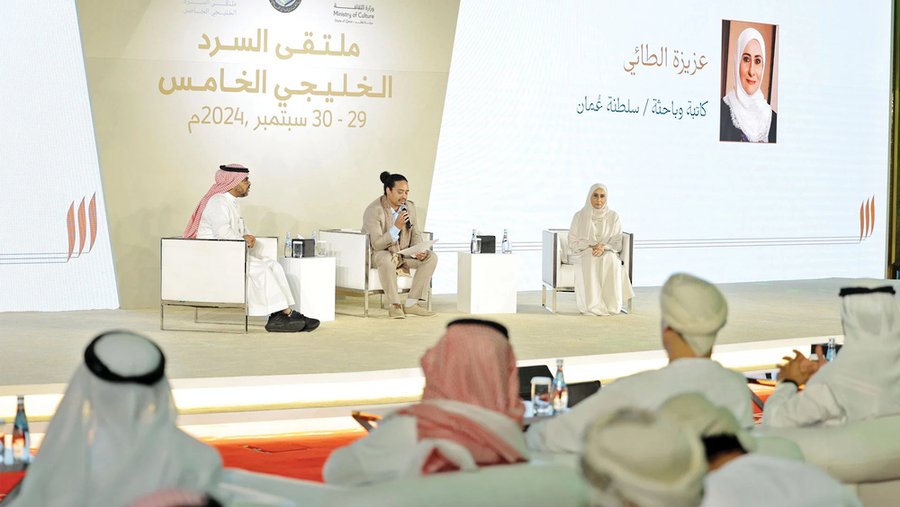

DOHA: This two-day event, hosted at the General Secretariat of the GCC, is a key initiative aligned with the principles of the Gulf Cultural Strategy, which promotes collaborative cultural events across the region.
The Gulf Narrative Forum seeks to bolster cultural communication and elevate the art of narration within Arab culture, emphasizing the significance of the classical Arabic language. It aims to encourage expressions of this rich language through storytelling, which is a foundational aspect of Arab heritage.
In the first session, Omani writer and critic Dr. Aziza Al-Taie presented a compelling paper titled “Current Narrative Discourse in Oman,” highlighting the evolution of narrative styles in modern Omani literature from 2000 to 2024. Dr. Al-Taie noted a remarkable transformation in Omani storytelling that reflects the country’s modern state and societal changes.
Read More
- 26 arrested near Muttrah Beach for attempting to enter Oman illegally
- Three expats arrested in Oman’s Mahdah Wilayat over crystal meth and morphine possession
- Oman Labour Law: Can employers discipline workers for violations discovered more than 30 days later?
- Oman unveils 1,500-home tourism project on Muttrah waterfront
- Isotears sold in Oman not affected by recall notices, ministry says
Saudi novelist Taher Ahmed Al-Zahrani followed with a thought-provoking presentation on “The Village and the City: The Duality of Intimate Narrative,” where he underscored the essential role of place in storytelling, illustrating how setting shapes narratives, characters, and the rich tapestry of human experience.
The forum also featured Bahraini novelist Abdul Qader Aql, who discussed “The Folktale in the Arabian Gulf,” examining the region’s efforts to collect and document its folk heritage since the early 1980s. His insights into the establishment of the Popular Heritage Center in Doha shed light on the extensive projects undertaken to preserve Gulf culture.
Qatari novelist Fahad Al Kuwari presented “Questions about the Purpose of Mythology and the Status of Narrative Storytelling,” arguing that storytelling serves deeper purposes beyond mere entertainment, especially in the age of artificial intelligence.
In a dynamic seminar, Egyptian writer Mahmoud Mahdi addressed the “Forms of Narrative in Digital Content and the Challenge of Adaptation,” exploring the evolving landscape of narrative creation in the digital age and the potential of online platforms for enhancing storytelling experiences.
The second day of the forum promises engaging discussions with three additional sessions and seminars, including one on “The Magic of Narrative Storytelling in Podcasts.”





