

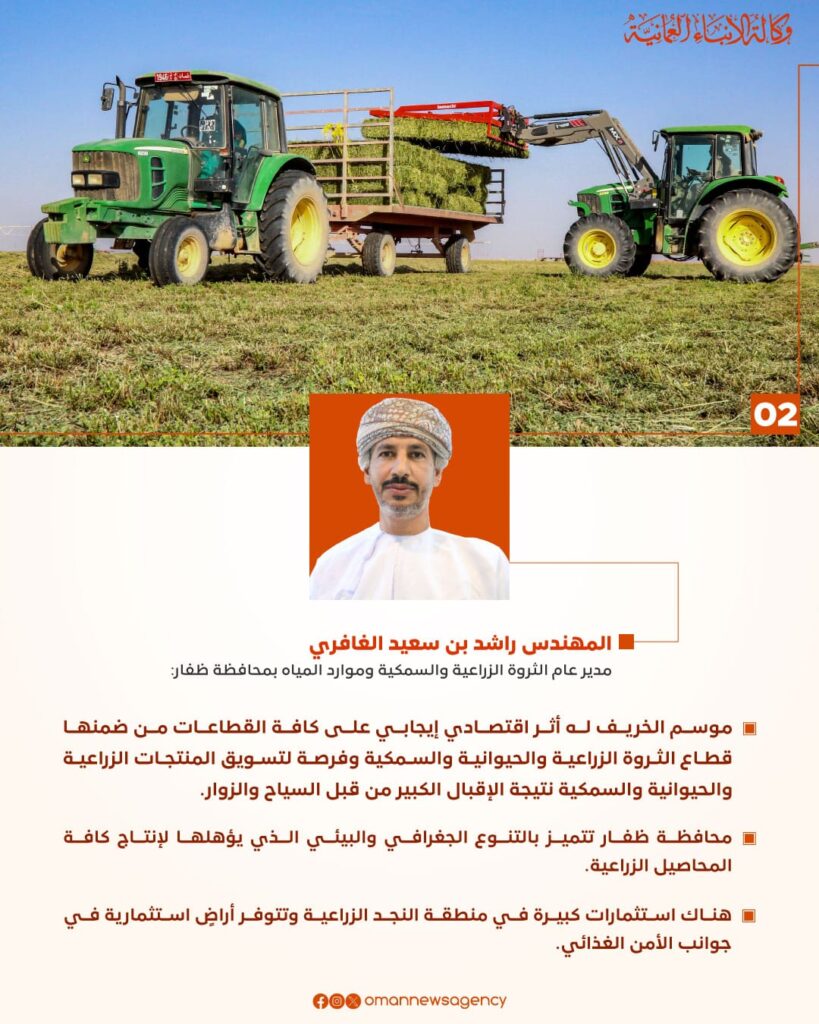
MUSCAT : The Khareef season, attracting large numbers of tourists, significantly boosts the demand for local agricultural, animal, and fish products.
Eng. Rashid bin Saeed Al Ghafri, Director General of Agricultural, Fisheries, and Water Resources in Dhofar, highlighted the economic benefits of the Khareef season, emphasizing the opportunity to market local products to the influx of tourists. “There is a noticeable demand for agricultural, fish, and animal products, which are essential for tourists and residents,” he stated.
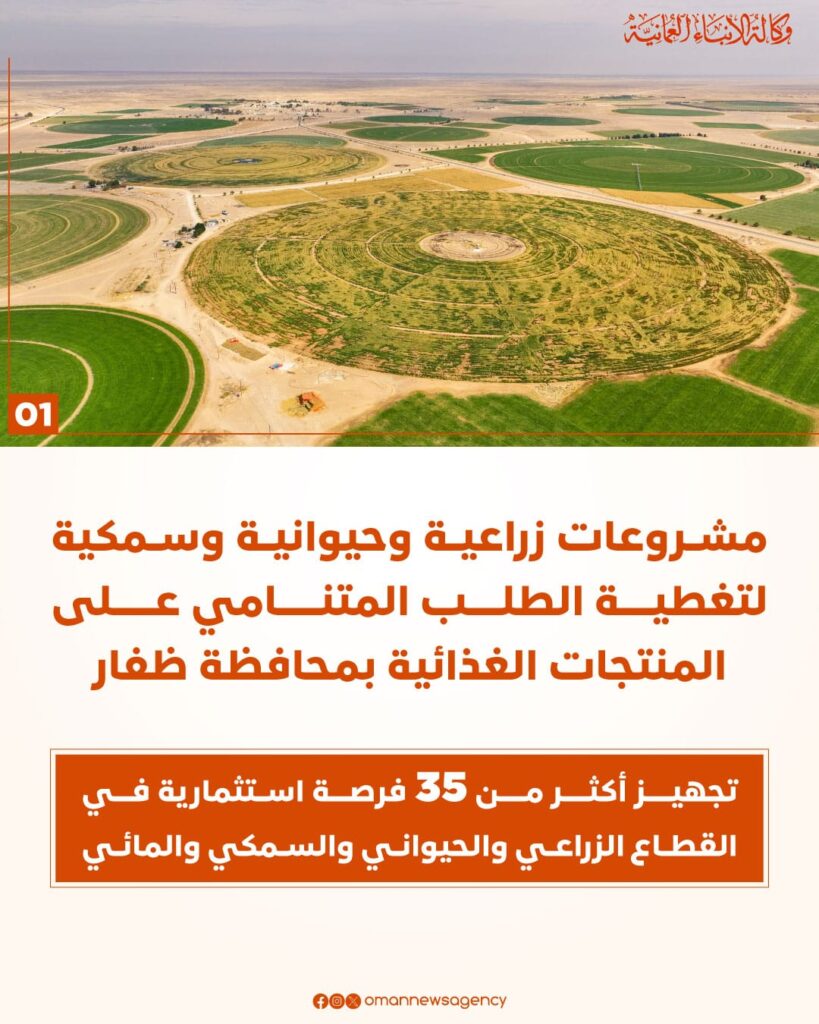
The Directorate collaborates with various agencies, including Consumer Protection, the Ministry of Commerce, Industry, and Investment Promotion, and Dhofar Municipality, to ensure food availability and safety. Al Ghafri also noted significant investments in the Najd agricultural region, with over 35 investment opportunities being prepared in various sectors.
Read More
- Heavy rain and hail lash Oman’s Al Buraimi, triggering wadi flows
- Honourable Lady visits Omani Women’s Association in Salalah
- Oman Foreign Minister holds talks with Tunisia, Brunei on bilateral ties and global developments
- Oman, Kazakhstan review bilateral ties and regional developments
- Oman’s Health Ministry urges public to act on suspected unsafe food
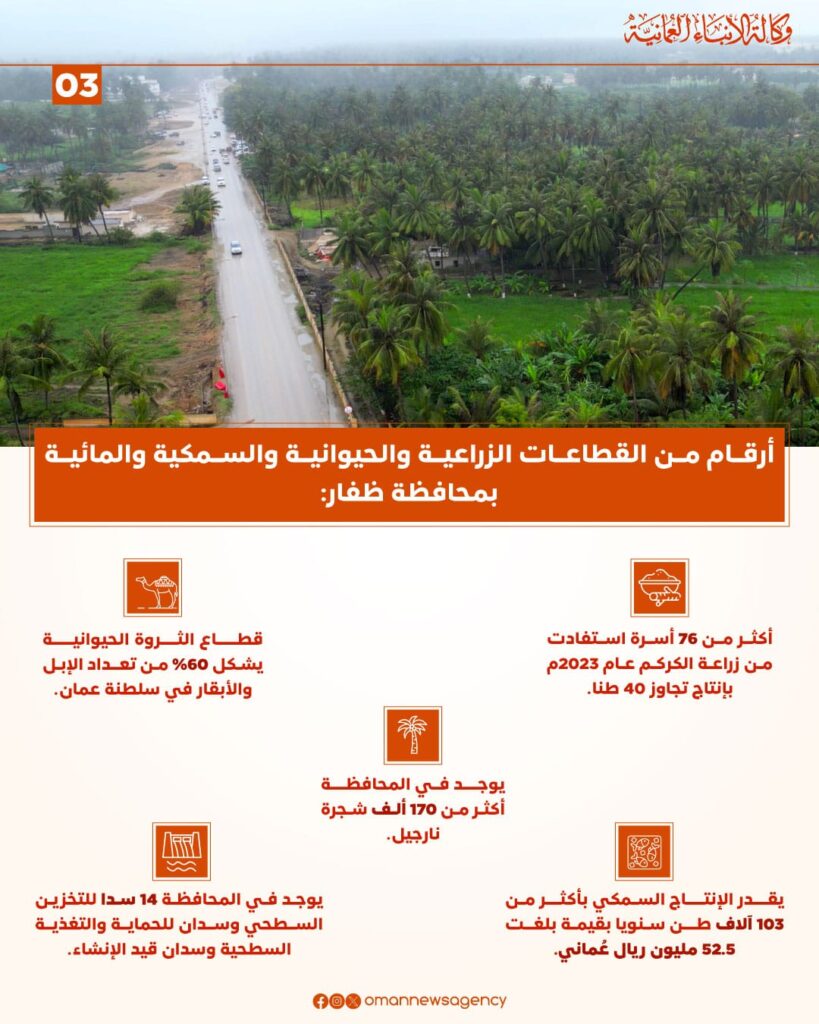
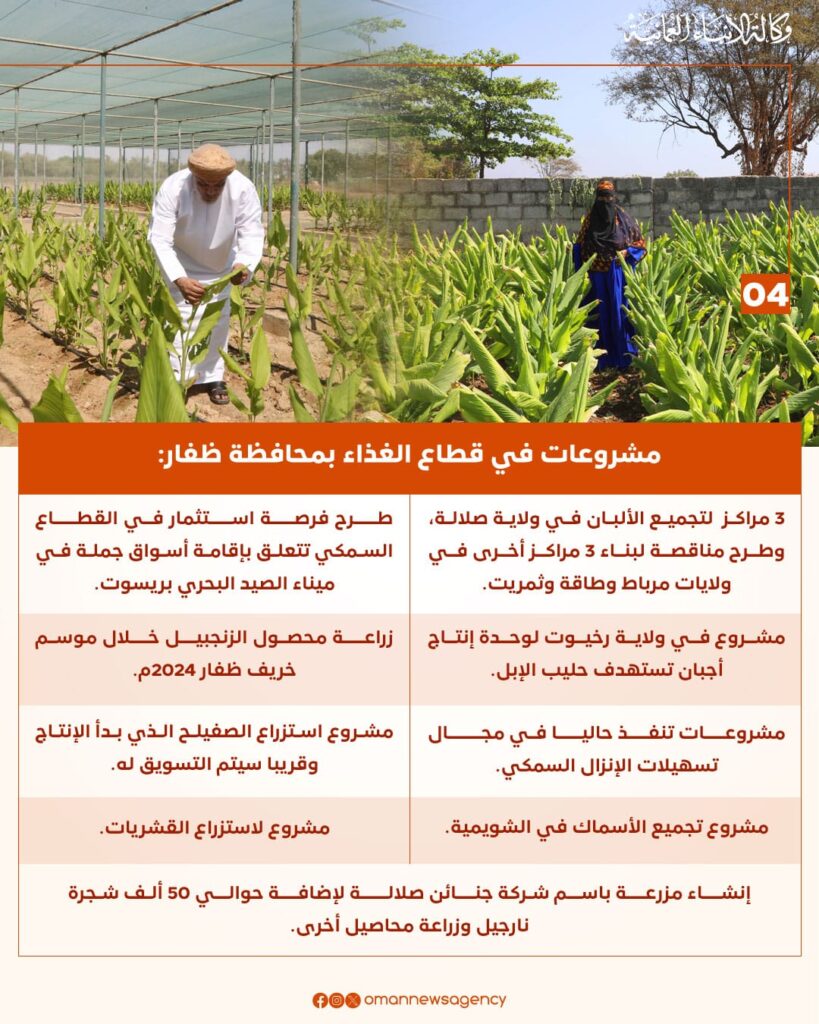
Dhofar’s geographical and environmental diversity allows for the production of diverse crops, including successful projects like the turmeric localization initiative, benefiting over 76 families with a production of more than 40 tons last year. Preparations for ginger cultivation are underway for this autumn season.
Coconut farming is another highlight, with Dhofar housing over 170,000 coconut trees. The Salalah Gardens Company project aims to add about 50,000 more coconut trees, alongside other crops like papaya. The Ministry of Agriculture, Fisheries, and Water Resources has implemented measures to halt the export of coconuts until the end of the autumn season to meet the increased local demand.
Fish production in Dhofar is substantial, with over 103,000 tons produced annually, valued at about RO 52.5 million. This production supports both local consumption and exports. The Governorate boasts 12,687 fishermen and 5,094 boats, contributing significantly to the local economy.
Investment opportunities in the fisheries sector include the establishment of wholesale markets and fish farming projects. Notable projects include a fish collection facility in Al Shuwaimiyah and the abalone farming project, which has commenced production.
The livestock sector, constituting 60 percent of the camel and cow population in Oman, is also receiving significant attention. Development projects include the national immunization project, veterinary services, and modern technology introduction, such as automatic milking machines. The Al Murooj milk collection project and a cheese production unit targeting camel milk in Wilayat of Rakhyut are notable initiatives.
Dhofar also has 14 surface storage dams, two dams for protection and surface feeding, and two dams under construction, costing approximately RO 45 million, expected to be completed by early next year.
For all the latest news from Oman and GCC, follow us on Twitter, Instagram and LinkedIn, like us on Facebook and subscribe to our YouTube page, which is updated daily.





