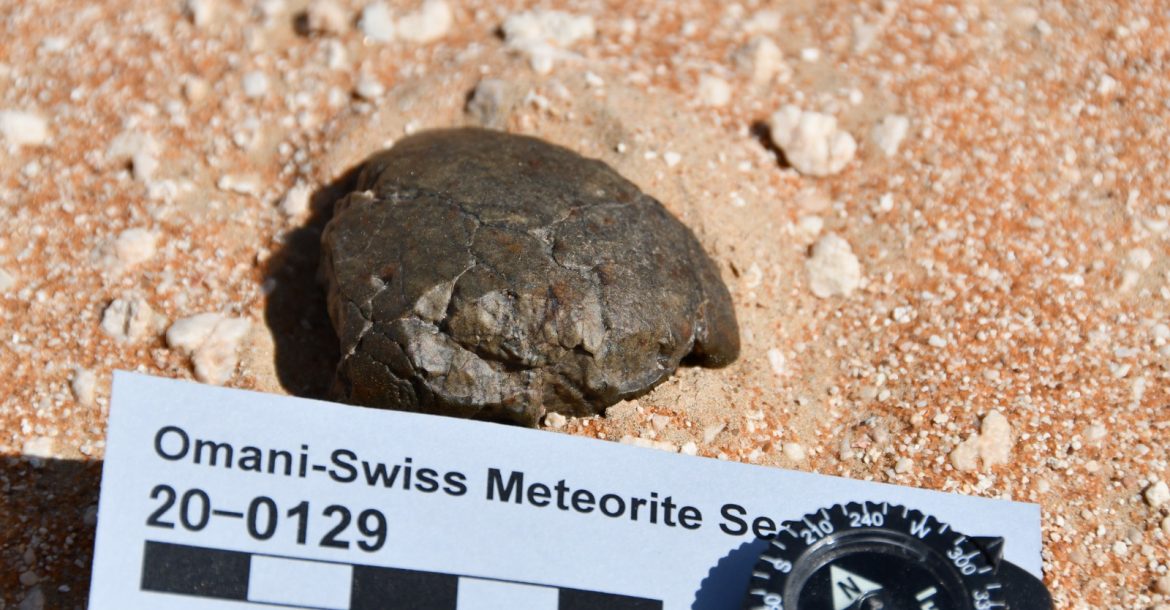

Muscat – Scientific studies conducted recently have confirmed the rarity of this meteorite compared to other lunar meteorites found around the world. This meteorite is particularly significant because it originates from the far side of the Moon, unlike most lunar meteorites discovered on Earth, which are from the near side.
This newly discovered meteorite differs from the samples returned by NASA missions, which were also limited to the near side of the Moon. The unique origin of this meteorite will allow scientists to gain a broader understanding of the characteristics and components of the far side of the Moon. This study represents a new scientific addition to the fields of meteorite and asteroid research.
The meteorite was discovered on February 5, 2020. However, the analysis and confirmation of its type and rarity were completed recently. According to chemical analyses, the main minerals in the meteorite are plagioclase (70 percent), pyroxene (20 percent), and olivine (5 percent), along with other minerals in smaller percentages such as iron.
The outer crust of the meteorite, which formed due to combustion as it entered the Earth’s atmosphere, contains minerals such as mesclunite and troilite. The study also found that the outer layer of the sample contains molten atoms of moon dust.
This discovery is part of the Ministry’s ongoing efforts to document meteorites in Oman, a project that has been in cooperation with the Natural History Museum in Bern since 2001. To date, over 7,341 meteorite pieces, weighing more than 7,000 kilograms, from the Moon, Mars, and various asteroid belt fissions have been documented. The Ministry ensures these meteorite samples are preserved, sustained, and scientifically documented according to the best international practices.
In early 2022, as part of its digital transformation programs, the Ministry launched a project in collaboration with the International Meteor Observing Network and other specialized scientific institutions to monitor and document meteorites as they enter Oman’s atmosphere. This project enables the field research team to locate meteorites immediately after they land, allowing for timely and accurate scientific research. The Ministry’s documentation of the ‘Khadf meteorite’, weighing 22 grams, is a testament to the success of using modern technology in meteorite research.
At the beginning of this year, the Ministry organized a workshop titled ‘Meteorites in the Sultanate of Oman and Combating Illicit Trade in Them]. The workshop aimed to educate participants about meteorites, their scientific importance, and the legal controls related to them. It targeted customs inspectors, tourism companies, researchers, and others involved in geological heritage and cultural property.
Read More
- Oman records highest temperature of 46.2°C
- Heavy rain and hail lash Oman’s Al Buraimi, triggering wadi flows
- Honourable Lady visits Omani Women’s Association in Salalah
- Oman Foreign Minister holds talks with Tunisia, Brunei on bilateral ties and global developments
- Oman, Kazakhstan review bilateral ties and regional developments





