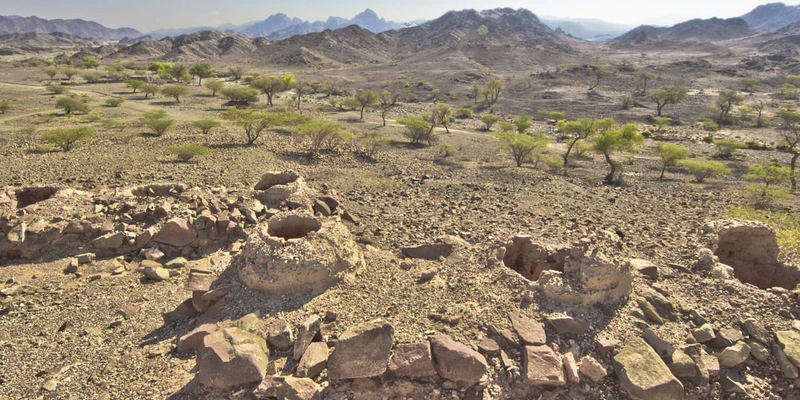

MUSCAT : The Tawi Al-Abila site in the Wilayat of Mahdah reveals a fascinating glimpse into Oman’s role in copper production centuries ago.
Humaid bin Rashid Al Zaidi, Director of the Department of Heritage and Tourism in Al Buraimi Governorate, explains the site’s significance. Dating back to a period between the 9th and 15th centuries AD, Tawi Al-Abila housed a village or seasonal workshop dedicated to copper extraction and smelting. This wasn’t a permanent settlement, but rather a hub for seasonal copper production, evident from the presence of 16 well-preserved furnaces.
These conical furnaces, varying in size from medium to large, showcased a small entrance for copper smelting. Interestingly, remnants of copper slag and broken bronze pieces were found within the furnaces, hinting at their extensive use.
Read More
- Heavy rain and hail lash Oman’s Al Buraimi, triggering wadi flows
- Honourable Lady visits Omani Women’s Association in Salalah
- Oman Foreign Minister holds talks with Tunisia, Brunei on bilateral ties and global developments
- Oman, Kazakhstan review bilateral ties and regional developments
- Oman’s Health Ministry urges public to act on suspected unsafe food
Al Zaidi highlights the importance of this discovery, mentioning that the presence of these furnaces provides archaeological evidence of Oman’s continuous role in copper extraction and smelting, dating back to the 3rd millennium BC. The high-quality copper produced here was in high demand by neighbouring civilizations for crafting weapons and tools.
The Ministry of Heritage and Tourism has taken steps to preserve this valuable site. Registration, documentation, and protective signage have been implemented.
For all the latest news from Oman and GCC, follow us on Twitter, Instagram and LinkedIn, like us on Facebook and subscribe to our YouTube page, which is updated daily.





