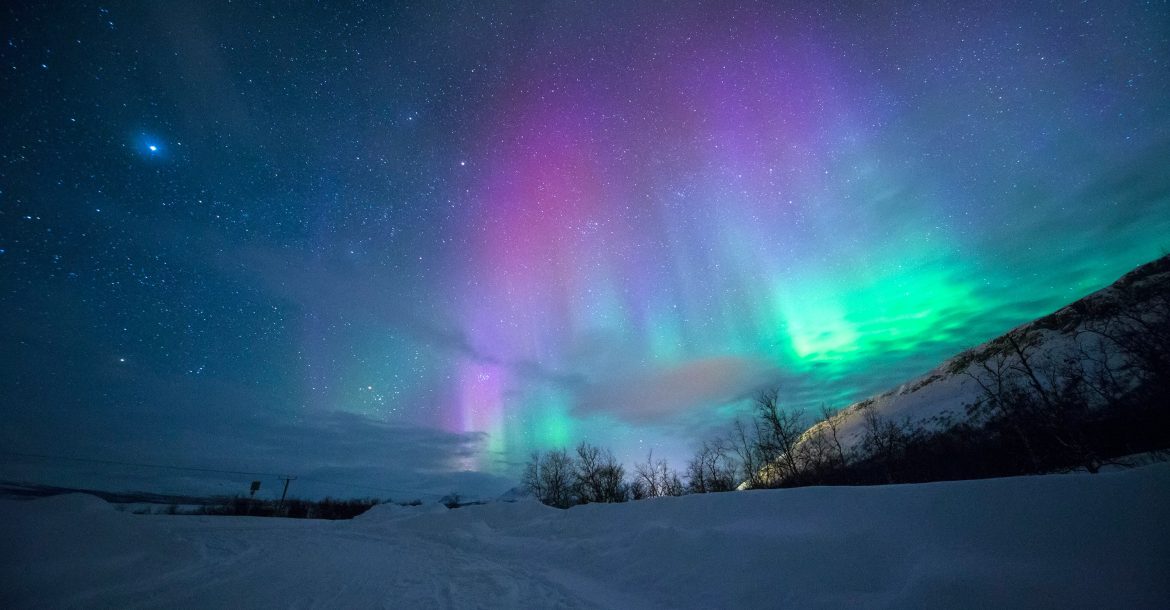

What is the first thing that comes to your mind when you hear about the “Arctic” and “Arctic Circles”? If it’s the dancing lights, then you’re about to be mesmerized by what you’re about to read.
You probably might have heard this, but UK and US residents didn’t have to go to the Arctic to enjoy the Aurora Borealis; some found it in their backyard.
Chances are that many more regions will catch a glimpse of this breathtaking phenomenon. Here’s why you should know more about it!
Read More
- Mexico, Peru restore diplomatic ties after nine-month rift
- Abelardo De La Espriella officially sworn in as Colombia’s President
- Iran, Oman reach ‘general framework’ on Strait of Hormuz arrangements
- Sri Lanka prison riots leave 3 dead, more than 20 injured
- Seven dead, 15 injured in Thailand high school shooting
What are the Aurora Borealis, and why are they formed?
The northern lights, also known as the aurora borealis, are a spellbinding display of nature’s grandeur that has enchanted humans for centuries. Despite their breathtaking beauty, these luminous ribbons of light are born from a violent cosmic ballet in Earth’s upper atmosphere.
Energized particles from the sun, hurtling at staggering speeds of up to 45 million mph, collide with our planet’s magnetic shield. This collision triggers a mesmerizing transformation as the charged particles are redirected towards the poles, where the magic unfolds into a celestial spectacle.
Lucky observers in the Northern Hemisphere witness the aurora borealis while their counterparts in the Southern Hemisphere marvel at the aurora australis. The vibrant hues of the lights are a testament to Earth’s atmospheric chemistry, with ever-changing solar input and atmospheric responses contributing to the kaleidoscopic display.
Why did the UK and US citizens get to catch a glimpse of the dancing lights?
A potent solar storm recently electrified Earth’s magnetosphere, igniting an extraordinary show of the Northern Lights across the UK. Forecasted by NOAA’s Space Weather Prediction Center, this solar storm is hailed as the most potent since 2003, promising a weekend of celestial enchantment.
Britons were treated to a rare spectacle, with the auroras visible from Scotland’s serene landscapes to the bustling streets of London. This event serves as a reminder of nature’s awe-inspiring power and the delicate dance between Earth, the sun, and the cosmos.
As solar activity heightens, experts anticipate a wider reach for the auroras. Americans in regions as far south as Alabama and Northern California eagerly anticipate a potential glimpse of the northern lights.
Apart from being ethereal and a definite bucket list event, the dancing lights also indicate something more alarming.
Geomagnetic storms, while captivating in their celestial dance, hold potential disruptions for Earth’s surface and near-Earth orbit infrastructure, according to the Space Weather Prediction Center. These storms can create a domino effect, impacting communications, the electric power grid, navigation systems, and satellite operations.
Rob Steenburgh, a Space Weather Prediction Center space scientist, emphasizes the criticality of monitoring high-voltage transmission lines during such events. The influx of magnetic fields from coronal mass ejections, akin to cosmic tsunamis, can induce electrical currents that stress major transformers, jeopardizing power distribution networks.
With the possibility of geomagnetic storms affecting more regions in the near future, you will likely spot these magnificent sights, too, and we may be better equipped to enjoy them soon.





